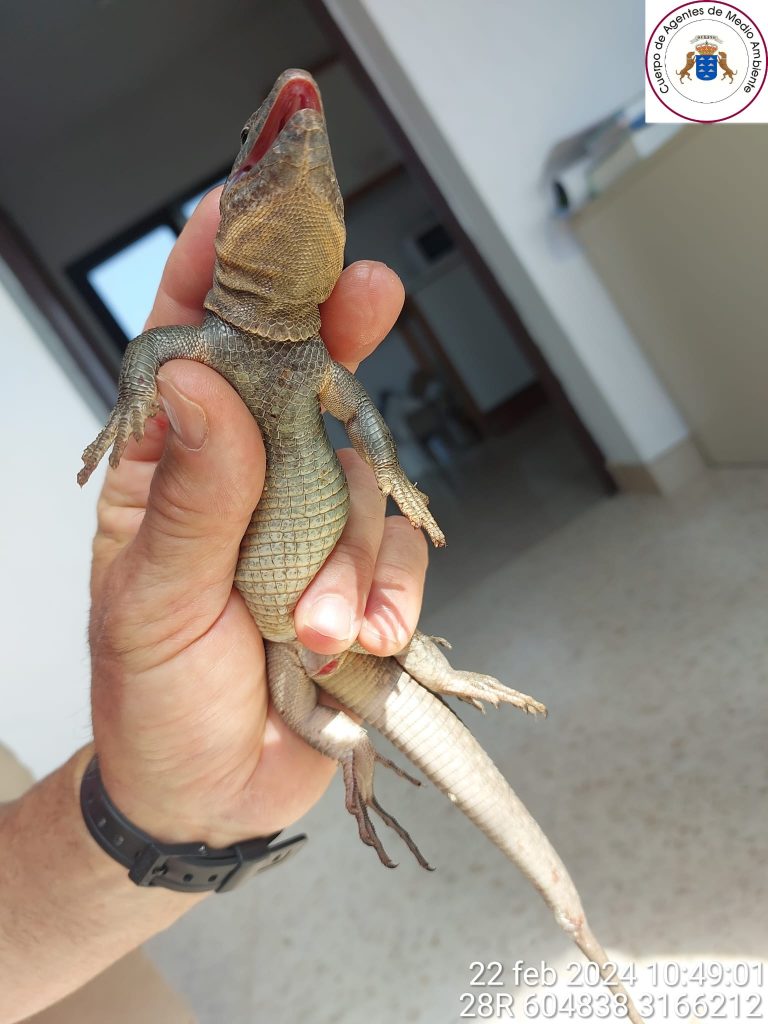
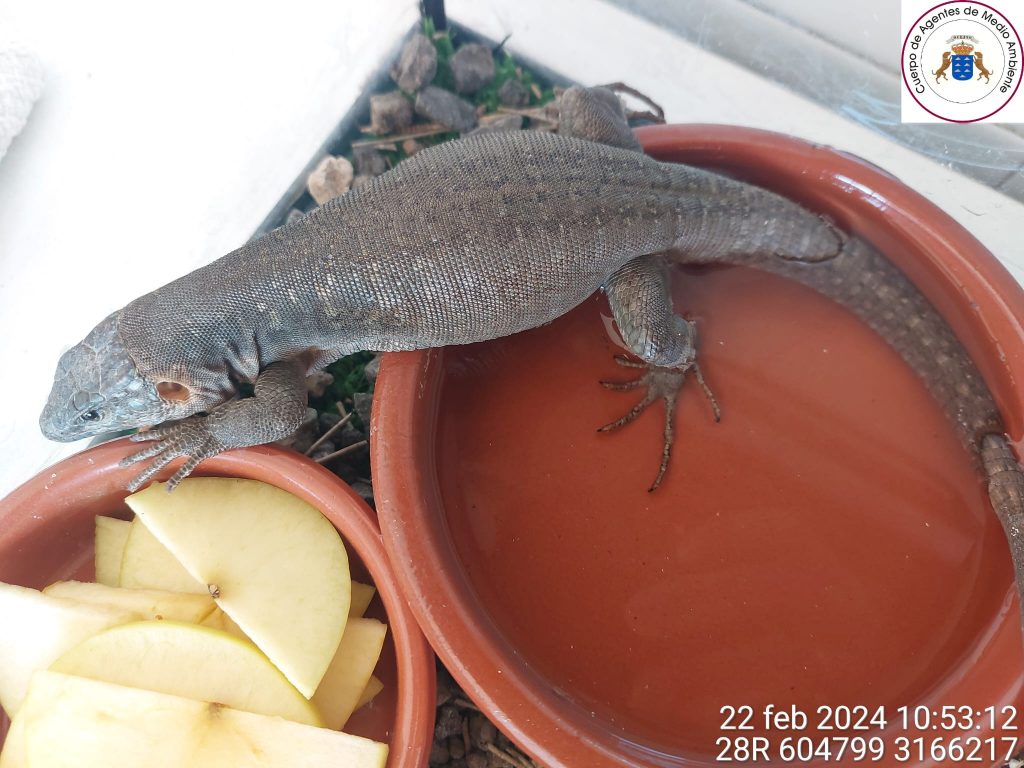
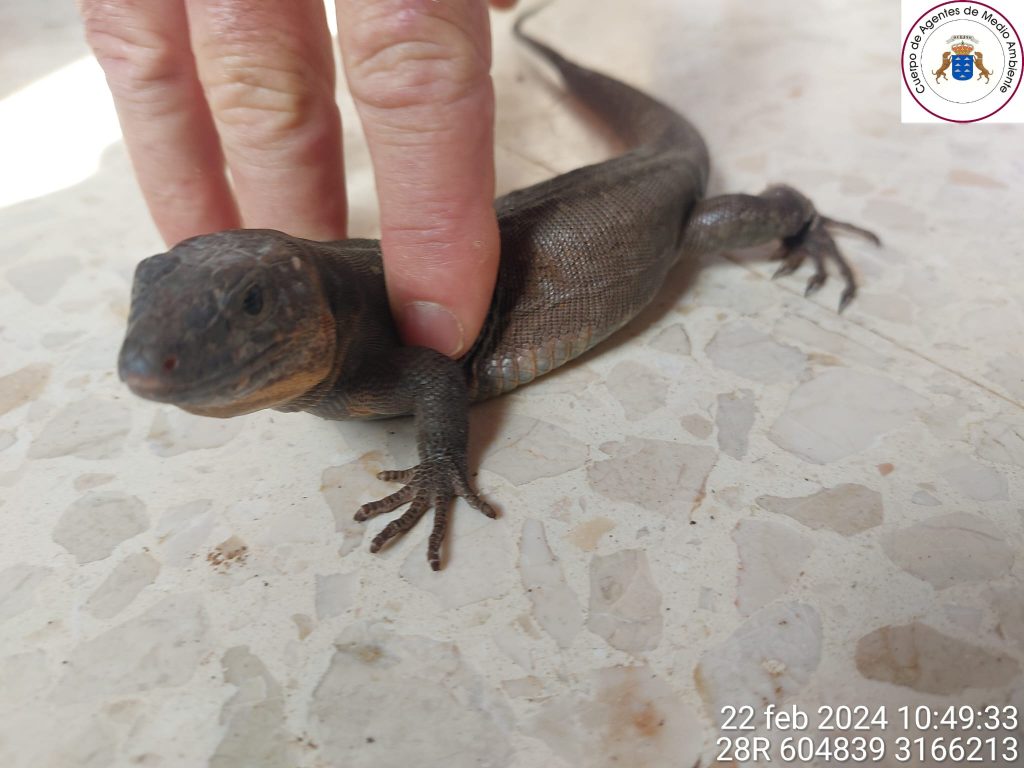
In a fascinating development for wildlife enthusiasts and environmental advocates alike, the Cabildo de Fuerteventura’s Department of Environment and Hunting, led by Carlos Rodríguez, has been alerted to the presence of a Gran Canaria giant lizard (Gallotia stehlini) within private property in Lajares, a quaint village situated in the municipality of La Oliva. This discovery came to light when a local resident was inspecting their family garden for signs of damage to plants and inadvertently found the lizard trapped in a trap meant to identify the culprit behind the destruction.
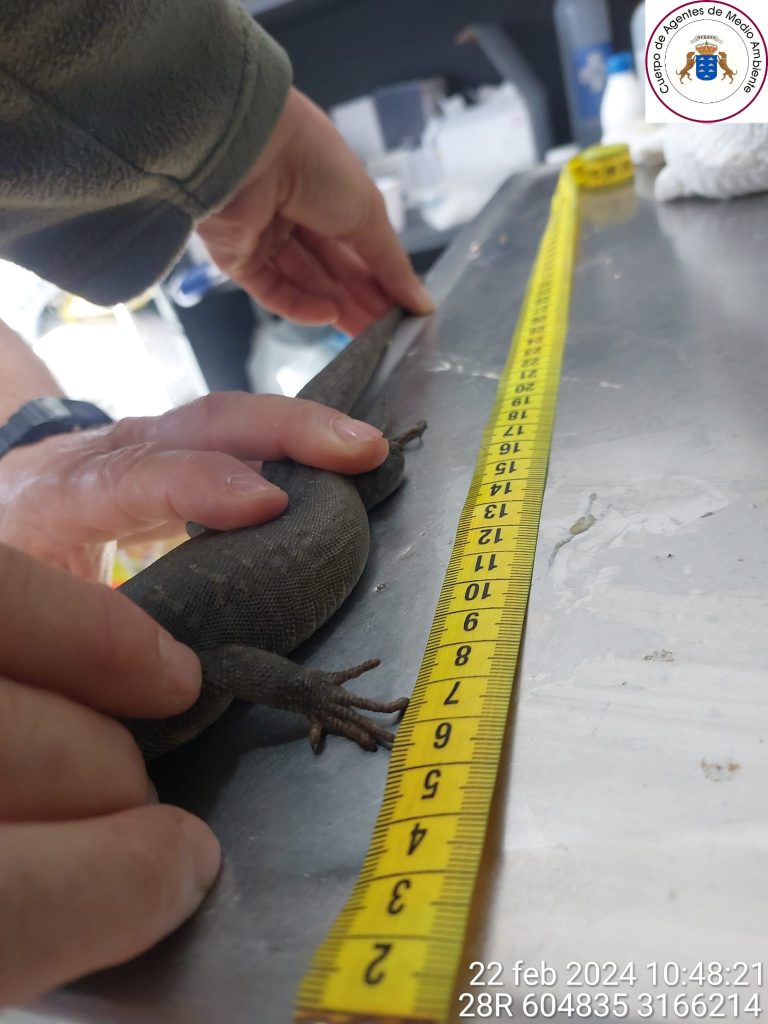
Measuring an impressive 44 centimeters in length and weighing 117 grams, the giant lizard is currently receiving care at La Oliva Biological Station, which is managed by RedEXO through the service concessionaire GESPLAN. Staff are closely monitoring the reptile’s condition and providing the necessary measures to ensure its well-being while evaluating its circumstances. The decision on its future care and protection will be made based on these assessments.
Once the requisite bureaucratic procedures are completed, the plan is to return this majestic creature back to its natural habitat in Gran Canaria, where RedEXO will coordinate this critical operation. The return signifies not only the importance of habitat preservation but also an ongoing commitment to responsible wildlife management.
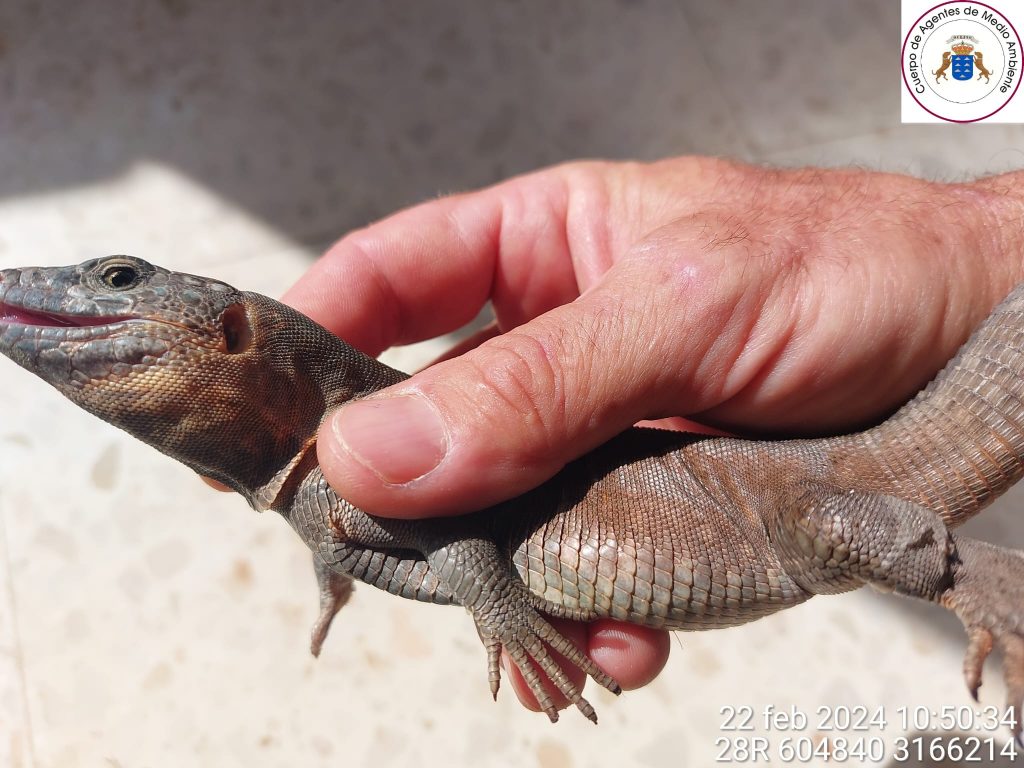
In a statement, Carlos Rodríguez emphasized that the Department of Environment remains committed to preserving native flora and fauna. The collaborative efforts with experts and organizations aim to ensure the conservation of the diverse species inhabiting the Canary Islands. This aligns with broader environmental goals and fosters community engagement in conservation efforts.
The Gran Canaria giant lizard, endemic to its namesake island, primarily thrives on a vegetarian diet, playing a vital role in the ecosystem by aiding in the dispersion of various plant seeds. This function is crucial for maintaining biodiversity and ensuring a balanced environment. Understanding the significance of such species in our ecosystem emphasizes the importance of ongoing conservation work.
The Canary Islands’ network for early warning of invasive exotic species (RedEXOS) actively seeks to locate, identify, control, and eradicate new outbreaks or populations of these species. The goal is clear: preventing their establishment and expansion across the islands. This proactive approach not only protects local ecosystems but also helps educate the public about the importance of biodiversity.
In light of this incident, the Cabildo urges the public to report any sightings of similar species by contacting the emergency number 112. Such vigilance is essential for ongoing conservation efforts and preserving the unique natural heritage of the Canary Islands.