A Historic Agreement to Honor LGBTQ+ Memory in Fuerteventura
A New Museum of Memory
On a notable Monday, the Government of Spain and the Cabildo of Fuerteventura came together to sign a groundbreaking agreement. This partnership aims to finance the initial steps toward transforming the former penitentiary colony of Tefía into a museum dedicated to the memory of the LGBTQ+ community. It’s a significant moment that sheds light on a dark chapter in history, where the Franco regime imprisoned over a hundred individuals merely for their sexual orientation.
Recognition of Historical Injustice
This agreement aligns with the recent publication in the Official State Gazette (BOE), which declares Tefía a site of memory. This recognition not only honors the individuals who suffered in this institution but also serves as a reminder of the systemic repression that existed during the Franco era. The former airfield, now a site of remembrance, represents a painful but necessary part of Spain’s collective history.
The Origins of Tefía’s Dark Legacy
In early 1954, the Francoist authorities repurposed Fuerteventura’s old airfield, turning it into a detention and punishment center for social prisoners and homosexuals under the Law of Vagrants and Idle Persons. This transformation was not merely a logistical adjustment; it was a manifestation of anti-LGBTQ+ sentiments that saw countless individuals severely persecuted.
A Vision for Interpretation
Seventy-one years later, this former colony, which operated as a forced labor camp, aspires to become a center for interpreting what transpired in Fuerteventura during the dictatorship. The plan to establish a museum of memory sparks hope that future generations will learn about the injustices faced by countless individuals.
Initial Funding and Support
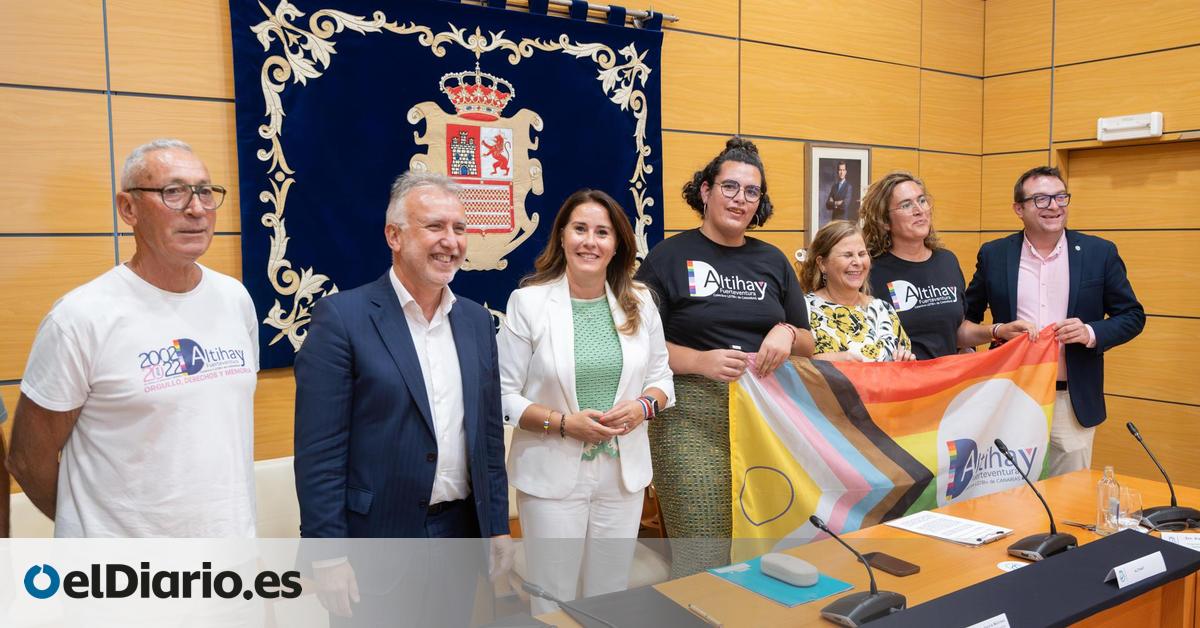
Angel Víctor Torres, the Minister of Democratic Memory, traveled to the island to formalize this agreement with Cabildo President Lola García. The Spanish government is providing an initial subsidy of €100,000 for the first phase of the museum’s development and scientific studies aimed at creating a comprehensive interpretive center.
Torres emphasized that this is the first time the Spanish government has allocated funds directly for local councils and island councils, deviating from the traditional funding mechanisms typically directed toward autonomous communities. This pioneering move is a step towards restoring dignity to victims of historical injustices.
A Broader Commitment
The minister announced that four islands in the Canary archipelago will receive similar funding, with the possibility of additional resources for Tefía’s transformation into a museum. This commitment signals a broader acknowledgment of the need to address the historical injustices faced by the LGBTQ+ community.
Addressing Past Abuses
Torres recalled the humiliating treatment endured by the inmates of the penitentiary colony, who were subjected to “absolutely unacceptable medical tests in a state of law.” He expressed hope that the declaration of Tefía as a Place of Democratic Memory would serve to honor those who were persecuted and ensure that such atrocities never recur.
The Current Climate of Intolerance
In an alarming statement, Torres pointed out that even in the 21st century, one can observe a resurgence of discrimination against LGBTQ+ individuals. He cited examples of ultrarightist governments in Europe attempting to ban Pride parades and cases in Spain where local authorities refuse to fly the rainbow flag. This context underscores the importance of remembering the past as we navigate present challenges.
Educating Future Generations
García emphasized the urgency of educating younger generations about the struggles faced by LGBTQ+ individuals in Spain. Many were forced to live in hiding due to societal stigma and were confined in forced labor camps like Tefía. She reiterated the need to ensure that the sacrifices of those who endured injustice are not forgotten.
The Path Ahead
Following the BOE publication, there will be an opportunity for public contributions, suggestions, and observations. This feedback will culminate in a detailed historical study of Tefía, eventually leading to a formal memorialization of the site. A dedicated recognition plaque will serve as a lasting homage, ensuring that this memory is preserved “as quickly as possible.”
A Collective Effort
Lola García also praised the persistent efforts of the Altihay association, which has actively advocated for Tefía to become a site of LGBTQ+ historical interpretation. The establishment of this museum is seen as essential to ensure that the suffering of individuals detained there is never erased.
A Symbol of Hope and Change
Finally, Carla Soto, the president of Altihay, expressed her profound emotional response to the agreement, viewing it as the realization of a long-held dream and fulfilling a promise made to Octavio García—one of the individuals who suffered in Tefía due to his sexuality. This project not only seeks to memorialize the past but also represents a step toward a future of equality and respect for human rights.
With these developments, Tefía stands on the brink of transformation, marking a significant milestone in Spain’s journey toward acknowledging and rectifying historical injustices against the LGBTQ+ community.