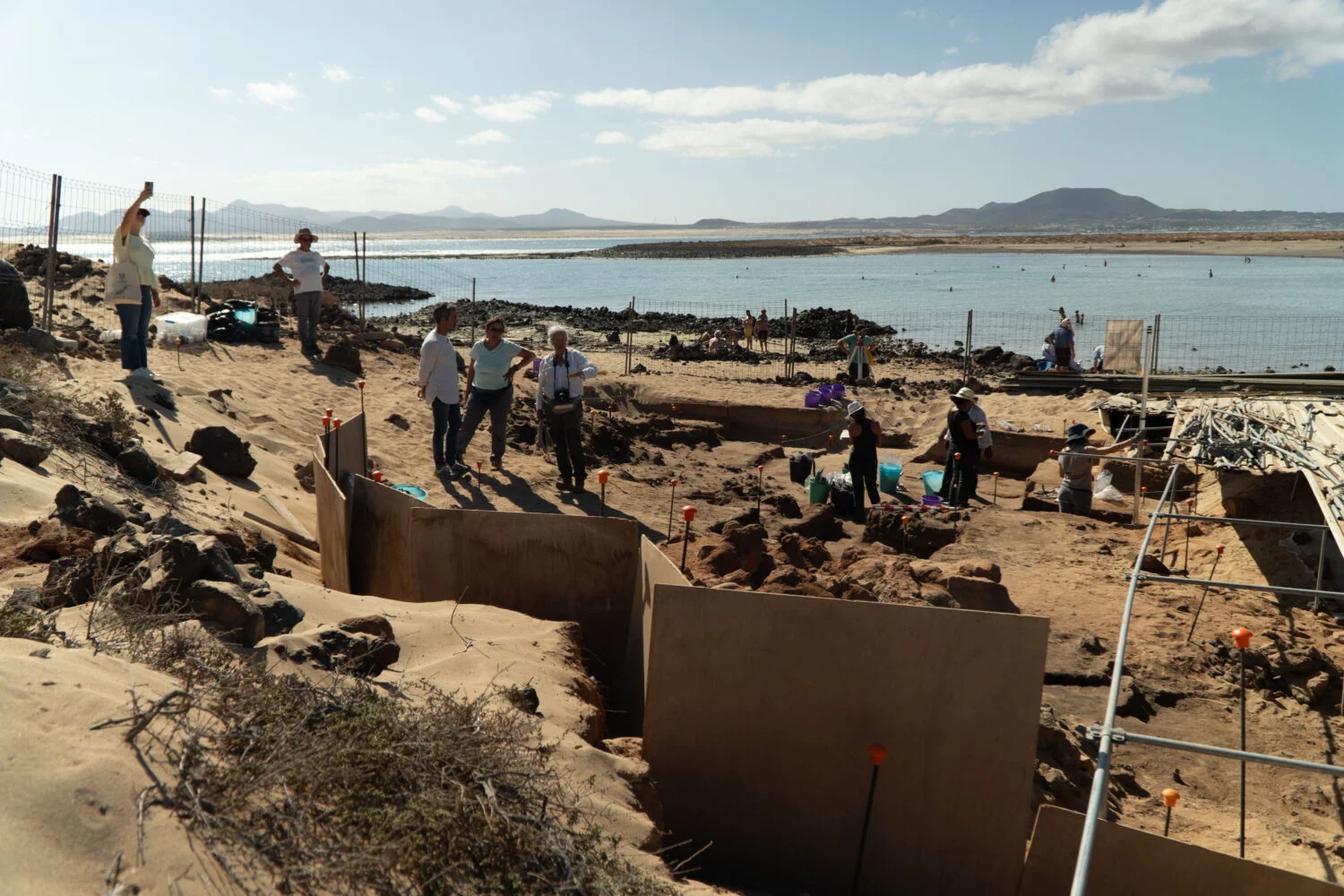
Potential Relocation of Excavations from Lobos to the Northern Coasts of Fuerteventura
Overview of Recent Excavations
The Cabildo de Fuerteventura and the autonomous organization Museums and Centers of the Cabildo of Tenerife have recently completed their tenth campaign of archaeological excavations at Islote de Lobos (located in La Oliva). With a keen eye on Corralejo, researchers are now considering extending their efforts into this northern region of Fuerteventura. The significance of this plan lies in promising findings suggesting that the Roman populations known to have operated a purple dye workshop in Lobos had also likely settled in Corralejo.
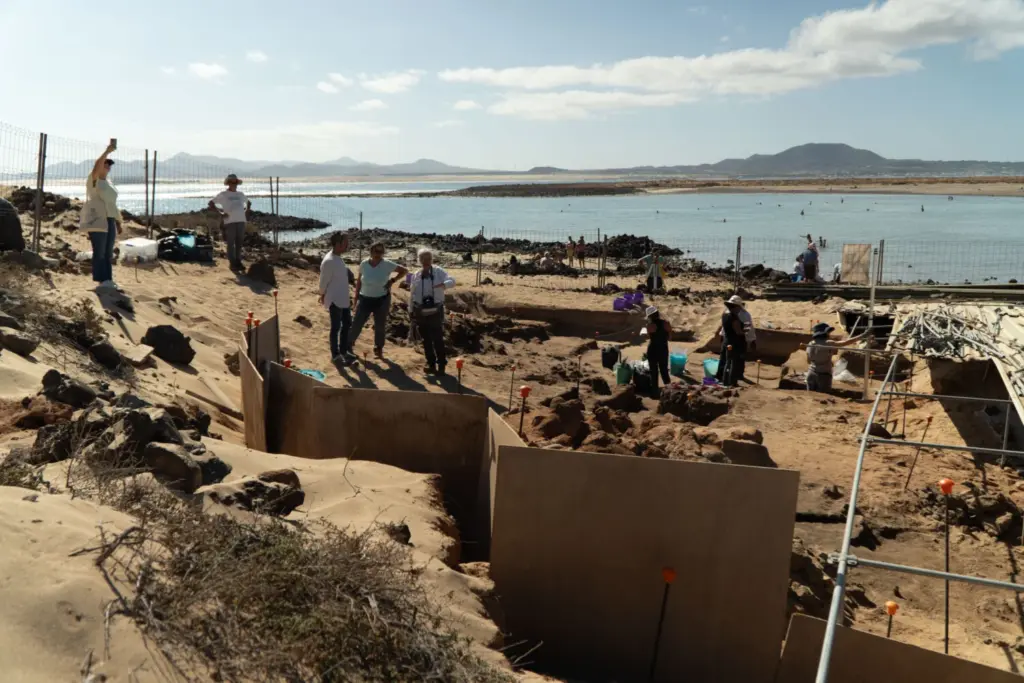
Caption: Potential relocation of the archaeological excavations from Lobos I to the surrounding coasts of Corralejo.
The Tenth Campaign
The current excavation campaign stands out as one of the most important archaeological projects in the Canary Islands. Conducted over a span of three weeks, it was organized through a collaborative effort between the Cabildo and the museum. The initiative aggregated a multidisciplinary team, including researchers, archaeologists, and specialists from various fields, alongside volunteers and enthusiasts from the archaeological museums of both Fuerteventura and Tenerife.
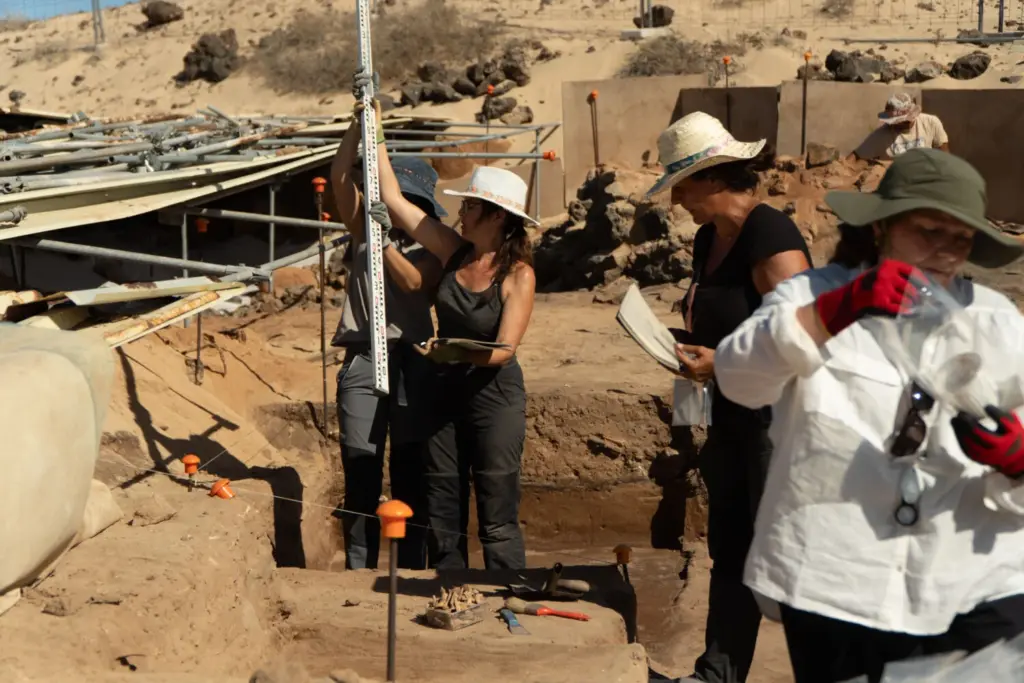
The chief goal of this tenth campaign has been to delineate and define the extent of the Lobos I site, which includes a Roman purple dye workshop. Researchers have also focused on a furnace situated in the northern section of the site, where materials related to purple dye production—alongside various household items such as ceramics and cooking remains—have been consistently documented.
Relocation Considerations to Corralejo
Given recent findings, archaeologists are seriously considering transferring their next set of excavations to the coastal areas of northern Fuerteventura. Initial surveys of the Corralejo beaches have indicated a possible presence of Romanized populations in that region.
Carmen del Arco, a researcher from the Tenerife Archaeological Museum, underscored the unique significance of the potential site: “This location is particularly remarkable because it represents a Getulian purple factory and provides valuable insights into the economic exploitation of marine resources in ancient Canary Islands.”
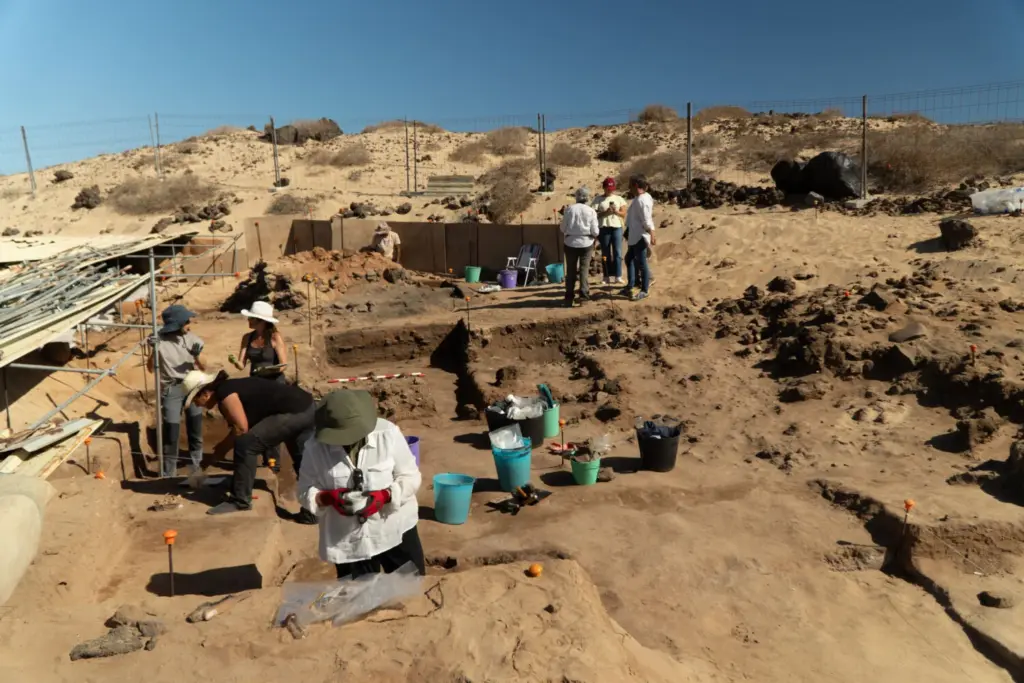
Caption: Findings from the site reconfirm the presence of materials related to the purple dye process and domestic activities.
Institutional Insights and Support
During a recent visit to the excavation site, Rayco León, the Historical Heritage Councillor, remarked that this campaign continues to deliver relevant information about the history of the Canary Islands, contributing significantly to the understanding of the region’s past. He emphasized the ongoing investment in the project, aiming to uncover all pieces of this historical puzzle.
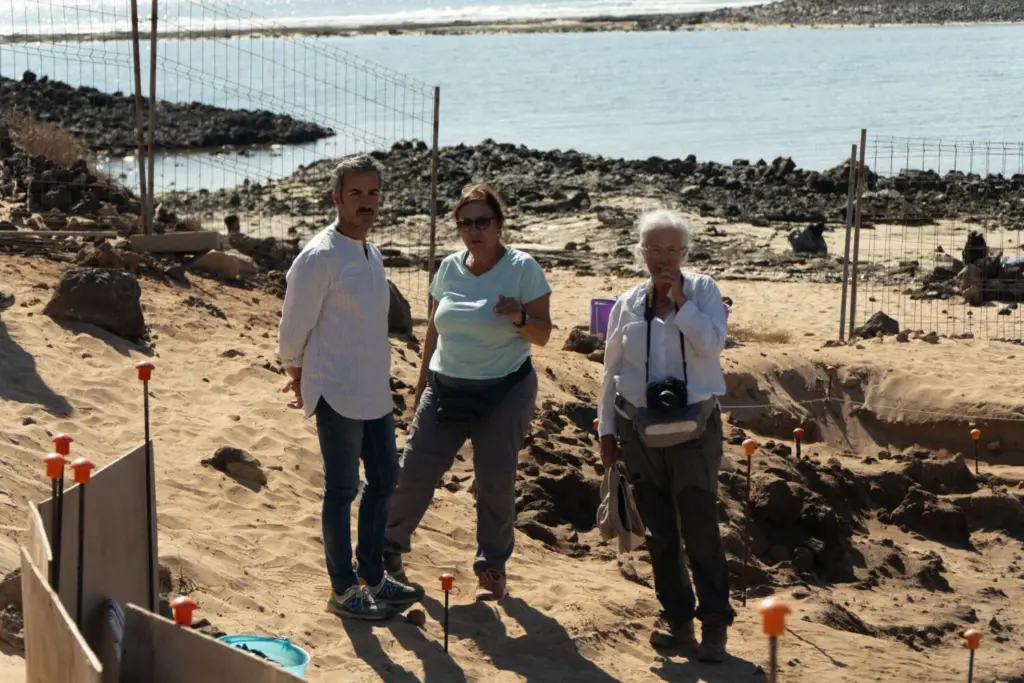
Caption: The Historical Heritage Councillor, Rayco León, highlights the importance of the campaign in revealing the history of the Canary Islands.
The excavation efforts are led by Isidoro Hernández, the director of the Archaeological Museum of Fuerteventura, alongside Mercedes del Arco, a technician and conservator in archaeology from the Tenerife Archaeological Museum, and Carmen del Arco, a professor in Prehistory.
This project has received authorization from the General Directorate of Culture and Cultural Heritage of the Canary Islands and enjoys the support of BINTER Canarias, which is funding the transportation of the team and materials.
Future Prospects
As discussions surrounding the potential relocation to Corralejo continue, researchers are excited about the implications such an initiative could have on our understanding of ancient civilizations in the Canary Islands. The confluence of archaeological discoveries from both Lobos and any future efforts in Corralejo could create a richer narrative of the region’s historical significance.