Exploring Jandía: A Hidden Gem in Southern Fuerteventura
As the dirt track unfolds before us, we leave behind the ticking of the odometer—here, the destination is less significant than the journey. With the radio barely drowning out the interference of the wind, we enter the southern reaches of Fuerteventura. This rugged peninsula, known as Jandía, beckons us to discover its secrets, charmingly described by National Geographic as a “free verse” in the scenery of the Canary Islands. It’s a reminder that sometimes the allure lies more in what’s absent than what’s present.
The Isthmus that Split the Island
Before reaching Jandía, we pass through La Pared, a narrow strip where Fuerteventura seems to pause, contemplating its next step. Just five kilometers wide, this isthmus allows the winds from Cofete to mingle with the waves of the eastern coast. Over the centuries, sand blown in from the Sahara Desert has settled, creating a unique landscape that houses fossilized dunes and remnants of biodiversity that speak to a wetter past. Scattered along this route are sections of the Camino Natural de Fuerteventura, a sprawling network of trails that invites outdoor enthusiasts to explore the island’s untouched beauty.
Morro Jable: The End of the Asphalt Road
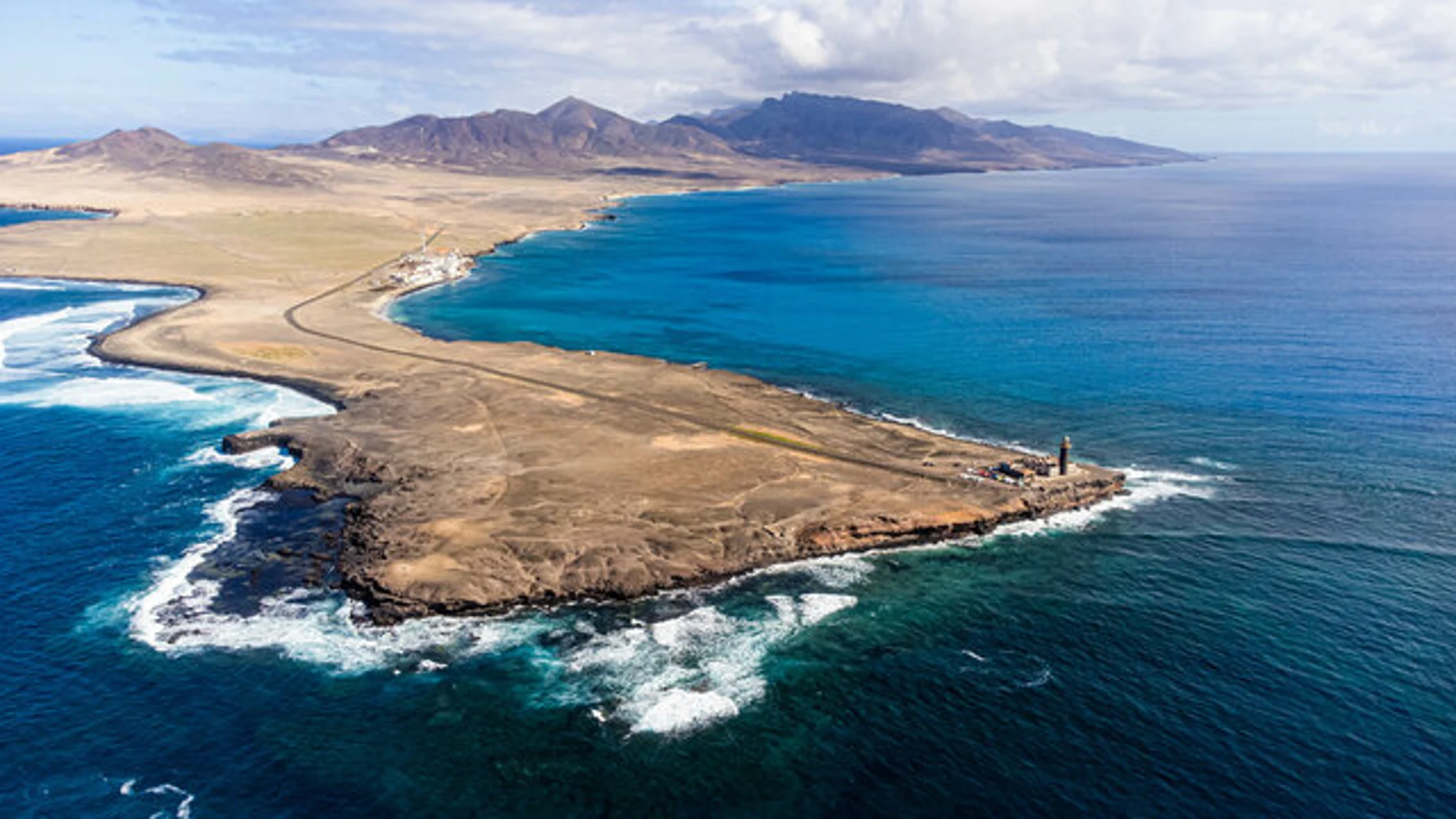
As we approach Morro Jable, the urban confines recede, and the asphalt yields to dusty paths leading us further into nature’s embrace. One route guides us to the Punta Jandía Lighthouse, often referred to as the “end of the world.” Another leads to the stunning Cofete viewpoint, revealing a breathtaking panorama of the twelve-kilometer beachfront nestled between the roaring Atlantic Ocean and a towering volcanic massif that rises dramatically to 800 meters.
Ascending to the Island’s Pinnacle
The journey continues to the Pico de la Zarza, the highest point on Fuerteventura, standing tall at 807 meters. This trail, beginning near Morro Jable, requires only sturdy footwear, ample water, and an early start to dodge the midday heat. As you ascend, the slopes are dotted with cardones—cacti yielding an otherworldly allure. The pristine sands of Cofete unfold below like a seamless tapestry, framing the deep, indigo hues of the Atlantic, which seem to draw you further into their depths.
Unraveling Local Mystique
Alongside its natural treasures, Jandía has intriguing spots like the Playa de los Ojos, famous for its coastal cave that has become a beloved photographic gem, known mostly to those willing to seek it out. Not far lies the enigmatic Villa Winter, with its uniquely shaped roof perched amidst the open expanse of Cofete. The story of Gustav Winter, a German national who lived there, intertwines reality with myth—whispers of alleged Nazi safe havens during World War II linger in the air like the sea breeze.
Preserving Jandía’s Heritage
Most of this exquisite peninsula is safeguarded by the Jandía Natural Park, established in 1987 and later expanded to ensure the protection of its unique habitats and endemic species. This conservation effort emphasizes the importance of preserving vital ecosystems, particularly as Cofete and Barlovento serve as crucial nesting sites for the protected loggerhead sea turtle.
In this hidden corner of the Canary Islands, every turn of the landscape tells a story—a narrative written by time and the elemental forces of nature, awaiting those who seek to uncover it.