The Musical Spirit of San Lorenzo de El Escorial
In the picturesque town of San Lorenzo de El Escorial, located northwest of Madrid, a unique blend of history and culture thrives. Here, amidst the grandeur of the monumental complex built by King Philip II, a group of university students is earning their pocket money in an unconventional way. Gonzalo and his friends form a traditional Spanish band, serenading diners in local restaurants, bringing a slice of musical joy to the historic ambiance.
A Historical Backdrop
San Lorenzo de El Escorial is not just any town; it is steeped in history. The town is home to a massive complex that includes the Basilica of St. Lawrence, a royal palace, and an Augustinian monastery. This architectural marvel, constructed in the 16th century, symbolizes the powerful alliance between the church and the monarchy. King Philip II, who ruled from 1556 to 1598, oversaw the creation of this Renaissance masterpiece, which served as a royal mausoleum and a center of Catholic faith.
A Spontaneous Performance
On a recent evening, Gonzalo and his band found themselves in a local restaurant, where they spontaneously performed for a group of journalists, including representatives from OSV News. The atmosphere was lively, filled with the sounds of traditional Spanish music and the clinking of glasses. When asked about his feelings ahead of the upcoming apostolic journey to Spain, Gonzalo expressed his excitement about the visit of Pope Leo XIV, reflecting a sense of hope and enthusiasm among the youth.
A Shift in Religious Engagement
Gonzalo’s enthusiasm is emblematic of a broader shift occurring within the Catholic Church in Spain. Augustinian Fr. Alberto Sánchez Sánchez, the top organist in San Lorenzo de El Escorial, notes that there is a noticeable change in how young people engage with their faith. “More young people are participating in religious celebrations and are less afraid to identify as Catholics,” he remarked. This newfound openness marks a significant departure from previous years when many young Spaniards felt hesitant to express their beliefs.
Declining Numbers, Growing Consciousness
As Pope Leo XIV prepares for his visit from June 6 to 12, Church leaders acknowledge that the Catholic community in Spain is at a crossroads. While the number of individuals identifying as Catholic has declined sharply—15.8% from 2011 to 2026—there are signs of renewed interest among younger generations. A study by Statista highlights this trend, showing a significant drop in baptisms and active priests over the years. Yet, the Church has expanded its charitable efforts, doubling the number of social assistance centers to over 9,000, demonstrating a commitment to serving those in need.
A Church at a Crossroads
Archbishop Luis Argüello of Valladolid describes the Spanish Church as being “caught at a crossroads.” While it has faced challenges in adapting to a new social and political landscape, there is a palpable desire among younger generations to reconnect with their faith. The upcoming papal visit is seen as an opportunity to encourage this missionary path, fostering a renewed sense of community and purpose.
A Historic Papal Visit
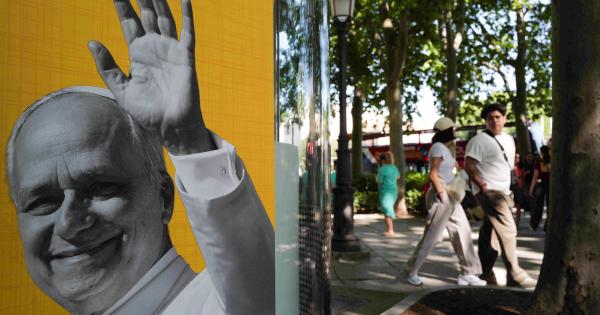
Pope Leo XIV’s visit to Spain is particularly significant, marking the first major European trip of his papacy. Unlike his predecessors, who focused on traditional Catholic strongholds, Leo has a unique perspective shaped by his extensive missionary experience. His familiarity with Spain, having visited nearly 50 times, positions him to engage with the evolving landscape of Spanish Catholicism.
Cultural Shifts in Faith
The relationship between Spaniards and their faith has transformed dramatically since the 1980s. Narciso Michavila, president of GAD3, emphasizes that faith is now more of a personal choice rather than an inherited obligation. Young people are increasingly exploring their spirituality, seeking answers to their doubts and concerns. This shift is evident in the rise of new communities, liturgical interest, and public expressions of faith.
Signs of Revival
Yago de la Cierva, the general coordinator for Leo’s trip, notes that while the Church faces challenges, there are also signs of revival. Many young people are drawn to the Church due to a search for meaning in their lives. Movements like Hakuna, known for their beautiful musical performances, are attracting attention and participation. The legacy of World Youth Day 2011 continues to inspire a new generation, and Leo’s visit is seen as a chance to reignite that passion.
Cultural Catholicism and Public Expression
Cultural Catholicism remains strong in Spain, with civil holidays and traditions that bring communities together. The upcoming Corpus Christi procession, where Leo will lead a gathering of 1.5 million faithful, exemplifies this vibrant public expression of faith. Such events serve as a reminder of the Church’s presence in society and its role in fostering community.
The Need for a Stronger Voice
The Church in Spain is eager for Catholics to be more visible in public life. Alberto Ruiz-Gallardón, a former mayor of Madrid, articulates the need for a spiritual rebellion among young people facing ideological challenges. He believes that Leo’s visit could inspire Catholics to boldly proclaim their faith and engage in societal discussions.
Building Bridges for the Common Good
De la Cierva envisions the pope as a “pontifex,” or bridge builder, encouraging collaboration among various sectors of society. The Church’s call for a stronger voice in public discourse is crucial, especially in light of contemporary challenges. As the Spanish government navigates complex social issues, the Church seeks to advocate for the common good and support the moral fabric of society.
A Flame of Hope
As the papal visit approaches, the flame of hope ignited by young musicians like Gonzalo and his friends continues to burn brightly. Their music not only entertains but also serves as a reminder of the enduring spirit of faith and community in Spain. The upcoming events promise to be a significant moment for the Church, one that could inspire a new generation to embrace their beliefs and actively participate in the life of the Church.