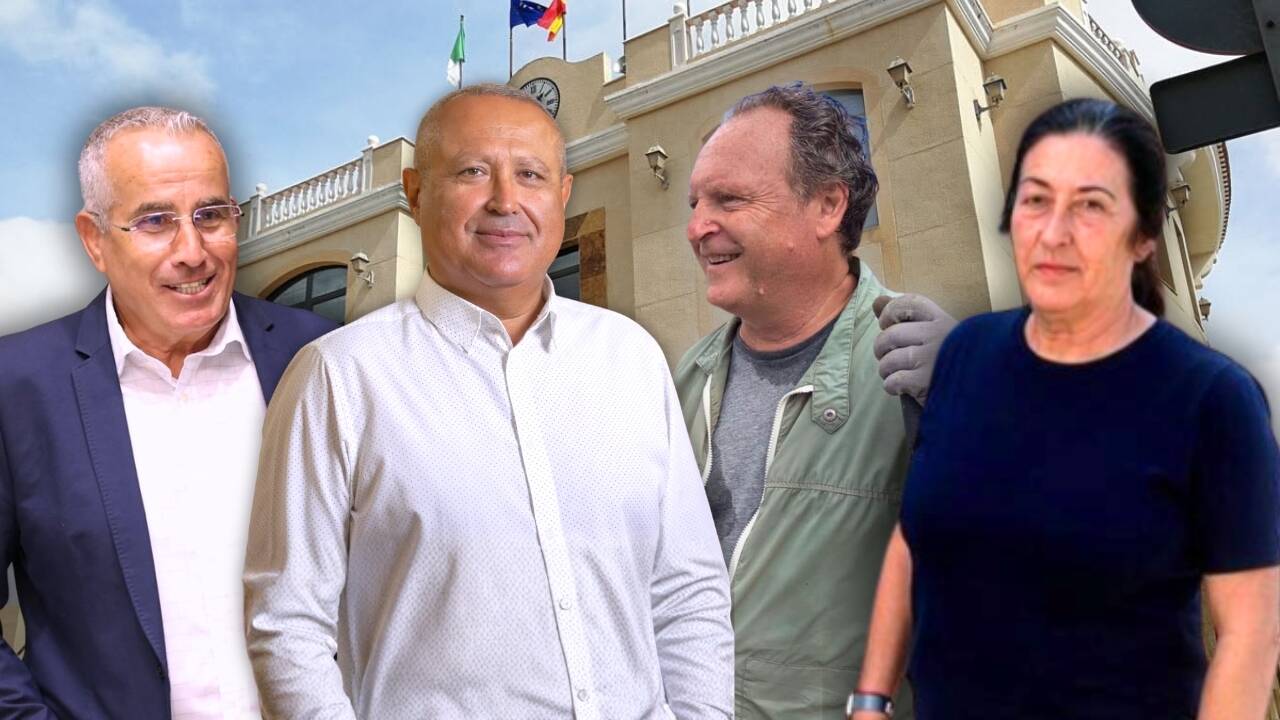
Political Shake-Up in Antigua: The Rise of Juan Cabrera
In a significant turn of events within Fuerteventura’s local politics, a coalition comprising AMF (Alternativa por Antigua y Fuerteventura), Contigo, Coalición Canaria, and the Partido Popular has taken steps to unseat the current mayor, Matías Peña of AlxAn. This coalition has proposed a motion of censure that could potentially elevate Juan Cabrera, currently serving as the councilor for Parks and Gardens, to the mayoral seat.
The Context of the Motion
This political maneuver comes on the heels of ongoing dissatisfaction with Peña’s leadership over the past two legislative terms. Critics have described his management as lacking planning and characterized his approach as unipersonal, suggesting a detrimental impact on the quality of public services. On June 19, a plenary session will convene to discuss this motion, which, if successful, will lead to a significant shift in the municipal landscape of Antigua.
The Coalition’s Reasons for Change
During a recent press conference, representatives from the coalition laid out their grievances concerning the incumbent mayor’s handling of municipal affairs. They highlighted deteriorating conditions in areas such as public safety, cleanliness, and infrastructure. Coalición Canaria emphasized their aim to “end the widespread neglect” that has plagued the municipality.
A New Era: Collaboration and Dialogue
The coalition members are hopeful that the proposed motion marks the dawn of a new chapter in local governance—one built on dialogue, planning, and teamwork. David Alberto Guerra, the spokesperson for AM-CC in Antigua, stressed that the agreement arose not from power-sharing arrangements but from a collective desire to improve the municipality’s situation. The necessity of such an alliance became particularly apparent when the councillors from Coalición Canaria departed the governing coalition in February, citing ongoing disrespect and institutional disloyalty from Peña.
Critiques from the Opposition
The Partido Popular has also voiced its support for the censure, arguing that there has been a pressing need for an urgent change in governance. Having remained in opposition despite numerous invitations to partake in the government, the PP states that the decision to align with the motion stems from a sense of responsibility towards their constituents. They have pledged to address long-standing issues raised by citizens about safety, cleanliness, and municipal service quality.
AMF’s Vision for Antigua
Juan Nicolás Cabrera, the AMF secretary, expressed the challenges of orchestrating a unified front among four previously distinct political forces. “Making such an agreement in a municipality like Antigua isn’t easy,” he stated, highlighting the need for concerted efforts to effect change. He believes that the citizens of Antigua genuinely deserve this shift in governance, which aims to improve the municipality’s dire situation.
A Focus on Coordination and Functionality
Both Mario Cabrera of AM-CC and Giuseppe Signorino of Contigo echoed similar sentiments regarding the necessity of collaboration amongst councilors. They formulated their arguments around the urgent need to address specific sectors such as tourism—particularly the conditions of the Castillo, a significant local tourist attraction.
Signorino articulated, “The economic engine of the municipality lies in tourism, and we must enhance it.” He emphasized prioritizing essential areas like public safety and the maintenance of public spaces, arguing that while the coastline deserves attention, the needs of all communities within Antigua must be recognized.
The Road Ahead: Uncertain Future
As the coalition moves forward with its plans, the focus is not only on the outcome of the vote on June 19 but also on what comes after—how to distribute roles and responsibilities in the new governance structure remains a pressing question. Responses from Matías Peña, the PSOE, and the broader political community remain awaited, which will provide a clearer picture of Antigua’s political landscape moving forward.
This complex discussion reflects not just the immediate political maneuvers at play but also speaks to deeper issues of leadership, community priorities, and the capabilities of local government to address critical needs in the region.
![[gpt_title] Rewrite this article’s title in the tone of *Fuerteventura Times* — calm, intelligent, and curiosity-driven. Keep it under 60 characters. Focus on themes like consciousness, healing, creativity, or neuroscience — avoid hype or clickbait. Make it sound soulful yet journalistic. Examples: “The Science of Stillness,” “Microdosing for Meaning,” “A New Age of Conscious Healing.” [/gpt_title]](https://www.arabnews.pk/sites/default/files/styles/660x371_watermarkpakistan/public/main-image/2026/06/07/4719374-144375349.jpg?itok=rDmy3lc9 "[gpt_title] Rewrite this article’s title in the tone of *Fuerteventura Times* — calm, intelligent, and curiosity-driven. Keep it under 60 characters. Focus on themes like consciousness, healing, creativity, or neuroscience — avoid hype or clickbait. Make it sound soulful yet journalistic. Examples: “The Science of Stillness,” “Microdosing for Meaning,” “A New Age of Conscious Healing.” [/gpt_title]")

