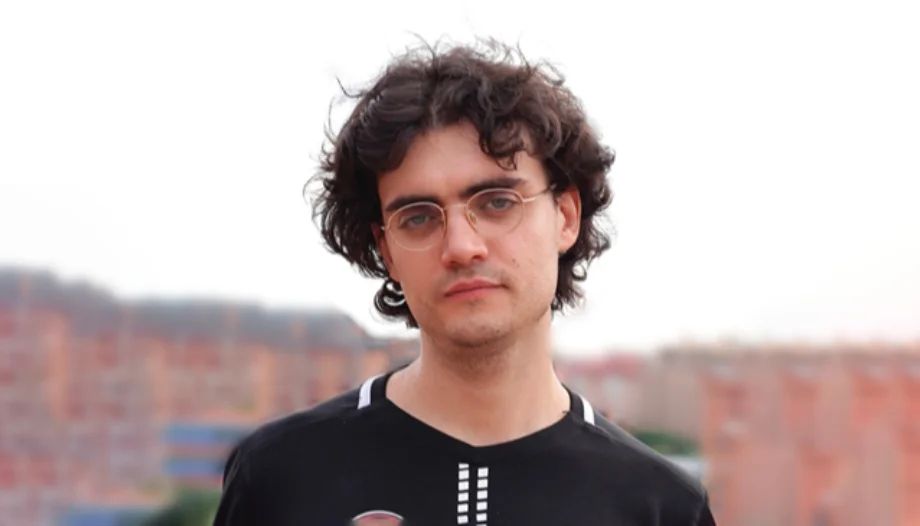
The Intellectual Journey of Ernesto Castro Córdoba
Ernesto Castro Córdoba, born in Madrid in 1990, has emerged as a significant figure in contemporary philosophy, essay writing, and popular science within the Spanish-speaking intellectual landscape. His unique blend of rigorous academic thought and engagement with digital culture has made him a standout voice among his millennial peers.
Early Life and Education
Growing up in a household steeped in intellectual discourse, Ernesto is the son of the esteemed art critic and philosopher Fernando Castro Flórez. This environment undoubtedly shaped his academic pursuits. He earned both his bachelor’s and doctoral degrees in philosophy from the Complutense University of Madrid. His teaching career has taken him to various institutions, including the University of Zaragoza and the Autonomous University of Madrid, where he currently serves as a professor of Aesthetics.
A New Kind of Philosopher
What sets Ernesto apart is his remarkable ability to navigate the intersection of high academic culture and the mass phenomena of the digital age. He first gained widespread attention at the age of 25 with his YouTube channel, where he shared university lectures and analyses of philosophical texts. His approach was refreshingly straightforward—no flashy editing or background music, just a young man thoughtfully reflecting on complex ideas for hours at a time. With over 300 videos and 1,000 hours of content, he created a space for deep intellectual engagement that resonated with many.
Understanding Over Criticism
Ernesto’s channel distinguished itself from conventional media by prioritizing understanding over mere criticism. In an era where quick judgments often masquerade as intelligence, his commitment to engaging deeply with philosophical texts—regardless of their ideological leanings—was a breath of fresh air. He approached even the most revered Christian thinkers with respect and rigor, showcasing a willingness to explore ideas that many in his ideological camp might dismiss.
Radical Convictions
Throughout his career, Ernesto has been characterized by his firm and radical convictions. He has not hesitated to critique the left, which he passionately supports, nor has he shied away from calling out the mediocrity that he perceives in Spanish universities. His philosophy is not just theoretical; it is rooted in real-life experimentation. Known for his eclectic style—often sporting brightly dyed hair or an unconventional haircut—he embodies the spirit of a thinker unafraid to stand out.
When he began teaching at the University of Zaragoza, he expressed frustration at the monotony of teaching the same courses repeatedly. His argument was simple yet compelling: his previous lectures were available online, and he preferred to explore new ideas rather than rehash old ones. This desire for intellectual growth and exploration sets him apart from many of his peers.
A Spiritual Awakening
Recently, Ernesto’s life took a significant turn when he was baptized and received his First Communion, marking his conversion to Christianity. The details surrounding this transformation are complex and multifaceted. In interviews and podcasts, he has hinted at an intellectual journey that culminated in this spiritual awakening, possibly catalyzed by a personal crisis and a pilgrimage suggested by his wife.
His conversion reflects a deep engagement with the philosophical questions he has grappled with throughout his life. He now approaches Christian texts with the same seriousness he once reserved for Aristotle and Marx, demonstrating a willingness to follow ideas wherever they may lead.
The Papal Chronicle: In Theos
In a recent piece published in Spanish, Ernesto chronicled Pope Leo XIV’s visit to Spain, showcasing his ability to blend enthusiasm with critical insight. His writing captures the essence of his journey, beginning with a striking image that encapsulates his transformation: “I don’t know about God, but if Nietzsche weren’t dead, that postmodern performance would have finished him off.”
His account is filled with moments of reflection, humor, and a sense of irony that reveals his deep understanding of the complexities of faith and culture. He describes his experiences during the Pope’s visit with a mix of reverence and critical detachment, illustrating the tension between his past and present beliefs.
The Evolution of Thought
Ernesto’s philosophical journey can be divided into distinct phases. The first, from 2011 to 2015, saw him emerge as a staunch opponent of relativism, advocating for truth and political commitment amid the socioeconomic turmoil of the 15M movement. His work, Against Postmodernism, reflects this commitment.
The second phase, from 2016 to 2019, marked a shift toward applying classical philosophical tools to analyze mass culture, culminating in his book Trap: A Millennial Philosophy for the Crisis in Spain. This work resonated with a generation grappling with cultural divides.
The third phase, spanning 2020 to 2021, led him to explore ontology and speculative realism, resulting in Post-Continental Realism, a seminal text in Spanish philosophy that critiques both analytical idealism and continental deconstructionism.
A New Chapter
Now, Ernesto finds himself in a fourth phase—one that is perhaps the most radical of all. His conversion to Christianity represents a profound shift in his intellectual and spiritual life. While he acknowledges that he has much to learn, his commitment to exploring faith with the same rigor he applied to philosophy is promising.
As he continues to navigate this new terrain, Ernesto Castro Córdoba stands as a compelling figure in contemporary thought, embodying the complexities of faith, philosophy, and cultural critique. His journey is a testament to the power of ideas and the transformative potential of intellectual exploration.