Smart Data Canarias: A Game Changer for the Tourism Sector in the Canary Islands
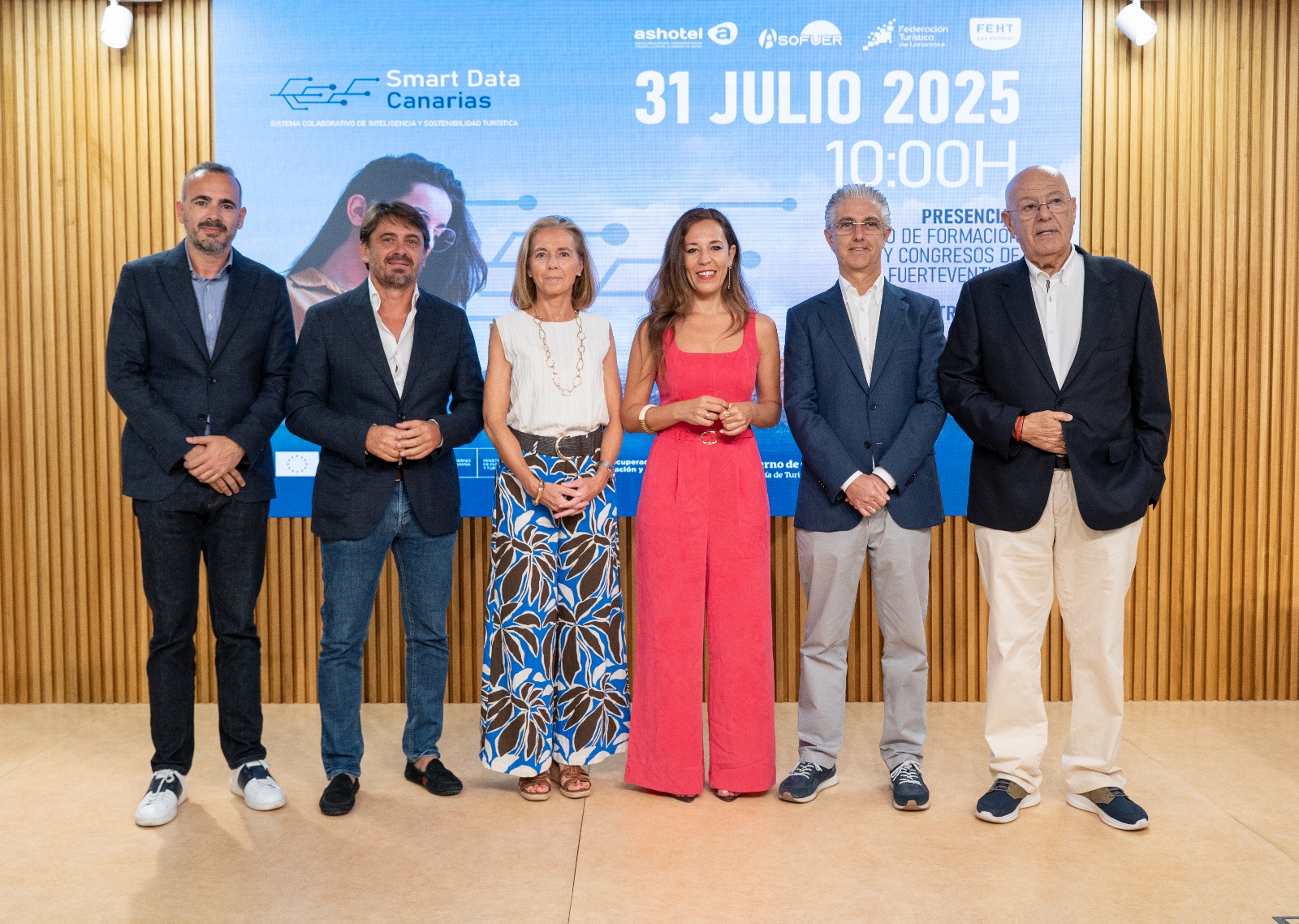
The tourism landscape in the Canary Islands is set to undergo a significant transformation, thanks to the innovative initiative called Smart Data Canarias. Launched by key tourism associations including Asofuer, the Federation of Tourist Entrepreneurs of Lanzarote (FTL), the Federation of Hospitality and Tourism Entrepreneurs of Las Palmas (FEHT), and Ashotel, this project was unveiled in Puerto del Rosario on a lively morning filled with discussions led by prominent figures in the industry.
Response to Industry Needs
At the helm of this ambitious project are notable speakers such as Antonio Hormiga, president of Asofuer; Jorge Marichal, president of Ashotel; Susana Pérez, president of FTL; and Fernando Estany, vice president of FEHT. The gathering also included Jéssica de León, the counselor of Tourism and Employment for the Government of the Canary Islands, who elaborated on the project’s vital role in tackling evolving tourism demands in a competitive market.
“Businesses today require precise information to make informed decisions,” Hormiga emphasized. “If you can’t measure it, you can’t improve it.” This philosophy underpins Smart Data Canarias, which addresses a crucial structural need: creating a reliable, connected, and useful database that empowers each establishment to benchmark itself and optimize performance.
A Focus on Sustainable Development
Smart Data Canarias marks a leap forward in tourism intelligence. The platform focuses on capturing, structuring, and analyzing various data types—operational, environmental, and customer behavioral—intended to optimize processes, minimize impacts, and facilitate data-driven decision-making. By emphasizing responsible tourism, this project reinforces the commitment to a more conscious approach toward environmental and social sustainability.
The unveiling took place at the Palacio de Congresos de Fuerteventura during a technical workshop that brought together hoteliers, data analytics experts, public officials, and tech companies. Together, they explored the digital transformation necessary for enhancing efficiency and resilience within the tourism ecosystem.
Ethical Data Management
A standout feature of Smart Data Canarias is its commitment to ethical and sovereign management of tourism data. Unlike many commercial platforms where access is often dictated by market interests, this initiative is crafted specifically for the Canary Islands’ tourism sector. It is safeguarded by the governing associations to ensure responsible use that prioritizes collective interests over profit motives.
This initiative comprises three primary strategic objectives:
- Enhancing Digital Maturity: It progresses the sector’s digital capabilities by incorporating advanced data analysis and visualization techniques.
- Facilitating Innovation: The framework paves the way for new solutions in sustainability, efficiency, and customer experience.
- Valuing Data Sovereignty: By placing tourism associations in charge of data stewardship, the project guarantees that information is utilized responsibly and for the collective benefit rather than for commercial gain.
Collaborative Efforts for Greater Impact
Jorge Marichal highlighted the importance of collaboration in maximizing the impact of Smart Data Canarias, stating, “This project is a technological milestone for the tourism sector.” He emphasized that successful collaboration between public and private sectors begins with strengthened intra-sector relationships.
Susana Pérez echoed this sentiment, stating, “This is a firm step towards more intelligent, efficient, and sustainable tourism management in the islands.” The emphasis on real-time data-based decision-making is considered essential for maintaining competitiveness in a challenging environment.
Fernando Estany considered the initiative a “unique opportunity” for associations to access aggregated data, providing a nuanced view of tourist patterns, strengths, and weaknesses within the destination. He stressed that the future of the tourism model hinges on efficiency and ecological respect.
Financial Investment and Future Outlook
The importance of Smart Data Canarias is further underscored by the involvement of Jéssica de León, who disclosed that the project is backed by a €600,000 investment from the Government of Canarias. This funding, part of a broader strategy leveraging Next Generation EU resources, is aimed at refining how the industry navigates future challenges.
De León accentuated the rarity of companies sharing such sensitive data, characterizing this project as a significant accomplishment for the sector. Furthermore, she revealed that the initiative is designed to be scalable, paving the way for the training of local professionals in artificial intelligence applications through collaborations with educational institutions.
Technical Foundations of the Data Platform
To provide a clearer understanding of the technical aspects of the project, Juan Pablo González, Ashotel’s manager, explained how the platform operates. Smart Data Canarias will facilitate data capture, processing, analysis, and utilization across various lodging establishments via connections to management tools and other data sources. It comprises four independent cloud data warehouses managed by each patron, enabling future interconnection of information streams.
González highlighted that by ensuring the reliability of the data they collect, the platform will enable the creation of a dashboard of competitiveness and sustainability indicators. This feature will allow participating hotels to benchmark against a chosen set of peers anonymously.
Insights from Industry Experts
The technical workshop further included insights from experts across various domains regarding data security and tourism management. Contributions came from figures such as Daiana Lamela, legal partner at i+D Abogados; Jorge Núñez, CEO of Adquiver; Antonio Álvarez, director at Evosocial Soft; and Mayte García, executive director of Hosbec, who shared experiences from a similar initiative in the Valencian Community.
These discussions underscored the collaborative nature of the project, emphasizing that Smart Data Canarias represents not only a tool for data analysis but a holistic approach to advancing the entire tourism sector in the Canary Islands. With its launch, the stage is now set for a more resilient, efficient, and sustainable future in the region’s tourism landscape.