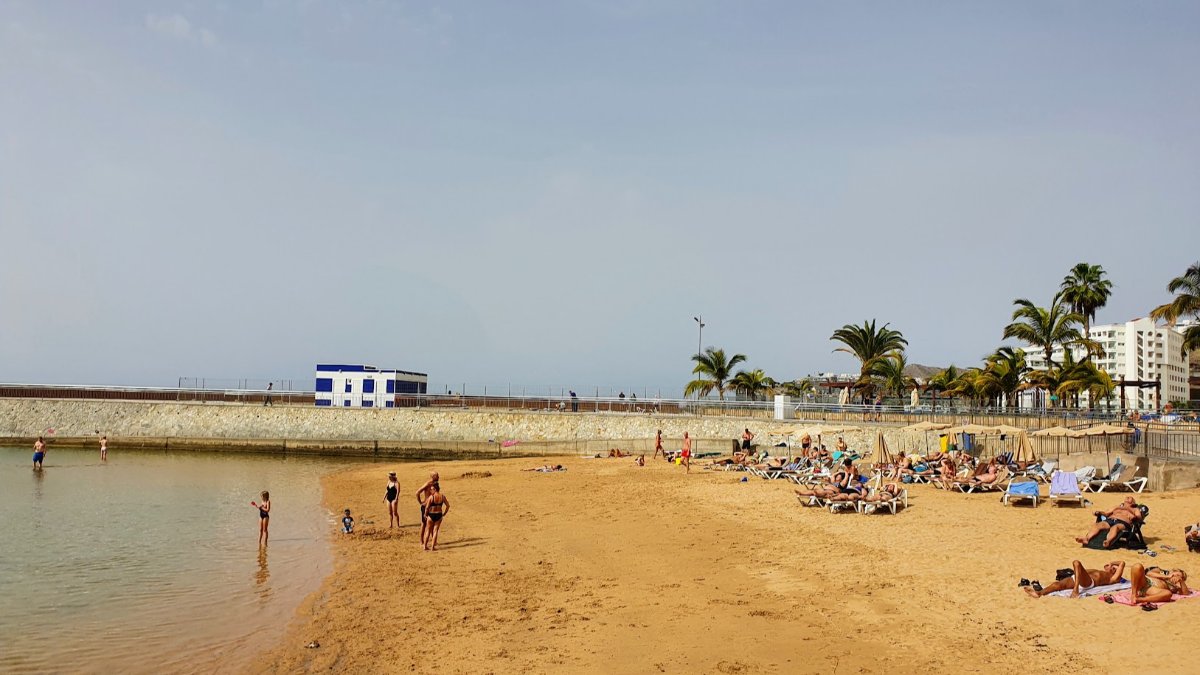
The Canary Islands are currently grappling with an intense weather event characterized by extreme heat, Saharan dust, strong winds, and hazardous sea conditions. This combination has led to multiple alerts across the archipelago, making it a critical time for residents and visitors alike.
The Canary Islands Government, through its Directorate General for Emergencies, has issued a maximum temperature alert for Gran Canaria. In some areas, temperatures are expected to soar as high as 40°C (104°F). This alarming forecast has prompted heightened awareness and precautionary measures across the region.
While Gran Canaria is facing the brunt of the heat, the rest of the archipelago is under a pre-alert for high temperatures. Wildfire warnings have also been activated on five islands due to exceptionally dry conditions, with relative humidity levels plummeting below 30%. This combination of factors creates a precarious situation, particularly for the natural environment.
According to Spain’s State Meteorological Agency (Aemet), Gran Canaria is under an orange weather warning from 11:00 a.m. to 7:59 p.m. on Tuesday. The highest temperatures are anticipated in inland areas facing south and west, the southeastern coastline, and the Tejeda basin, where daytime highs are expected to range between 37°C and 40°C. Nighttime temperatures, unfortunately, will offer little respite, remaining between 25°C and 27°C in the hottest parts of the island.
Other islands are not spared from the heat either. Tenerife, La Palma, La Gomera, and El Hierro are under yellow weather warnings for heat. In Tenerife, temperatures could climb to 35°C, particularly in eastern, southern, western, and inland areas. Meanwhile, La Gomera, El Hierro, and parts of western inland La Palma are expected to see highs around 34°C.
The extreme weather has prompted authorities to activate the Canary Islands’ Special Civil Protection Plan for Forest Fires (INFOCA). Wildfire alerts are now in effect across El Hierro, La Palma, La Gomera, Tenerife, and Gran Canaria. Enhanced monitoring and restrictions are in place in mountainous areas above 600 meters on northern slopes and above 400 meters on southern slopes, as these regions are particularly vulnerable.
Officials have raised concerns that the wildfire threat is being intensified by a low thermal inversion between 300 and 500 meters above sea level. This phenomenon traps hot, dry air over mid-altitude and high-elevation areas, driving humidity levels down to critical lows. Such conditions are a recipe for disaster, especially in a region known for its natural beauty.
Adding to the hazardous conditions, a dense calima—a dust haze caused by Saharan sand—continues to affect higher elevations, particularly on the southern sides of the islands. This not only reduces visibility but also worsens air quality, posing health risks to residents and visitors alike.
Strong northeast winds are also expected throughout the day. Aemet has issued yellow wind warnings for Lanzarote, La Gomera, and Gran Canaria, where gusts could reach 70 km/h (43 mph). However, localized gusts of up to 90 km/h (56 mph) are possible in southeastern and western low-lying areas of the larger islands, as well as northwestern La Palma, northwestern Tenerife, and southern Fuerteventura.
At sea, the Directorate General for Emergencies has maintained a coastal pre-alert due to rough marine conditions. Northeast winds of 50 to 61 km/h (31 to 38 mph) are expected to generate rough seas, accompanied by northerly swells of one to two meters along exposed coastlines. This makes maritime activities particularly risky during this period.
Despite the severe conditions, authorities are optimistic that the weather event will be short-lived. Forecasts indicate that temperatures should begin to ease from Wednesday, July 1, while wildfire conditions are expected to improve significantly by Thursday, July 2. This offers a glimmer of hope for both residents and the natural environment of the Canary Islands.