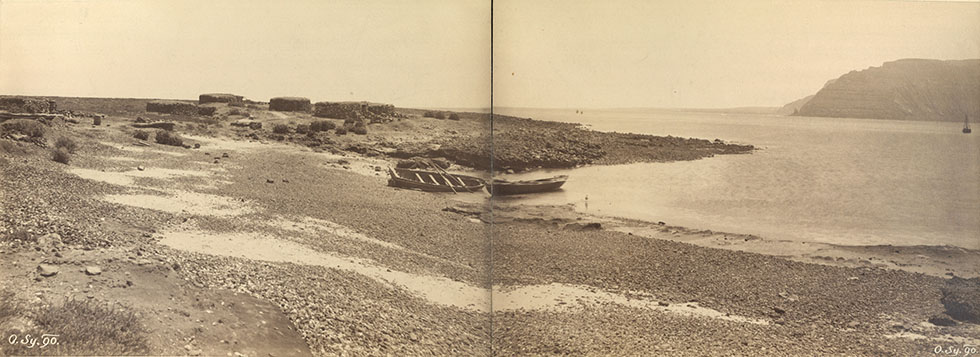
The Enlightenment Era and the Discovery of the Canary Islands
With the emergence of the Enlightenment and the scientific project that began in the 18th century, a significant wave of scholars and travelers from Europe embarked on journeys to explore the natural wonders of lands beyond the continent. Among various destinations, the Canary Islands emerged as a favored locale, not only because they were relatively close to Europe but also due to their vibrant biodiversity, unique geology, and societies that were vastly different from the urban norms of places like London, Paris, or Berlin.
19th Century Travelers: An Influx of Curiosity
In the 19th century, advancements in transportation solidified a trend of illustrious visitors—geologists, botanists, physicists, as well as curious travelers and chroniclers. Among them was the famous English traveler Olivia Stone. These explorers set sail from Europe with a mission: to study and share the environmental and cultural heritage of the Canary Islands. Equipped with the latest photographic technology or traditional sketchbooks, they documented their findings, which became a rich literary and iconographic heritage still revealing surprises today. A notable recent addition is the book 1890: Lanzarote y los islotes. Lanzarote und die islotes by Oscar Simony, published by Ediciones Remotas.
Famous Voices of Discovery
The testimonies of 18th-century Scottish explorer George Glas, the awe expressed by English naturalist Charles Darwin upon seeing Mount Teide, the historical inquiries by French anthropologist René Vernau, and the artistic impressions captured by the sisters Ella and Florence Du Cane are just a few examples of the wealth of scientific discoveries and narratives that this wave of exploration produced. Many more accounts await rediscovery, adding depth to our understanding of this vibrant period.
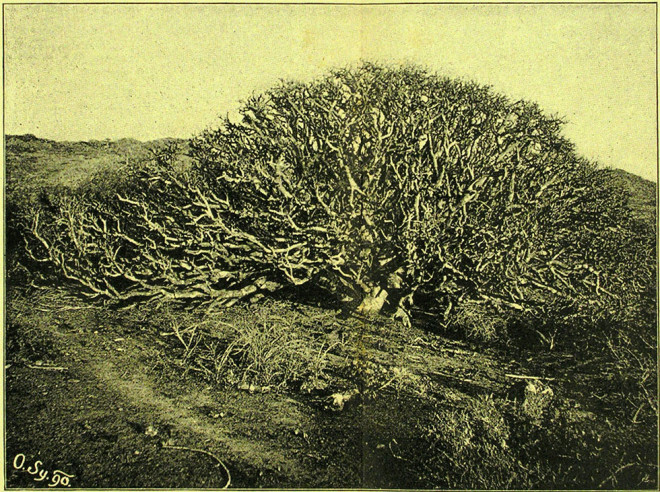
Image caption: Tabaiba dulce, “five meters wide and two meters high on sandy terrain surrounded by cinder accumulations near the east coast of Isla de Lobos.” Simony captured this photograph on September 15, 1890.
Institutional Efforts to Preserve Heritage
Various institutions, like the Fundación Canaria Orotava de Historia de la Ciencia (Fundoro), have worked diligently to promote these historical and scientific contributions. They have engaged in publishing, exhibitions, and digital initiatives focusing on the naturalists and scientists who traversed the archipelago. The Museo Canario also plays a pivotal role; it was here that researcher Carlos Reyes found a German copy of a lecture by Oscar Simony, presented to the Association for the Dissemination of Scientific Knowledge in Vienna in 1892.
Upon Reyes’s collaboration with Ediciones Remotas, a bilingual edition of Simony’s work was developed, showcasing the rich history of the Canary Islands. The investigation even led them to the Natural History Museum in Vienna, which holds previously unexploited photographs from Simony’s travels.
Oscar Simony: The Austrian Humboldt
Born in Vienna in 1852, Oscar Simony was the son of an aristocratic Austrian mother and a notable geographer, which ignited his early passion for science. While he specialized in Mathematics and Physics for his teaching career, his insatiable curiosity made him a naturalist at heart, exploring various fields, including geology, botany, astronomy, and the prehistory of the Canary Islands.
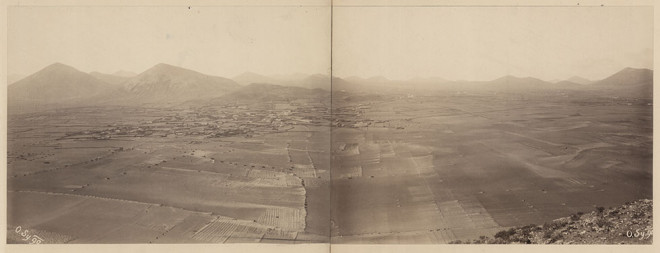
Image caption: Panoramic view of San Bartolomé captured in 1890.
Connection with the Archipelago
Simony’s relationship with the Canary Islands was profound; he made three voyages at the end of the 19th century, visiting every island and islet. He sometimes received financial support from institutions in Austria but frequently financed his scientific adventures personally. In 1890: Lanzarote y los islotes, Simony notes discovering the endemic blind crab from Jameos del Agua after learning of “white crickets” nearby, leading him to identify a new species that is now a symbol of Lanzarote.
His fascination with Mount Teide was evident, as he spent extended periods there, setting up scientific instruments. Notably, he was among the first to comment on the famous “jameíto” and discovered the iconic giant lizard of El Hierro, which is scientifically named Gallotia simonyi.
The Cultural Legacy
Simony’s extensive research yielded a trove of cultural treasures for various museums, including a mummy, numerous human skeletal remains from the archipelago’s early inhabitants, hundreds of photographs, and a diverse collection of volcanic rocks and other biological specimens. Unfortunately, his life ended tragically when he took his own life after suffering a stroke in 1915.
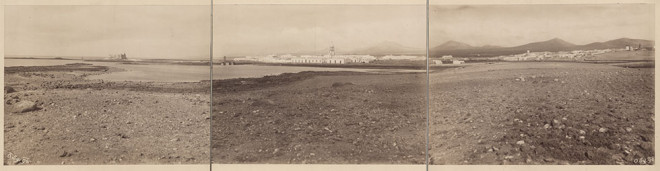
Image caption: Panoramic view of Arrecife taken in 1890.
An Insightful Chronicle of Travels
Simony’s bilingual work, 1890: Lanzarote y los islotes. Lanzarote und die islotes, focuses primarily on the environmental aspects of his journeys, delivering rich descriptions of the geology, botany, and flora of places such as Lanzarote, La Graciosa, Isla de Lobos, Alegranza, and others. However, it also offers a window into the social dynamics of the period, sharing anecdotes that illustrate the living conditions and societal structures of the time.
He wrote about Arrecife, stating, “it is not at all unpleasant, despite the lack of animated small streets and gardens,” while also observing the social discrepancies—a mention of “wealthy merchants” alongside “the poor who begged for water as if it were alms.”
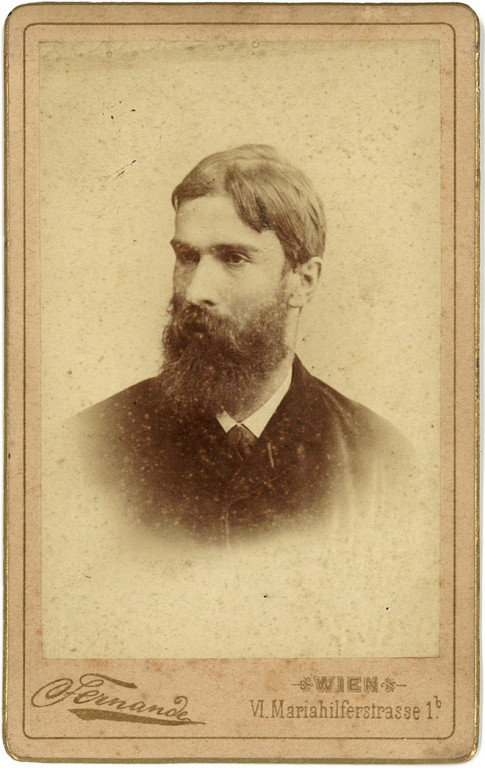
Image caption: Portrait of the Austrian naturalist Oscar Simony (1852-1915).
Notable Observations of the Islands
Simony draws comparisons between Lanzarote and Fuerteventura, providing insights into localities like Puerto Cabras and Vega del Río Palmas. His keen observations also highlight the island’s predominantly desert-like landscape, especially during the dry summer months when fields lay fallow.
This latest edition of Simony’s conference, complete with a preface by biologist Ana Carrasco Martín from the Cabildo de Lanzarote Biosphere Reserve Office, holds not only scientific value but also historical significance through its imagery. Simony captured over 400 photographs of the Canary Islands between 1888 and 1890, utilizing the albumin print technique. This edition presents more than 25 images, some of which are newly discovered, while others rank among the oldest known of the photographed locations.
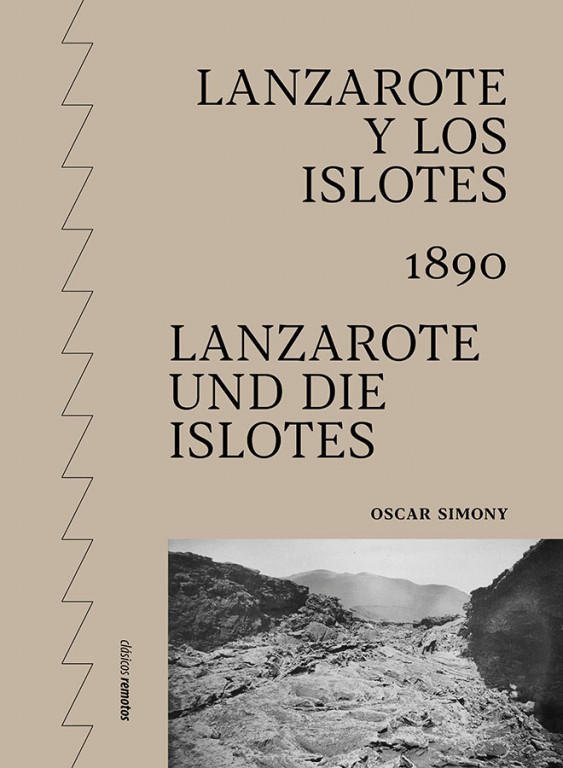
Image caption: Cover of the new book by Oscar Simony published by Ediciones Remotas.
This treasure trove of historical and scientific rediscovery was set to be unveiled at the Islote de Fermina on December 11, featuring esteemed guests such as Ana Carrasco, Marcial Martín, the former director of CACT, and Rubén Acosta from Ediciones Remotas. The event promises to celebrate the enduring legacy of Simony’s remarkable contributions to the understanding of the Canary Islands.