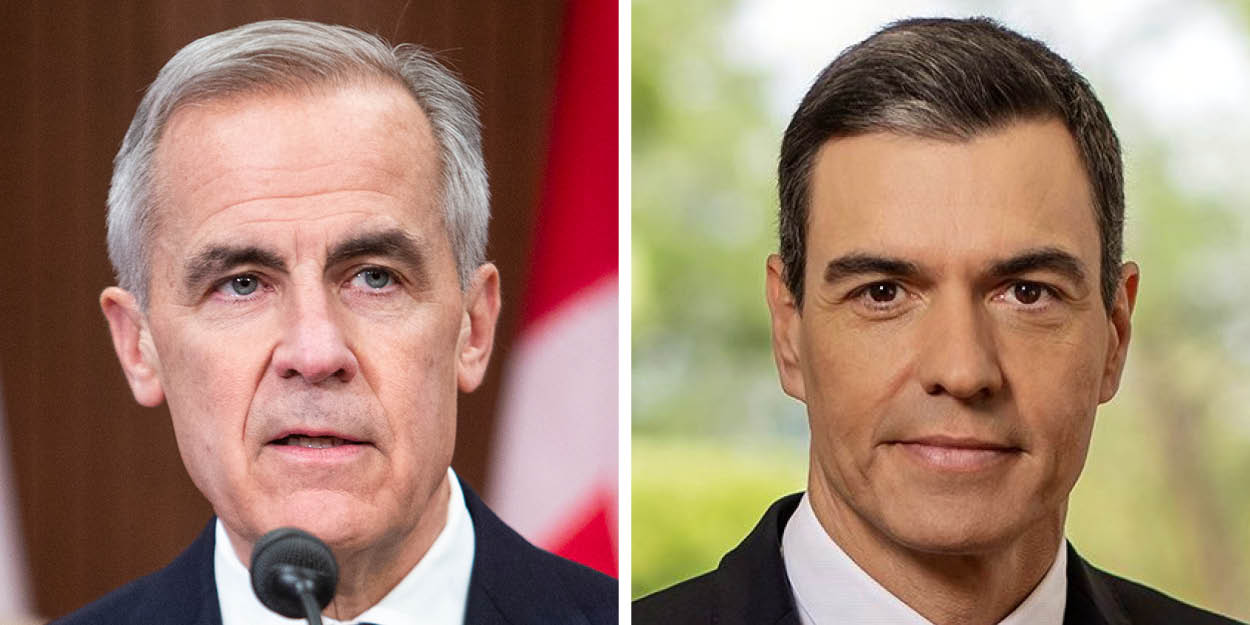
A Tale of Two Leaders: Responses to the U.S.-Led Attack on Iran
In the complex landscape of international relations, the responses of world leaders to crises often reveal much about their values and priorities. Recently, the U.S.-led attack on Iran has sparked a significant divide in how leaders approach democratic governance and global peace. Notably, Canadian Prime Minister Mark Carney and Spanish Prime Minister Pedro Sánchez have taken markedly different stances, highlighting the nuances of leadership in times of conflict.
The Context of the Crisis
The backdrop of this discussion is the ongoing tensions surrounding Iran, a nation that has long been at the center of geopolitical strife. The U.S. has historically taken a hardline approach, often leading military interventions that many critics label as illegal wars. As the situation escalated, the world watched closely, waiting to see how various leaders would respond. Would they uphold the principles of international law and diplomacy, or would they align with military aggression?
Spain’s Courageous Stand
Prime Minister Pedro Sánchez of Spain has emerged as a beacon of hope in this tumultuous time. His response to the U.S.-led attack has been characterized by a commitment to rebuilding the norms of global peace and security. Sánchez has called for dialogue and diplomacy, emphasizing the importance of international cooperation over military action. His stance is not just a political maneuver; it reflects a deep respect for human rights and the rule of law.
Sánchez’s approach resonates with many who believe that the path to lasting peace lies in understanding and negotiation rather than aggression. By advocating for a peaceful resolution, he is not only standing up for the people of Iran but also reinforcing Spain’s role as a responsible global actor. This courageous position serves as an inspiring example for other nations grappling with similar dilemmas.
Canada’s Divergent Response
In stark contrast, Canadian Prime Minister Mark Carney’s response has raised eyebrows and sparked debate. While he has expressed support for democratic governance, his reaction to the U.S. attack has been perceived as more cautious and less principled. Critics argue that Carney’s approach lacks the moral clarity that Sánchez has demonstrated. Instead of condemning the military action, Carney has opted for a more measured response, which some interpret as an unwillingness to confront the U.S. directly.
This divergence in responses highlights a critical question: what does it mean to be a leader in the face of injustice? Carney’s reluctance to take a firm stand may reflect a desire to maintain diplomatic relations with the U.S., but it also raises concerns about the implications for Canada’s foreign policy. Is Canada willing to sacrifice its moral authority for the sake of political expediency?
The Impact on Global Norms
The differing responses from Carney and Sánchez have broader implications for global norms and the future of international relations. Sánchez’s bold stance could inspire other leaders to prioritize diplomacy and human rights, potentially leading to a shift in how nations engage with one another. In contrast, Carney’s more subdued response may signal a continuation of the status quo, where military interventions are normalized and dissenting voices are silenced.
As the world grapples with the consequences of the U.S.-led attack on Iran, the actions of these two leaders will likely be scrutinized for years to come. Their responses not only reflect their individual leadership styles but also serve as a litmus test for the values that will shape the future of global governance.
The Role of Public Opinion
Public sentiment plays a crucial role in shaping the responses of leaders. In Spain, Sánchez’s call for peace resonates with a populace weary of war and conflict. The Spanish people have historically been vocal about their opposition to military interventions, and Sánchez’s stance aligns with their values. This connection between leadership and public opinion underscores the importance of democratic governance, where leaders are held accountable to their constituents.
Conversely, in Canada, Carney faces a more complex landscape. While there is a segment of the population that supports a strong alliance with the U.S., there is also a growing demand for a more principled foreign policy. The challenge for Carney lies in balancing these competing interests while maintaining Canada’s reputation on the global stage.
The Future of Leadership in Crisis
As we reflect on the responses of Carney and Sánchez, it becomes clear that leadership in times of crisis requires more than just political acumen; it demands a commitment to principles that transcend national interests. The contrasting approaches of these two leaders serve as a reminder that the choices made today will shape the world of tomorrow.
In an era where the lines between right and wrong can often seem blurred, the courage to stand for peace and justice is more important than ever. Whether through Sánchez’s inspiring call for dialogue or Carney’s cautious diplomacy, the responses to the U.S.-led attack on Iran will undoubtedly influence the course of international relations for years to come.