The Enigmatic Isla de Lobos: A Biodiversity Sanctuary in the Atlantic
Human Impact on Ecosystems
Over the past 50 years, humans have transformed ecosystems faster and more extensively than at any other time in history. While we are the primary beneficiaries of the environment, we often overlook the fact that our actions are contributing to its decline. Pollution, hunting, overfishing, and deforestation are just a few of the reasons ecosystems, along with countless species, are imperiled. Despite increasing awareness, it is ultimately up to governments and authorities to implement regulations to prevent further degradation.
The Protected Paradise of Isla de Lobos
In Spain, certain areas have been designated as restricted zones to protect biodiversity. One such area is Isla de Lobos, located in the Canary Islands, where visits are carefully regulated.
Where is Isla de Lobos?
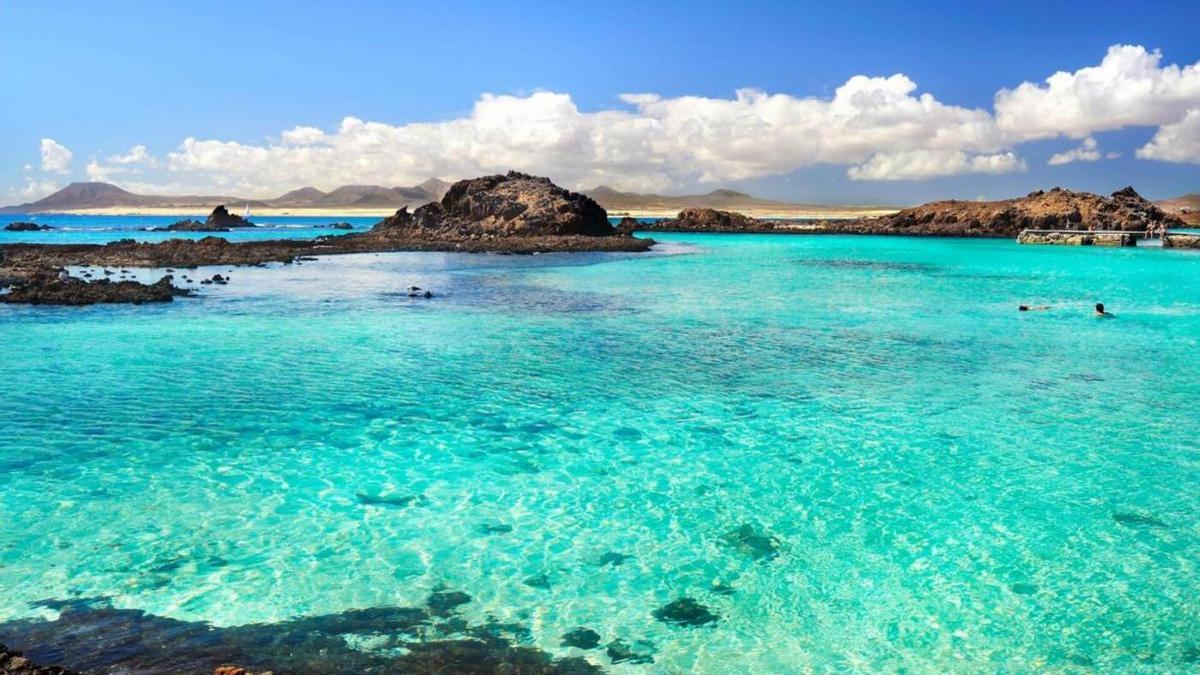
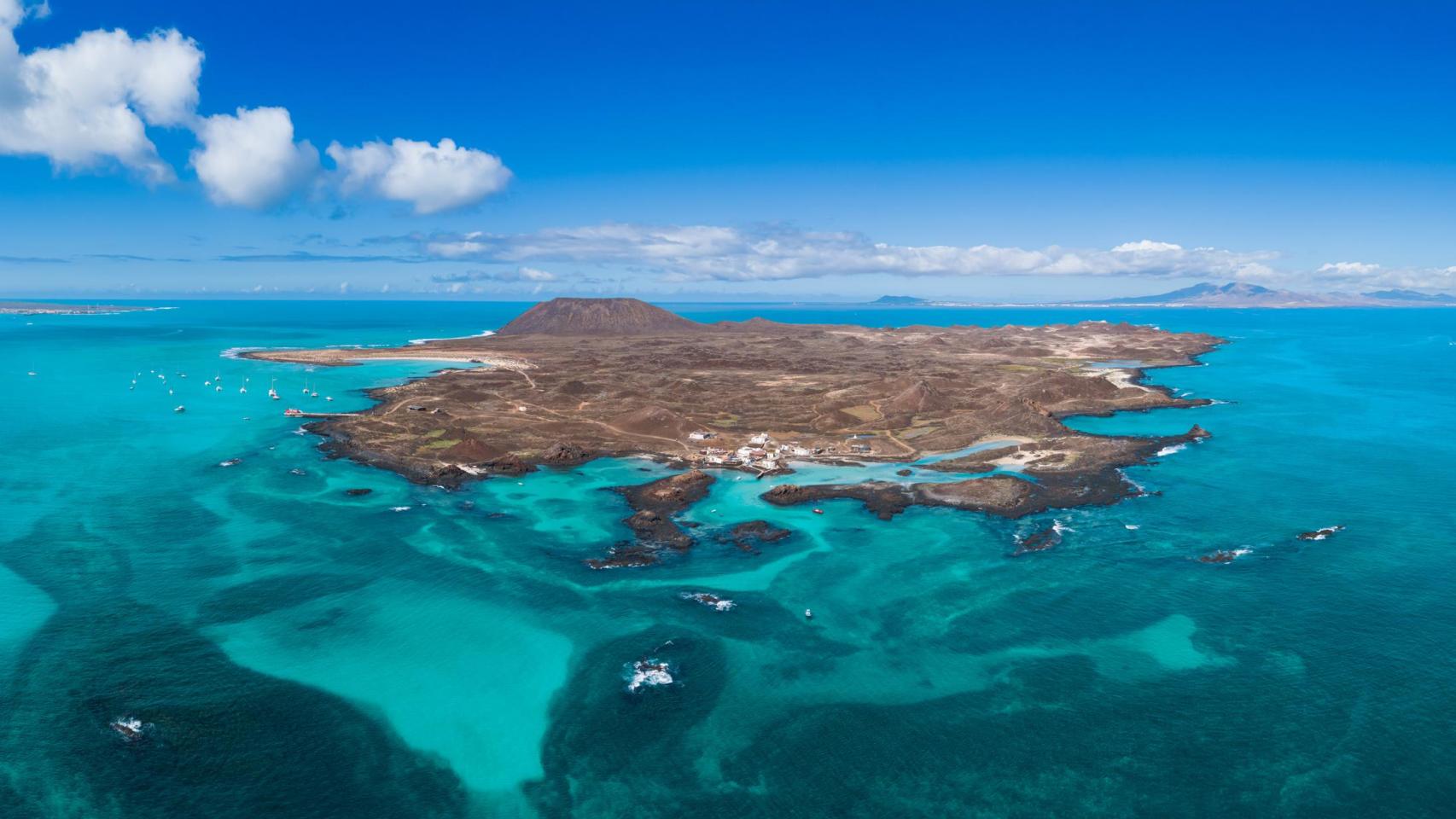
Isla de Lobos is a small paradise situated in the Canary archipelago, in the Atlantic Ocean. Just two kilometers from Fuerteventura and eight kilometers from Lanzarote, this volcanic islet covers approximately 4.5 square kilometers. Its rugged coastline is characterized by steep cliffs, offering breathtaking views and diverse marine life.
A Name with History
The island gets its name from the historical existence of colonies of sea lions, also known as monk seals. These creatures thrived on the island until they were nearly hunted to extinction due to overexploitation, which decimated fish populations in the region.
Nature’s Richness on Isla de Lobos
Isla de Lobos is part of the Reserva Natural del Islote de Lobos, a protected area famed for its spectacular biodiversity. The island features indigenous flora adapted to volcanic conditions, including notable species like tabaiba dulce and uvilla de mar, along with a variety of unique marine life.
The clarity of its waters allows for the observation of an array of marine species, including colorful fish, rays, and sometimes even dolphins. This rich underwater ecosystem has made snorkeling and diving some of the most sought-after activities for tourists fortunate enough to visit.
Geological Marvels
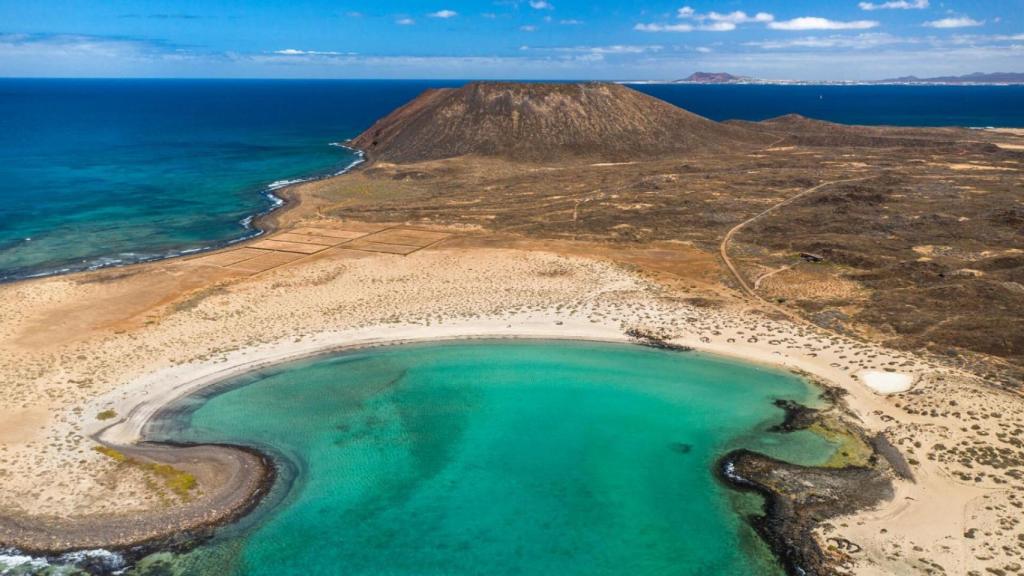
The island’s geography is defined by its volcanic origin, primarily attributed to Montaña de La Caldera, a volcanic cone that rises 127 meters. From its summit, visitors can enjoy panoramic views of nearby islands such as Lanzarote and Fuerteventura, along with the vast Atlantic Ocean. This area is a magnet for hikers, offering relatively easy trails with stunning vistas of pristine white sandy beaches and crystalline waters.
Iconic Landmarks
El Faro de Martiño is another iconic landmark on Isla de Lobos. Constructed in the mid-19th century, the lighthouse once housed lighthouse keepers and their families, who lived isolated on the island to ensure the light functioned correctly. Although it is now automatic, its presence adds a nostalgic touch and serves as a symbol of the island’s rich maritime history.
According to the National Institute of Statistics, in 2021, Isla de Lobos had a single resident. However, there is little known about this solitary inhabitant, and it is often said that there are no permanent residents on the island.
Conservation Measures and Visitor Regulations
Due to its stunning beauty and unique biodiversity, access to Isla de Lobos is strictly regulated to preserve its ecosystem. Authorities have implemented a control system to limit the number of tourists, which helps mitigate human impact on the fragile environment.
Visitor Quotas
Daily access to Isla de Lobos is restricted to 400 visitors, divided into two shifts—morning and afternoon. Each shift lasts a maximum of four hours, allowing for a steady flow of visitors without overwhelming the island.
Permits for Access
Visitors must obtain a prior permit, which can be requested online or through local tourist offices. This permit is mandatory and must be presented to authorities before boarding the ferry to the island.
Boats authorized for transport to Isla de Lobos depart exclusively from the Corralejo port in Fuerteventura, operating on fixed schedules to control visitor flow.
Respecting Nature
Upon arrival, visitors are required to follow strict regulations. Collecting plants or animals is prohibited, and discarding any type of waste is not allowed. A marked trail runs through the island, guiding tourists to stay within designated areas and protect the natural environment.
Water-based activities like swimming and snorkeling are permitted in designated areas, yet visitors are reminded to be cautious and respectful towards the marine fauna.
Overnight Restrictions
Overnight stays on the island are prohibited, ensuring that Isla de Lobos remains uninhabited during the night, allowing its wildlife to thrive undisturbed. Although there is a small restaurant on the beach, it is advisable for visitors to bring their own food and water, as facilities are very limited. Open fires and barbecues are strictly forbidden anywhere on the island.
Isla de Lobos stands as a testament to the beauty of nature and a commitment to conservation efforts. As a regulated haven, it invites visitors to explore its wonders while ensuring the preservation of its unique ecosystem for generations to come.