The Renewable Revolution on Fuerteventura: Bright Prospects for Local Startups
Harnessing wind and sun, Fuerteventura’s businesses are leading the charge towards a sustainable future.
Fuerteventura, renowned for its stunning landscapes and vibrant tourism, is undergoing a transformation that extends beyond its sandy beaches. As the island embraces renewable energy, local startups are jumping at the opportunity to innovate and create economic stability. With abundant sunlight and strong winds, Fuerteventura is not just a paradise but also a prime location for renewable energy projects. This shift offers entrepreneurs the chance to merge environmental responsibility with profitability, paving the way for a greener local economy.
The integration of renewable energy sources has sparked an unprecedented interest among businesses aiming to reduce costs and enhance sustainability. Startups focused on solar energy installation, wind turbine technology, and energy efficiency solutions are finding fertile ground in this changing landscape. They are not only contributing to a cleaner environment but also positioning themselves to attract eco-conscious investors and customers. This trend indicates a broader shift in the island’s economic framework, moving towards a model that prioritizes sustainable practices as a pathway to growth.
Moreover, the Government of the Canary Islands is actively supporting this transition by providing financial incentives and streamlined regulations for green startups. By fostering an entrepreneurial ecosystem centered on sustainable technologies, Fuerteventura is setting an example for other regions. As local businesses harness the island’s natural resources, they are not only securing their future but also contributing meaningfully to a global movement towards sustainability.
Source: Gobierno de Canarias
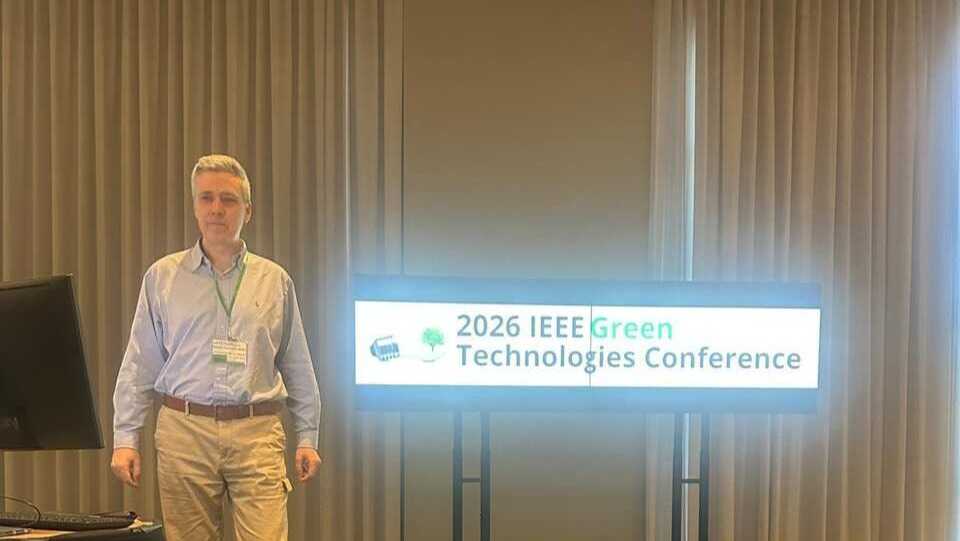
The Cabildo of Fuerteventura, through the Department of Territorial Planning, has promoted the development of a technical study presented at a top-level international conference held in Boulder (Colorado, United States), in which an innovative methodology is presented to advance towards decarbonization by minimizing land occupation. The work, developed taking the island of Fuerteventura as a case study and commissioned by the Cabildo, was presented by the technician responsible for the project, Ricardo Guerrero, and proposes a practical tool that allows public administrations to have objective information on the real needs of energy and territory in the energy transition processes. The study has been prepared based on official data, mainly from the Government of the Canary Islands, incorporating conservative hypotheses that allow obtaining results adjusted to reality. This document does not consider technological evolution, which would predictably reduce land occupation needs even further. Among its main conclusions, it is established that the complete decarbonization of the island could be achieved with an estimated maximum occupation of 11 square kilometers, prioritizing energy self-consumption and the implementation of renewable energies on roofs over their direct installation in the territory. The analysis also shows that land needs and energy demand may be significantly lower than those contemplated in other approaches and by other public administrations, identifying relevant differences in territorial occupation that, in some cases, can reach a ratio of up to ten to one. This approach, based on a conservative methodology and validated in an international scientific environment, reinforces the line that the Cabildo of Fuerteventura defends in terms of energy planning, aimed at demonstrating that it is possible to advance in decarbonization without assuming models that imply intensive occupation of the territory. The president of the Fuerteventura Cabildo, Lola García, has pointed out that “this study confirms that it is possible to move towards decarbonization without sacrificing our territory. Fuerteventura must lead a model based on the balance and protection of our environmental values.” For her part, the Minister of Territorial Planning, Nereida Calero, highlighted that “from the Cabildo we defend that the energy transition must be adapted to the reality of each territory, and this work provides data that supports a more adjusted model, based on self-consumption and the use of spaces such as roofs, as we have been defending.” The proposal has been valued in the congress for introducing the perspective of territories with land limitations and high environmental sensitivity, little present in other contexts with greater territorial availability. Furthermore, the work will be published in an international scientific journal of reference in the field of engineering, which reinforces its technical validity and global projection.
Originally reported by www.lavozdefuerteventura.com, rewritten by the Fuerteventura Times AI Editorial Desk.