The Cinematic Legacy of Fuerteventura and Lanzarote
In August 1925, American cameraman Benjamin Miggins and his team set sail for the Canary Islands with the ambition of creating a film for the renowned 20th Century Fox. Their effort culminated in the film Canary Islands, which premiered in 1926, though no copies survive today. A discovery years later by researcher Agustín Miranda Armas and the Filmoteca Canaria revealed thirty minutes of outtakes from the film at the University of South Carolina, showcasing Tenerife, Gran Canaria, La Palma, Lanzarote, and Fuerteventura—though the footage from the latter is minimal.
The Historical Context
This film remains the earliest recorded visual documentation of the Canary Islands, marking a significant moment in the region’s cinematic history. Amidst the precarious conditions of the mid-20th century, especially following the Spanish Civil War, the community of filmmakers was sparse. However, the era’s censorship under the Franco dictatorship led to a unique form of cinematic storytelling through NO-DO (Spanish Newsreels), which showcased snippets of life in Lanzarote and Fuerteventura, including national authority visits and events like Franco’s visit in 1950.
Interestingly, amateur filmmakers began capturing the islands’ everyday life as early as the 1950s, using 8mm film. Dutch filmmaker Jan Blaauboer documented Lanzarote and Fuerteventura’s landscapes and customs, contributing to a valuable collection preserved in La Palma’s Insular Archive.
Emergence of Diverse Genres
As we move into the 1960s, both amateur and professional filmmaking in the Canary Islands flourished, notably with the rise of the Super 8. The islands attracted national and international productions, with Cuando los dinosaurios dominaban la Tierra (1968) being a significant milestone, heralding a wave of films in the fantasy genre. The unique volcanic landscapes of Fuerteventura and Lanzarote lent themselves well to various film settings, becoming the backdrop for adventure stories, science fiction, and post-apocalyptic tales.
This trend continued with films like Operación Ganímedes (1977), a landmark production for the international cinema community that further emphasized the islands’ potential as a picturesque filming destination.
The Wéstern and Beyond
The 1970s also saw the rise of the Western genre in the Canary Islands. In 1974, Por la senda más dura, featuring Lee Van Cleef, was filmed across multiple islands, highlighting the rugged terrains and diverse landscapes capable of standing in for the old West. Despite challenges, the Filmoteca Canaria’s recent catalog highlights the influx of productions in Fuerteventura, though some experts question the authenticity of certain claims regarding film shoots.
While some productions, like Adán y Eva: La primera historia de amor (1982), stirred curiosity due to their unusual plots and execution, others tried to capture the islands’ allure without success. The ebb and flow of creativity and quality in productions illustrates a fascinating landscape of cinematic exploration.
Contemporary Productions and Series
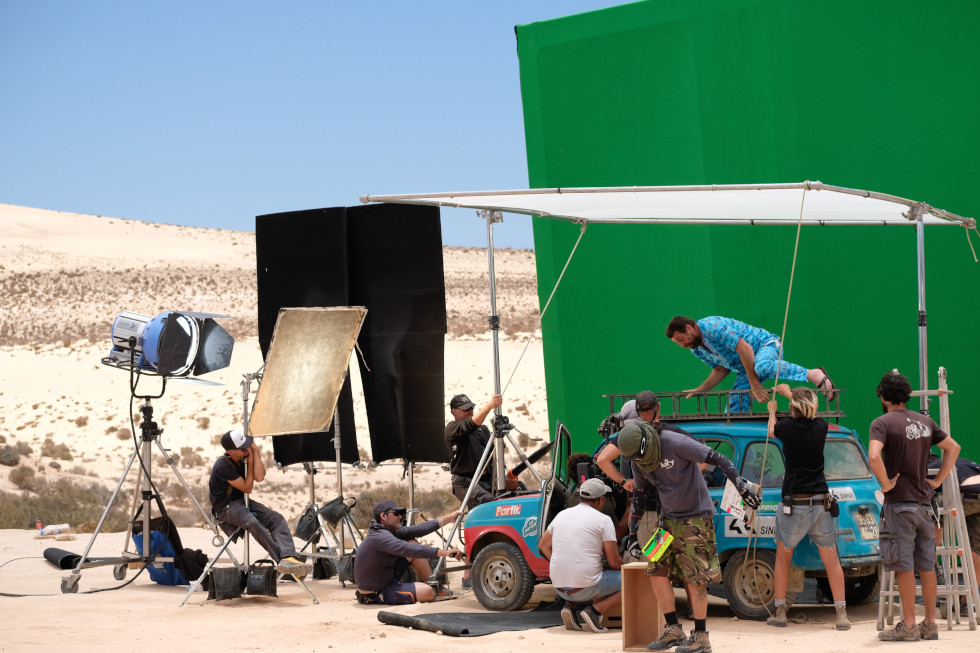
With the advent of digital streaming platforms like Netflix in recent years, the island’s cinematic profile has evolved. Productions such as Doctor Who and Foundation have utilized the stunning rural landscapes for various settings, merging the once distinct boundaries between television and film.
Incentives offered by the Canary government, aiming to attract filmmakers, have proved fruitful, leading to frequent productions from diverse industries. The allure of the islands goes beyond their natural beauty; they represent a viable economic opportunity as well as a way to enhance local tourism.
A Legacy Yet to Be Fully Explored
Despite the significant progress, much of Lanzarote’s and Fuerteventura’s cinematic heritage remains under-explored. Numerous documentaries and local projects, while valuable, lack the broad acclaim associated with mainstream releases. Yet it’s this very grassroots filmmaking — capturing daily life and traditions — that offers a rich tapestry of the islands’ cultural narrative.
As the cinematic journey continues, movies like Mararía (1997) highlight the intertwined histories of the islands. Though Mararía itself wasn’t filmed in Fuerteventura, its visuals evoke the geographic and geological connections between the islands, reminding viewers of their shared legacy.
Scenic Connections
The geographical proximity of Lanzarote and Fuerteventura enhances their appeal as filming locations. In a matter of miles, filmmakers can switch from volcanic landscapes to stunning coastlines. This geographical advantage continues to attract a variety of genres, creating endless possibilities for creative storytelling.
As the islands embrace their cinematic potential, they carve out a distinctive niche in the film industry, inviting filmmakers to explore their diverse terrains while telling stories that resonate with local culture and history. The journey of Fuerteventura and Lanzarote on the silver screen reflects not just a legacy of what has been but also the promise of what could be in the evolving landscape of film.