The Mysteries of Isla de Lobos: Unearthing Historical Insights from a Forgotten Manuscript
A small, isolated island known as Isla de Lobos carries a name that nods to the sea lions that once gathered on its shores. These creatures are said to rest on barren beaches to avoid becoming prey. As the largest of five islands in this stretch, Isla de Lobos is not just remarkable for its scant population; it also possesses some freshwater springs. This unique feature draws ships to its shores, where livestock like sheep and goats are sometimes taken, quietly disappearing during attempts to resupply on water.
A Historical Rediscovery
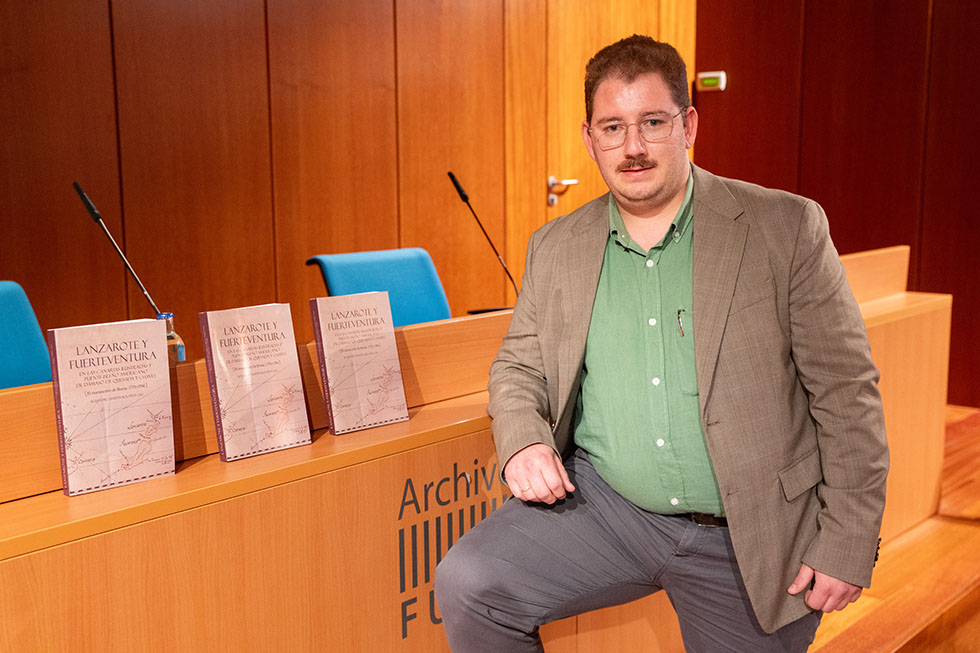
Nestled within a little-known manuscript, this brief note on Isla de Lobos serves as a window into the past—an entry from the 1770 work titled Las Canarias ilustradas y Puente isleño americano. Authored by the Tenerife cleric Dámaso de Quesada y Chaves, this manuscript sheds light on the early colonial history of the Canary Islands. The work was recently brought back into the public eye by Alejandro Bolaños, a researcher from the Universidad de La Laguna, who unearthed it while exploring the archives of the Biblioteca de la Iglesia Nacional Española de Santiago y Monserrat in Rome.
The Manuscript’s Journey
Bolaños recounts his serendipitous discovery of the manuscript, which had remained unedited for centuries. While accompanying esteemed historian Manuel de Paz, he felt a deep responsibility to capture as much of the manuscript as he could, given the strict limitations on how many photographs he could take each day. The result was his recent publication of the first volume, cataloged as ms323, which encapsulates detailed accounts of the conquests of Lanzarote and Fuerteventura. He notes that an even lesser-known manuscript, ms324, exists alongside it and focuses on the western territories of the archipelago.
The Enigmatic Historian
Dámaso de Quesada y Chaves stands out as an intriguing figure in historical literature. Described as both lucid in his historical review yet prone to errors, he embodies a unique mix of critical insight and occasional carelessness. Bolaños points out that it’s essential to differentiate between a historian and a chronicler. While Quesada attempts to document historical events, his style lacks the analytical rigor expected from modern historians. He assembles stories from various sources, but does not critically evaluate or draw conclusions from them.
Water on an Arid Island
One of the most provocative aspects of Bolaños’s recently published chapters is the mention of freshwater on Isla de Lobos. This detail could potentially unravel a long-standing mystery about how a dye workshop operated successfully in such a barren and isolated terrain. Historical investigations have failed to adequately explain how a dyeing industry could thrive without a reliable water supply.
Bolaños emphasizes that while the text provides specific historical documentation, it also references other historiographical sources. Understanding this interplay is crucial to constructing a more profound understanding of the area’s history.
The Legacy of Manuscripts
Bolaños identifies numerous valuable manuscripts originating from the Canary Islands that await publication. The very existence of Las Canarias ilustradas y Puente isleño americano in a Vatican library seems improbable, a testament to how archives can safeguard treasures waiting to be discovered.
The paths these manuscripts have traveled are equally fascinating. The manuscript’s journey to Rome can be traced back to the cultural practice of the Grand Tour, a rite of passage for young priests in the 18th century. Many clerical students journeyed to Rome for deeper enlightenment and education, with Quesada among them.
Connections and Historical Insights
Connections between historical figures deepen our understanding of this manuscript’s context. Notably, while Quesada does not mention his contemporary, the famed historian Viera y Clavijo, correspondence between the two suggests that they may have converged in their scholarly pursuits. Viera’s letters lend valuable insight, indicating that Quesada completed his manuscript in Rome and subsequently left it there in 1784.
The Scholar’s Responsibility
For Bolaños, the effort to delve into these manuscripts goes beyond mere academic interest; it represents a humanistic responsibility. The effort involved—financial, intellectual, and emotional—demands a commitment to recovering lost pieces of history, answering questions about the past that linger over the centuries.
As new hypotheses and possibilities surface from the research, researchers are reminded of the long-standing potential hidden within the pages of ancient texts. Each manuscript bears witness to a history rich with complexity, and the narrative continues to unfold.
Across the globe, countless libraries harbor similar stories waiting to be told. The challenge lies not only in unearthing these treasures but in giving them the attention they so deeply deserve. Through such efforts, we can help paint a fuller picture of the vibrant history that shapes us today.