The Ongoing Archaeological Endeavor at Lobos I
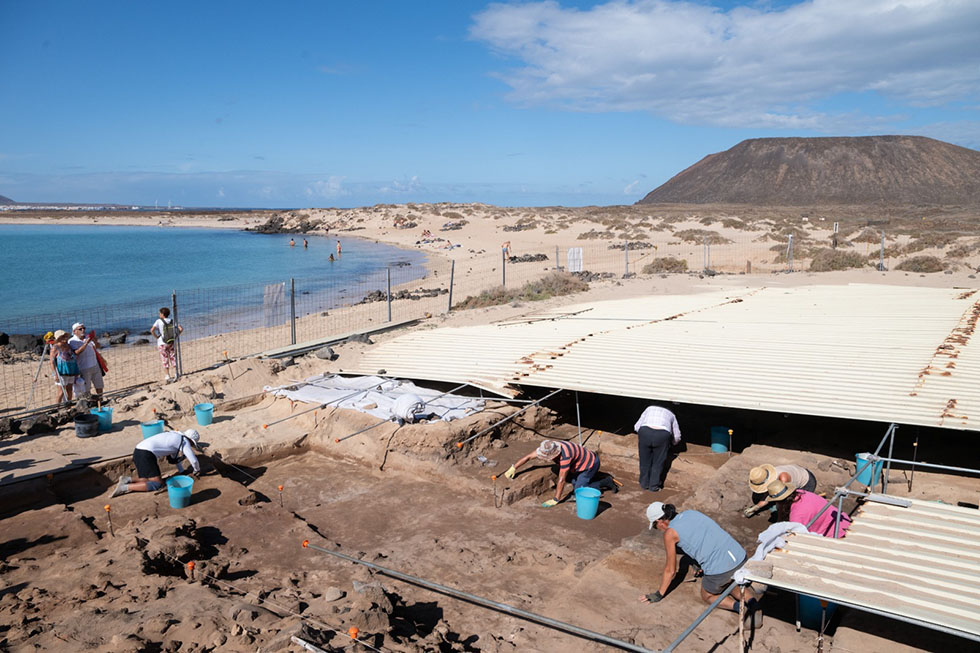
The rich archaeological landscape of the Canary Islands continues to unfold, with significant excavations taking place on Lobos Island. Recently, the Cabildo de Fuerteventura and the Museums of Tenerife launched their tenth excavation at a site known as Lobos I. This project aims to delineate the full extent of the archaeological site and will run through November 15th. The initiative is part of a broader research endeavor titled “Towards the Definition of the Islands,” which was detailed in a recent communication from the majorero corporation.
A Multidisciplinary Team at Work
This excavation is not just a solitary venture; it is a collaborative effort that brings together a diverse group of professionals. The team includes researchers, archaeologists, biologists, and various specialists from different institutions. Additionally, they are joined by volunteers and friends from the archaeological museums of both Fuerteventura and Tenerife. This varied expertise aims to enhance the investigation, ensuring a comprehensive analysis of what the site may reveal.
Focus on the Lobos I Site
The specific focus of this excavation is the Lobos I site, identified as a workshop for dyeing with Tyrian purple, a color historically associated with royalty and wealth. The current research endeavors to extend our understanding of this site more southward toward Playa de La Calera. By examining the area more closely, researchers hope to uncover insights into the economic activities that took place here and their broader significance.
Strategic Excavation Plans
To achieve the objectives, the team has planned a series of strategic boreholes in distinct locations. One of these will be near the dye workshop and at the base of a small volcanic cone associated with the site. The second borehole will be placed southwest, closer to the coastline. These locations have been deliberately chosen as they may unveil a different aspect of daily life connected to the workshop. One site is anticipated to provide evidence of ordinary activities, while the other could shed light on fishing methods, a critical aspect of life in the archipelago.
The Importance of Time and Focus
As highlighted by Rayco León, the Historic Heritage Councilor, the excavation holds significant importance within the archaeological narrative of the Canary Islands. The prolonged commitment of time and effort by the archaeological teams is expected to yield essential diagnostics about the region’s historical landscape.
Leadership and Oversight
The excavation is under the expert direction of Isidoro Hernández, the director of the Archaeological Museum of Fuerteventura. He is supported by Carmen del Arco, who is a technician, conservator in Archaeology at the Archaeological Museum of Tenerife, and a distinguished professor in Prehistory. The initiative has also received authorization from the Directorate General of Culture and Cultural Heritage of the Canary Islands, ensuring that the excavation adheres to the highest standards of archaeological practice.
Collaborative Efforts and Support
Additionally, the project receives logistical support from Binter, which is contributing to the transportation costs for the team and their materials. This collaboration exemplifies how different sectors can work together to preserve and understand cultural heritage.
Traveling back through time, the work being conducted at Lobos I promises to uncover layers of history that may redefine our understanding of life in the Canary Islands. Each shovel and trowel not only digs into the earth but also into the past, bringing us closer to understanding the complex lives of those who once thrived on these islands.