Exploring the Fragility of Corralejo’s Dune Park: A Call for Awareness
The last time I visited Fuerteventura, I found myself drawn to the stunning Corralejo Dunes. My intent was to write about Parque Holandés, a nearby village living in harmony with the shifting sands that occasionally drift into their homes. This quaint locale also grapples with the challenges posed by tourism, where many visitors might pass through without leaving a cent behind. Yet, what really captivated my attention was the road connecting Puerto del Rosario, the island’s capital, with Corralejo—Fuerteventura’s second-largest urban center.
Approaching the Natural Park
As I drove along, a sign announced that I was entering the Parque Natural de las Dunas de Corralejo. This area is a protected space, recognized for its significant natural value, alongside other reserves in the region, such as Jandía in the south and Lobos Island. However, it quickly became apparent that the significance of this protected status was often lost on visitors. With a road cutting through the dunes from north to south and a constant stream of rental cars, the natural beauty seems to be under siege.
Originally, this road was constructed before the area was declared a protected zone, and alternative routes to Corralejo do exist. Yet, these detours lack the breathtaking views of golden sands on one side and endless dunes on the other. This aesthetic allure creates a compelling temptation for visitors to snap photos, resulting in a concerning reality: immense pressure on the delicate environment.
The Strain of Tourism
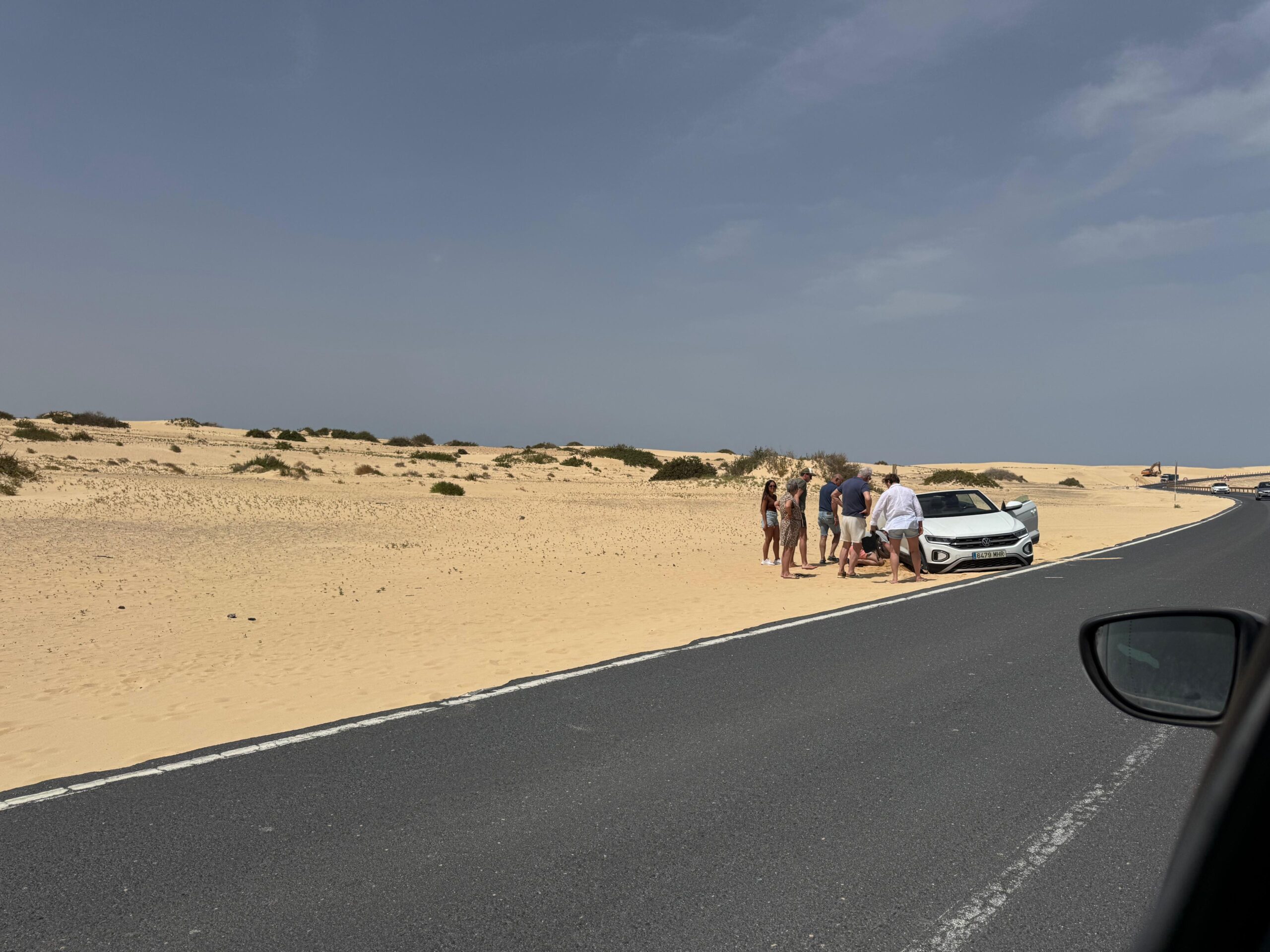
The landscape before me was breathtaking, but not necessarily in the way one would expect. Yes, the monumental sand dunes were impressive, but what stood out was the audacity with which vehicles, ranging from compact cars to caravans and buggies, crowded the roadside. Although designated parking areas exist for visitors wanting to experience the dunes and nearby beaches, these spots are often overflowing.
The sight of lined-up vehicles—Fiat 500s, Seat Ibizas, and various other transport modes—was a stark reminder of the impact tourism has on this fragile ecosystem. The sand adjacent to the road showed a noticeable shift in color, darkened by pollution and litter, including visible plastic waste. The convenience of parking near a pristine beach appears irresistible to tourists, especially those residing in expansive resorts that boast golf courses, right in the heart of the archipelago’s most arid region.
A Unique but Delicate Sanctuary
The Parque Natural de las Dunas de Corralejo is not only unique; it is also incredibly fragile. When we consider similar situations across the Canary Islands, it’s evident that other natural reserves—like the Maspalomas Dunes in Gran Canaria or the Rural Park of Anaga in Tenerife—also face daily threats from human activity. These patterns of degradation raise red flags about the sustainability of such invaluable landscapes.
The alarming state of our ecosystems deserves immediate attention. Opportunities for corrective action are limited; there is little room for error if we aim to preserve the mesmerizing landscapes our islands offer. Education should not just be confined to schools; it needs to be a broader endeavor that includes awareness campaigns on planes and informative signs for both locals and visitors before they enter these vital areas.
Shared Responsibility
While tourism is often blamed for this environmental strain, we cannot overlook our individual responsibilities as caretakers of these landscapes. It’s crucial to recognize that our complacency and normalization of these issues contribute to their escalation. We must engage in introspection and commit to learning more about our unique islands—after all, they are treasures that deserve ongoing protection and appreciation.
By fostering a culture of respect for these natural environments, both tourists and residents can play a pivotal role in safeguarding the fragile ecosystems that define who we are as a community and as stewards of our planet.