Exploring the Rich History of Isla de Lobos: The Roman Purple Dye Workshop
The archaeological site at Isla de Lobos, known for its remarkable Roman purple dye workshop, is a testament to the rich history of the Canary Islands. Recently, the Museo de Naturaleza y Arqueología de Tenerife (MUNA), in collaboration with the Cabildo de Fuerteventura, has embarked on the tenth campaign of systematic excavations at this iconic location. This research initiative promises to unveil essential insights into the lives and activities of ancient societies in the archipelago.
A Unique Project Unfolding
The current archaeological campaign operates under an inter-institutional agreement aimed at researching the islands known for producing the coveted purple dye—historically, one of the most prized commodities in the Mediterranean. The dates assigned to this site range from the 1st century BC to the 1st century AD, marking a significant period of Roman influence and development.
Key Personnel Leading the Excavation
The excavations are under the expert guidance of notable figures in archaeology. Isidoro Hernández Sánchez, director of the Archaeological Museum of Fuerteventura, along with Mercedes del Arco Aguilar, a conservationist at the Archaeological Museum of Tenerife, and María del Carmen del Arco Aguilar, a retired professor of Prehistory from the University of La Laguna, are spearheading this venture. Their combined expertise sets the tone for a focused and historically informed excavation process.
The Goals of the Campaign
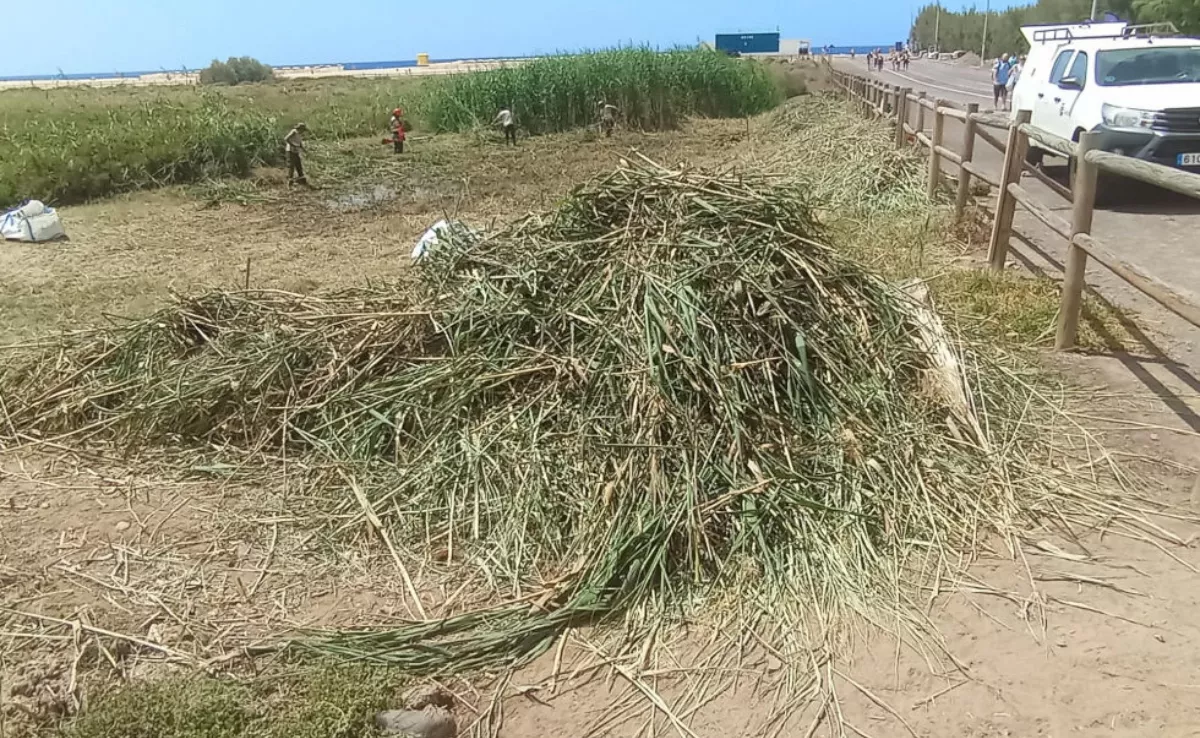
The excavation aims to better understand the spatial organization of the Lobos 1 workshop located at Playa de La Calera. Over a span of three weeks, which will conclude on November 15, the team plans to conduct two exploratory trenches. The first will be close to the workshop and the adjacent volcanic cone, while the second will be closer to the coastline.
These investigations are expected to reveal significant structures that could provide context to daily life and activities at this ancient site, including fishing and resource gathering—commonly referred to as haliéuticas activities.
The Archaeological Findings
So far, the conch shell midden and its surrounding area have yielded a variety of materials indicative of Roman craftsmanship. These include wheel-thrown pottery, bronze, iron, lead, and stone artifacts, all linked to the process of dye production. Notably, the discovery of household items like cooking ceramics and tableware implies that the site served multifunctional purposes.
Additionally, the presence of a secondary Roman site, known as Lobos II, supports the notion of the Romans’ seasonal occupation of the area, enriching our understanding of their influence in the Canaries.
Purple Dye: An Ancient Luxury
Historically, purple dye was considered a luxury commodity, symbolizing wealth and power since its introduction in the Eastern Mediterranean around the second millennium BC. The dye was extracted from the murex snail, a labor-intensive process that was economically significant for ancient coastal societies.
Institutional Collaboration and Support
The collaborative effort between various institutions exemplifies the commitment to preserving and exploring the historical and cultural heritage of the Canary Islands. Notably, Binter Canarias has stepped up to assist by covering essential transportation costs for both the team and materials, emphasizing the cooperative spirit driving this project.
Expert Insights
As José Carlos Acha, the advisor for Culture, Museums, and Sports of the Cabildo de Tenerife, remarks, the work being done is pivotal for deepening our understanding of the archipelago’s ancient history. He acknowledges the rigorous efforts of the teams involved, highlighting their commitment to unveiling the past and enriching our knowledge of Canaria’s cultural roots.
Through detailed archaeological work and fruitful institutional collaboration, Isla de Lobos continues to reveal layers of history that connect us to ancient societies. The ongoing research promises to illuminate the intricate links between daily life, economic practices, and cultural identity in this storied region.