Aydan Woodward: Reviving the Historical Essence of Puerto Cabras
El historiador y divulgador Aydan Woodward recently captivated his audience during a contextual reading session focused on the historical enclave of Puerto Cabras, now recognized as Puerto del Rosario. Woodward deftly navigated through the rich tapestry of the area’s past, illuminating its significance as the birthplace of the current capital of Fuerteventura. He emphasized, “We find ourselves precisely at the historical origin of the present-day capital of the island,” underscoring the importance of this unique location.
Architectural Heritage
A particularly engaging aspect of Woodward’s presentation was his examination of the architectural heritage that still remains in the Cornisa area. Some buildings date back to the late 18th century, serving as a testament to the history embedded in this iconic site. Woodward shed light on the gradual yet relentless urban transformation that Puerto del Rosario has undergone over the years. “Puerto del Rosario is undergoing modernization to a point where much of its urban historical heritage has been lost,” he lamented. This observation raises crucial considerations about the balance between progress and preservation, as the area moves further into a contemporary aesthetic.
The Invaluable Legacy of Puerto Cabras
Woodward’s exploration of the remaining architectural ensemble in the area serves to remind us of what we stand to lose. He identified it as one of the very few remnants of the actual foundations of Puerto Cabras—an architectural snapshot of a time gone by. This dwindling connection to the past invites reflection on the stories each structure might tell if its walls could speak, echoing the lives and events that have shaped Puerto del Rosario into what it is today.
Artistic Preservation
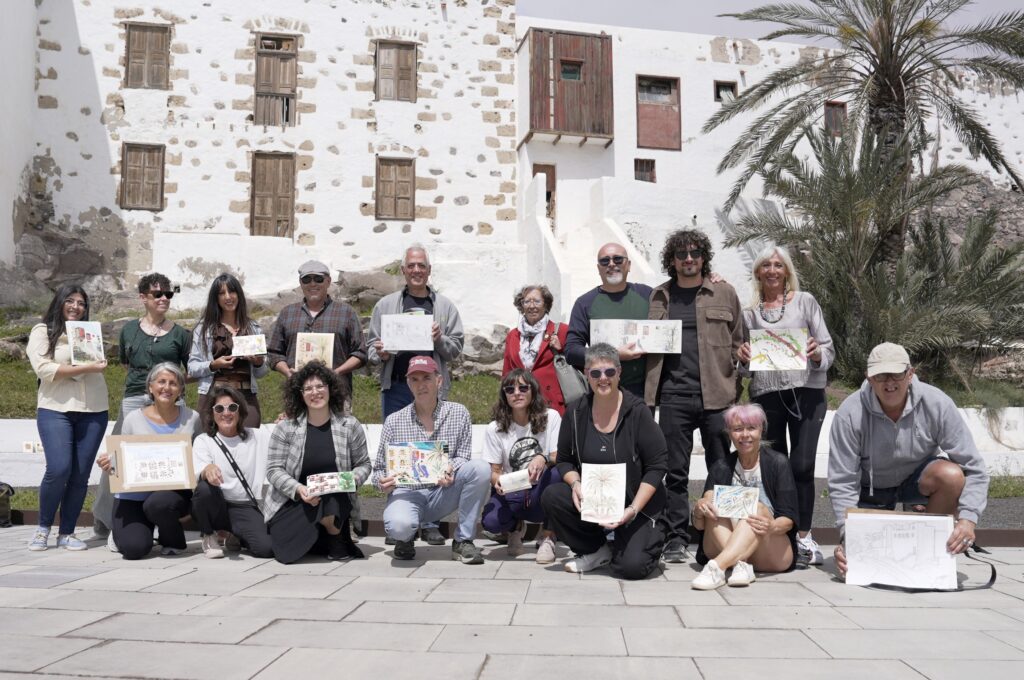
The gathering was not merely an academic exercise; it transcended into an artistic endeavor aimed at preserving the essence of the site, at least symbolically and documentarily. Woodward encapsulated this sentiment well when he stated, “Preserve through our own vision… what we want to protect.” This perspective highlights the vital role of collective memory in cultural continuity. By incorporating artistic expression into the preservation dialogue, participants can infuse their perceptions and emotions into this historical narrative, enriching it further.
Community Engagement and Experience
Despite experiencing a lower attendance compared to previous editions of similar events, the feedback from participants was overwhelmingly positive. Artists like Fernando expressed the enriching nature of the experience, exclaiming, “The experience is fantastic… I encourage people to join as well.” This sentiment reflects the communal essence cultivated through these gatherings, in which techniques and styles can be shared among participants, each driven by a shared passion for outdoor drawing.
The Social Dimension of Art
Beyond technical skill, the encounters highlighted the social dimension of art as a vehicle for connection. Attendees noted that drawing outside not only fosters creativity but also builds a sense of community—one that thrives on the exchange of ideas and inspirations. This social fabric weaves its way into the broader narrative of Fuerteventura, reinforcing the notion that art can indeed serve as a medium for historical and cultural dialogue.
Aydan Woodward’s contributions to the historical discourse of Puerto Cabras remind us of the profound ties between our past and present. His work, alongside the vibrant community of artists, marks a significant step toward nurturing an ongoing dialogue between history, art, and collective identity.