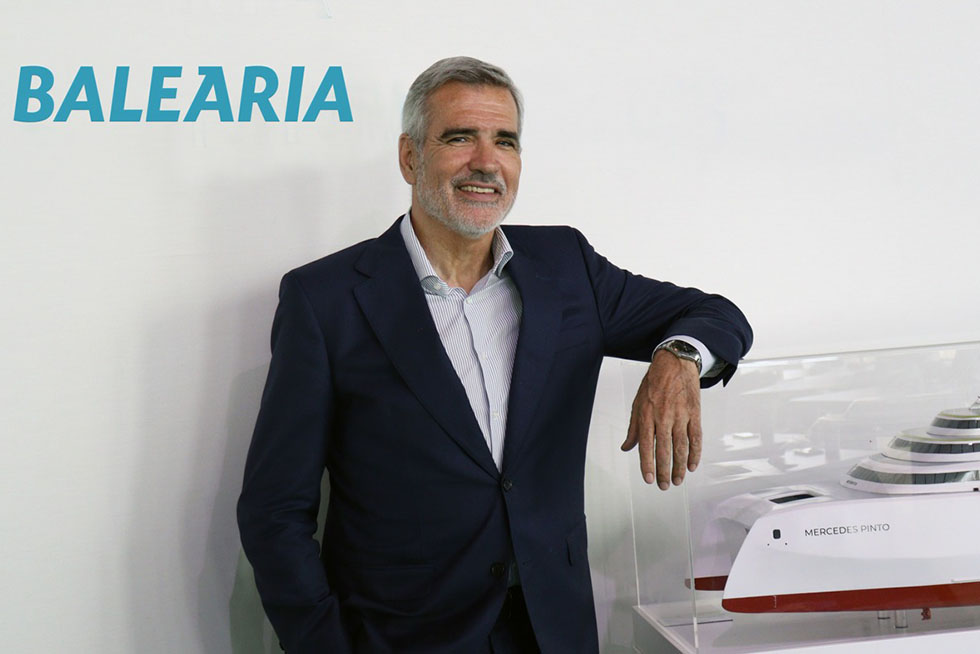
Major Changes in Maritime Connectivity: Baleària’s New Routes and Adjustments
In a significant announcement that impacts maritime travel between the Canary Islands and mainland Spain, Adolfo Utor, President of Baleària, confirmed this Monday that the maritime connection between Cádiz and Puerto del Rosario will cease operations as of June 30. This change comes as the current public service contract, which ensures the line linking Cádiz to Arrecife with a stop at the majorera capital, comes to an end.
Route Adjustments: What Travelers Need to Know
During his participation in the V Foro Económico de Lanzarote, organized by the Grupo Biosfera Media, Utor detailed the future of the route. While the connection from Cádiz to Arrecife will remain operational, the crucial stop at Puerto del Rosario will be eliminated. This means that travelers looking to head to Fuerteventura from Cádiz will have to navigate a more complex intermodal connection through Corralejo, combining ferry and bus services, with transit through the Playa Blanca port.
Utor indicated, “Travelers can also catch a ferry from Morro Jable to Tenerife, then continue on to Cádiz,” providing an alternative for those needing to traverse the islands.
Enhancements and New Routes
In his address, Utor unveiled plans for exciting new connections that will benefit Fuerteventura travelers. He announced a revival of the Morro Jable to Las Palmas de Gran Canaria route, with three daily services designed to boost connectivity. Furthermore, he mentioned two daily connections between Morro Jable and Tenerife, which will allow passengers to remain onboard while the vessel makes scheduled stops — an innovative service employing the ‘Mercedes Pinto’ ship.
Integrating Services: A Transition Period Ahead
Acknowledging the complexities of integrating services following Baleària’s acquisition of Armas Trasmediterránea, Utor emphasized the need for a transitional period for the company and its passengers. “We have deployed a rather ambitious service offering, and it’s going to be a little complicated; we will need some time for adjustment,” he explained. He requested understanding from passengers as the company works on aligning its operations with its established standards, particularly its commitment to punctuality, which Utor described as “almost orthodox.”
Infrastructure: Prioritizing Improvement at Ports
When discussing infrastructure, Utor praised the modern safety features and amenities of Playa Blanca. In contrast, he expressed concern about Corralejo, noting its aging facilities and pointing out, “It seems we are in two different countries.” He highlighted the need for necessary improvements at Corralejo’s port, declaring it essential to advocate for these enhancements in the near future.
Potential Future Connections
On future prospects, Utor touched upon the line between Fuerteventura and Tarfaya, which local authorities have expressed formal interest in. While he confirmed that Baleària’s immediate focus remains on streamlining current operations and consolidating the recent acquisition, he hinted at the company’s readiness to explore business opportunities. “We are a dynamic company, and if business opportunities arise, we will definitely consider a future link, perhaps between Tenerife and Playa Blanca,” he stated, exciting potential for more routes in the future.
Conclusion: Navigating Change
As these changes to maritime connectivity take effect, both travelers and local stakeholders may need to adjust their plans. Baleària’s commitment to improving services while navigating initial challenges indicates a forward-thinking strategy designed to enhance mobility in the region, despite the complexities of integration and infrastructure.


