### Government Initiative to Preserve Fuerteventura’s Heritage
The Government of the Canary Islands, through the Ministry of Agriculture, Livestock, Fisheries, and Food Sovereignty, has allocated €100,000 to support the project led by the Puerto del Rosario City Council aimed at restoring La Rosa de Juana Sánchez. This initiative has a fundamental goal: to safeguard and enhance the rich heritage of Fuerteventura. Nestled in the La Hondura neighborhood, La Rosa is registered with a Grade of Integral Protection, recognized as one of the last complete examples of traditional Majorera architecture and life associated with the island’s pastoral heritage, carrying immense historical significance.
### Initiating Restoration Efforts
The restoration efforts commenced in 2025, focusing on thorough cleaning in collaboration with local and insular authorities. The project encompasses debris removal and the restoration of traditional dry stone structures and other historical elements. The ultimate aim is to repurpose this space for social, cultural, and educational uses. With a total budget of €161,000, this intervention is set to structurally stabilize the building and meticulously restore its surroundings, adhering to traditional construction techniques.
### Evaluating the Work
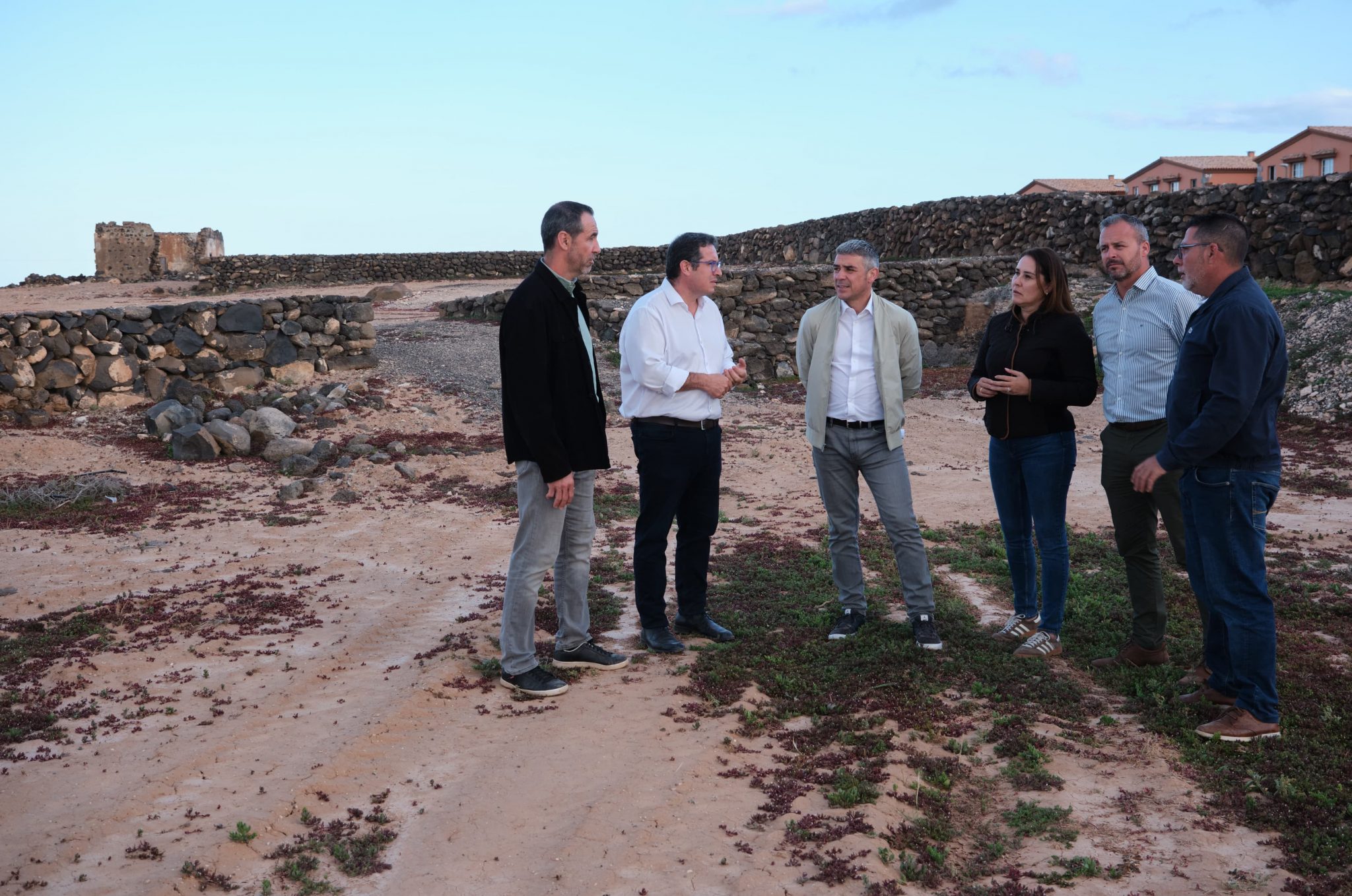
Recently, Narvay Quintero, the area’s minister, visited the site alongside several key figures: Lola García, President of the Cabildo of Fuerteventura; David de Vera Cabrera, Mayor of Puerto del Rosario; and others involved in the project. This visit was an opportunity to delve into the specific tasks planned for La Rosa, emphasizing the importance of the project in preserving local heritage.
### Historical Importance of La Rosa
Quintero highlighted that this action goes beyond mere architectural restoration, serving as a vital rescue of an essential part of our history tied to livestock farming and the primary sector. He noted that spaces like La Rosa remind us of how agricultural activities have shaped lives and societal organization. For generations, livestock farming has been a cornerstone of Fuerteventura’s economy and culture, and preserving such sites validates the efforts of those who have sustained the island’s agricultural landscape.
### A Collective Effort
Lola García accentuated the significance of La Rosa as an exceptional testament to traditional Majorera architecture. Since last year, efforts have been made in partnership with the municipality to clean and prepare the site, paving the way for its comprehensive rehabilitation. Meanwhile, David de Vera mentioned that the city is committed to ensuring that the primary sector thrives not just productively but also through cultural recognition and territorial identity. By fostering community spaces and collaborating across administrations, they aim to reinforce this vision.
### Understanding Livestock Culture
La Rosa de Juana Sánchez serves as a crucial link to understanding life centered around livestock utilization. More than just a rural residence, it stands as a complete pastoral settlement that exemplifies how land was organized for rearing Majorera goats, the island’s native breed. Its owner, Juana Sánchez Pérez, is remembered in oral tradition for her unique ability to maximize agricultural output, reflecting the interdependent relationship between livestock management and available pastoral resources.
### The Future of La Rosa
Covering over 25,800 square meters, La Rosa comprises all elements associated with pastoral activity, including living quarters, pens, and stone walls that delineate grazing areas, along with a threshing floor integral to the mixed economy sustaining farming families. The rehabilitation aims to transform the area into the future Center for the Interpretation of Majorera Livestock and Pastoral Landscape. This space will not only safeguard the heritage but also enhance its role in educating visitors about the primary sector’s significance, ensuring the rural culture’s memory thrives.
### A Hub for Cultural Preservation
The forthcoming center will feature a museum and exhibition area, a livestock classroom, multipurpose spaces, and venues for events. It will also serve as an information point, initiating guided paths that narrate the pastoral landscape’s story, thereby establishing it as a central hub for the activities and cultural heritage of the sector.
### Commitment to Heritage and Sustainability
This initiative aligns with the regional government’s strategy focused on protecting agricultural and livestock heritage in the Canary Islands, viewing these spaces as essential elements of the archipelago’s identity. It stands as a commitment to sustainable development, population retention, and the active conversation surrounding the primary sector’s invaluable heritage, thus linking the past, present, and future for generations to come.