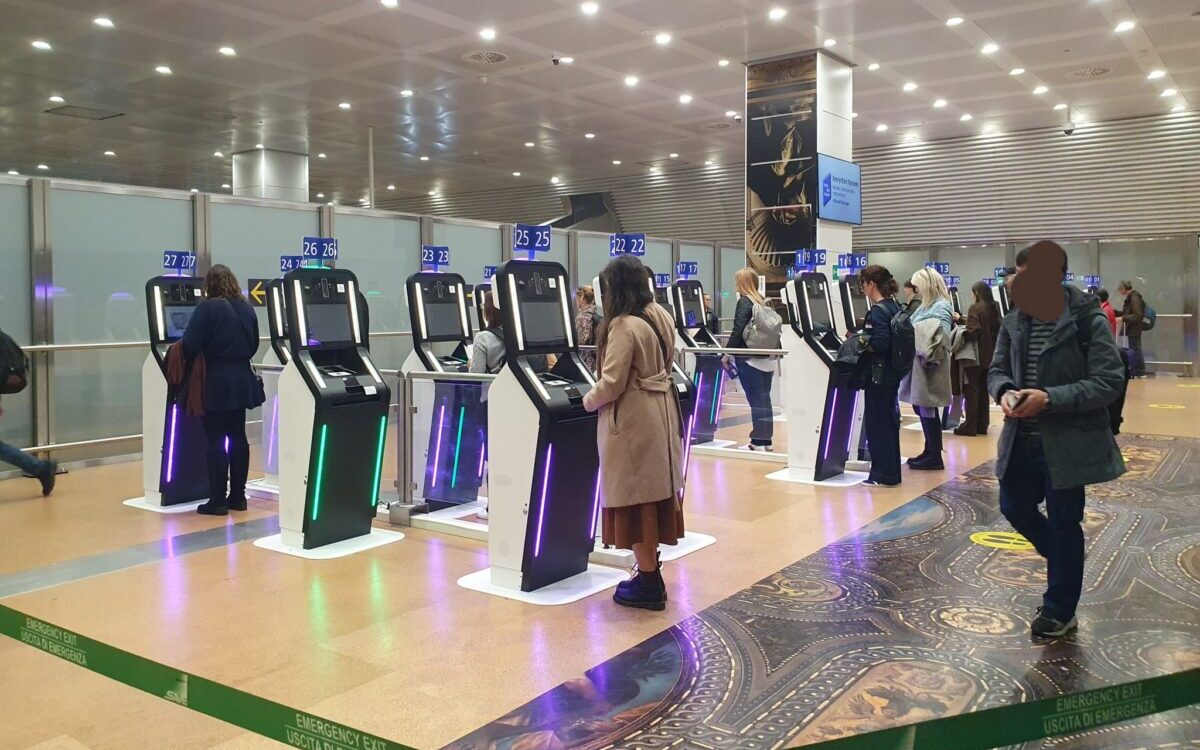
Passengers Getting to Grips with the New EES Machines
New border controls have transformed the arrival experience for travelers entering Schengen countries, as the Entry/Exit System (EES) officially went live and became compulsory on April 10, 2026. This innovative system replaces traditional passport stamps with biometric data collection, including facial scans and fingerprints, for all non-EU visitors. The shift aims to enhance security and efficiency across Europe, reflecting ongoing modernization efforts in border management.
Mixed Reactions from Travelers Across European Airports
As the EES was rolled out, travelers from the UK and Europe shared their immediate feedback on social media, revealing a wide range of experiences. The reactions varied significantly depending on the airport’s size, staffing, and whether passengers were registering their biometric details for the first time.
Frustrations Mount at Busy Airports
Reports of long queues have surfaced, particularly at major airports. UK sports presenter Jacqui Oatley expressed her frustration with the situation at Frankfurt Airport, noting that British travelers faced shocking delays while German passengers breezed through E-gates at Heathrow.
Similarly, Stephen Street described a half-hour wait at Geneva Airport just to enter data at the EES machines, followed by another queue to provide fingerprints and have his passport stamped at a manned station. “What is the point?!” he lamented.
Gary Fowler’s experience was even more dramatic; he missed his return flight due to the chaos at Geneva passport control. After a one-night stay, he found himself stranded for an additional night because of the delays, which included fingerprinting on both entry and exit.
In contrast, Craig Cockburn had a seamless experience at Hamburg, where he reported no wait at border control and a quick setup on the system. “Piece of cake,” he remarked.
However, not all experiences were positive. Dave shared his frustration about the situation at Verona Airport, where all EES machines were covered, and only three passport machines were operational. This led to a backlog of over 150 passengers, forcing border guards to revert to traditional passport stamping after 45 minutes of chaos.
On a brighter note, Bruce Medway reported zero delays during his travels to Seville, Copenhagen, and Milan-Malpensa, highlighting the variability in experiences across different airports.
Is This a Political Problem?
The introduction of the EES has sparked political discussions, with some attributing the delays to the consequences of Brexit. Ryanair’s Michael O’Leary suggested that the long waits for British travelers at security checkpoints are a form of punishment for the UK’s departure from the EU. Others, like Pat Yale, argue that these delays are simply a byproduct of the new system, not a political statement.
Business travelers have expressed particular concern, as EU citizens can pass through border control with minimal delays, while non-EU travelers face longer queues. Mr. Layne described the situation as a “disaster for business travelers,” noting that while EU citizens enjoy expedited processing, others are left to navigate slow-moving lines.
Ewe from Yorkshire shared her frustration about the inefficiencies at check-in, stating, “2 hours to board 200 people… Honestly, it’s useless!”
Mixed Views, Divided Experiences
Overall, the feedback from travelers indicates that the challenges associated with the EES stem from inadequate management at certain airports, insufficient systems, and malfunctioning equipment. Airports like Geneva, Malaga, Alicante, and Frankfurt have been particularly criticized for their handling of the new system. In contrast, travelers reported positive experiences at airports in Sevilla, Barcelona, Copenhagen, and Lanzarote.
Looking ahead, another border control system, the European Travel Information and Authorisation System (ETIAS), is expected to launch in late 2026. This system will require visa-exempt travelers from around 60 countries to apply online for authorization before short stays in participating European countries. However, for now, the focus remains on navigating the new EES system.
Have you experienced the new EES controls? What was your experience like? Share your thoughts in the comments below!