Fuerteventura tiene un límite: A Call for Sustainable Change in Corralejo
On October 20, 2023, the movement ‘Fuerteventura tiene un límite’, part of the broader network ‘Canarias tiene un límite’, took to the streets again, demanding a transformative shift in the economic model of the region. This time, the vibrant tourist town of Corralejo in La Oliva played host to the demonstration, drawing attention to pressing environmental, social, and economic issues that local residents face.
The Atmosphere of Protest
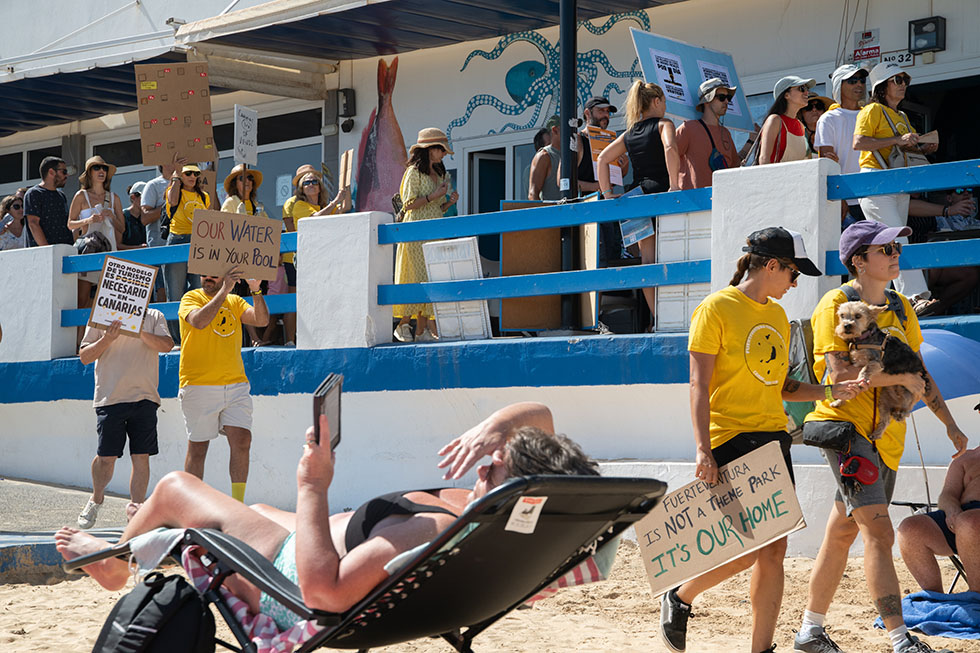
Despite a noticeable decrease in participation compared to earlier protests—approximately 1,500 people gathered this Sunday, a drop from the turnout on April 20—enthusiasm was palpable. Eager participants lined the streets, vocally expressing their frustrations with slogans that highlighted growing tensions around tourism’s expansion. Chants such as “Gobierno de Canarias es una Inmobiliaria” and “no es turismofobia, es canaricidio” underscored a shared sentiment that current government policies ignore local needs in favor of profit-driven tourism.
A March with a Purpose
The protesters congregated under a radiant sun, starting their march at the entrance to Corralejo. They trekked along Avenida Virgen del Carmen, made their way to Muelle Chico, and concluded their journey in Plaza Patricio Calero. It was here, in the heart of the protest, that a manifesto was read to reiterate a critical message: “Canarias y Fuerteventura tienen un límite.” This declaration served as both a call to action and a stark reminder that the delicate environment of Fuerteventura cannot withstand uncontrolled tourism growth.
Voices of the Movement
Lola Soto, the platform’s spokesperson, passionately addressed the crowd, emphasizing the lack of governmental action. “The Government of Canarias does not listen,” she stated. “We will continue organizing protests and mobilizations to make it clear that we are more than just numbers.” Soto also hinted at a meeting scheduled for November 30, where collective strategies will be developed to guide the movement’s efforts in the upcoming year. Over the past six months, they have raised their voices at various events, including the Feaga fair and the Costa Calma Windsurfing Festival.
Opposition to Development Projects
The protest also saw solidarity from groups like the Plataforma Salvar la Bahía de Corralejo, opposing a new macropuerto (megaport) project. Spokesperson Wim Geirnaert passionately argued against the development, stating that it would threaten the unique volcanic landscape and lead to increased pollution. “We demand sustainable growth,” he declared, advocating for a port design that respects both the environment and local biodiversity. Yet, Geirnaert lamented that their requests for information regarding the project have fallen on deaf ears.
Socio-Economic Realities
The manifesto articulated the dire socio-economic landscape that exists in the Canary Islands. With over 36% of the population at risk of poverty or social exclusion, and the region boasting the second-lowest average salaries in Spain, these issues strike at the heart of many residents’ lives. Fuerteventura stands out with the highest number of vacation rentals per capita within the Canary Islands, particularly in areas like Pájara, where tourist beds exceed the number of residents.
Debunking Myths and Confronting Prejudices
The movement also addressed another significant concern: rising xenophobia and racism linked to migration narratives. Notably, eight out of ten individuals reported encountering false narratives about migrants, reflecting a broader social issue that the movement seeks to confront head-on. Statistics from OXFAM indicate that such discrimination is prevalent in the region, urging a societal shift towards inclusivity rather than exclusion.
The Visual Impact of Protest
To enhance the impact of their message, demonstrators waved the iconic Canarian flags adorned with seven green stars, a symbol of regional pride and resistance against colonialist attitudes towards tourism. The visual aspect of the protest not only captured the local cultural identity but also helped to amplify their demands for respect and recognition of their land.
This movement reflects a broader struggle not merely against excessive tourism but also for the very soul of Canary Islands culture and environment. Through ongoing demonstrations, dedicated community engagement, and thoughtful actions, the people of Fuerteventura are calling for a future that respects their heritage and preserves their home for generations to come.