The Fall of the Baku Leisure Complex: A Cautionary Tale for Corralejo
Introduction to Ambitious Expectations
Eighteen years ago, the La Oliva Town Council initiated an ambitious project that sparked high hopes for the future of Corralejo. A macro leisure complex was slated to rise on a sprawling public parcel of 159,187 square meters, promising to be a beacon of modern entertainment in the Canary Islands. Designed to attract tourists with its attractions, hospitality, and sports facilities, the project was initially awarded to Ociopark Corralejo SA, which aimed to transform the site into a lively complex.
The Present Reality
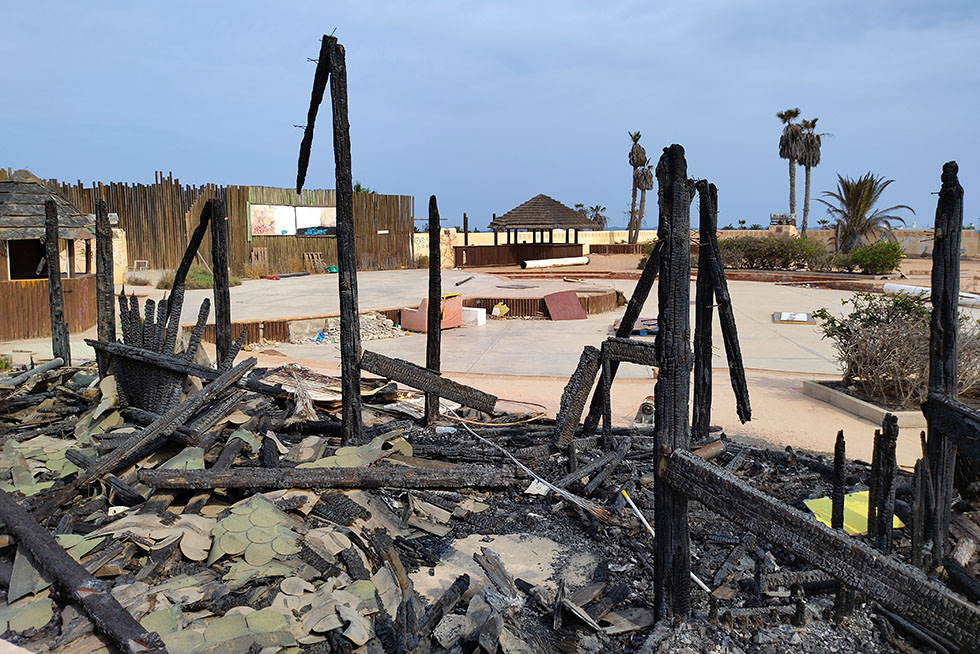
Fast forward to today, and the scene is strikingly different. What remains of the grand design is limited to a water park, which has remained closed since the onset of the pandemic, and a couple of paddle courts. The vast majority of the facilities lie in ruins, contributing to one of Fuerteventura’s most disheartening visual narratives. The transformation from hope to neglect illustrates a significant fall from grace.
Ongoing Legal Matters
Recently, the La Oliva council has begun the process of canceling its contract with Ociopark Corralejo. However, the road ahead is fraught with challenges. The company has accrued losses of approximately 31 million euros, compounded by 30 million euros in mortgages on the concession. Adding to the complicating factors is an unpaid fee to the municipality, estimated at 400,000 euros.
Background of the Contract
The initial contract for the macro leisure complex was awarded by a council led by Pilar González’s father, Domingo González Arroyo, in April 2003 to Joca Ingeniería y Construcciones SA. Two years later, ownership transferred to Ociopark Corralejo after the municipal council approved the lease of what was then dubbed Baku. As of now, the only operational entity at the site consists of paddle courts, while the initial vision has significantly deteriorated.
Financial Projections vs. Reality
In its early projections, Joca estimated a promising outlook, with expected annual profits reaching around 3.3 million euros. These revenues were derived from various components: the water park was expected to generate 761,000 euros, while a pub, market, bingo hall, and other attractions offered additional streams of income. However, these optimistic projections never materialized into reality.
Struggles with Debt
The financial audits paint a grim picture; Ociopark reported a staggering 31.2 million euros in accumulated losses by 2019. The years 2007 and 2008 saw particularly high losses, exceeding five million euros each year. The town’s reluctance to enforce strict financial oversight has heightened concerns, as poor management practices allowed the concessionaire to accumulate debts without consequence.
Complications in the Process
In early 2005, before the contract transitioned from Joca to Ociopark, the council permitted a mortgage of 20 million euros on the leisure complex. Auditors have expressed concern over the council’s decision to approve this funding, noting that it strayed profoundly from the initial economic viability study. A subsequent increase to 25 million euros raised additional alarms among financial experts.
Unfulfilled Commitments
The ongoing saga of the Baku complex has more than just financial ramifications. The council’s recent move to initiate contract termination stems from serious breaches, most notably the failure to pay the required annual fee of 36,000 euros for over a decade. Such unpaid fees have exacerbated the financial strain on municipal resources, and the total debt has now reached approximately 400,000 euros.
State of Disrepair
The current status of the facilities reflects years of neglect. According to a report by Tomás Ramón Fernández, a professor of Administrative Law brought in to address the situation, the lack of maintenance and closure of various facilities constitute “gross breaches” deserving of contract cancellation. The failed commitment to construct a promised clinic—only the exterior walls were completed—further exemplifies the situation’s gravity.
The Cost of Abandonment
The deteriorating state of the complex has drawn concern from residents and officials alike. Vandalism and a lack of surveillance have been compounded by safety incidents, including a notable fire in 2019 that damaged property within the site. Monitoring the site has proven increasingly difficult, leading to calls for decisive action by the local government.
Economic Implications Moving Forward
In contemplating the next steps for Baku, financial implications loom large. Councilor Juan José Rodríguez has cautioned that the economic consequences will be intricate and fraught with complications for both parties involved. Valuations will need to be conducted to determine reparations owed to both the municipality and Ociopark, taking stock of the damaged infrastructure that may need costly repairs before it can be put back into service.
Complexities with Mortgages
One of the pressing challenges ahead involves the 30 million euros in outstanding mortgages on the site. Depending on whether the contracts can be voided, banks could assert their rights to take over management of the Baku complex, although experts believe that the dilapidated state renders such an effort unlikely. The ultimate resolution will likely involve negotiations between the local government and the creditors regarding outstanding debts.
Closing Thoughts
The unraveling of the Baku project serves as a stark reminder of the complexities involved in public-private partnerships and the pitfalls of complacency in oversight. As the tale continues to unfold, the future of the site—and its potential to return to its envisioned glory—remains uncertain, marked largely by the shadows of neglect and mismanagement that currently overshadow this ambitious undertaking.