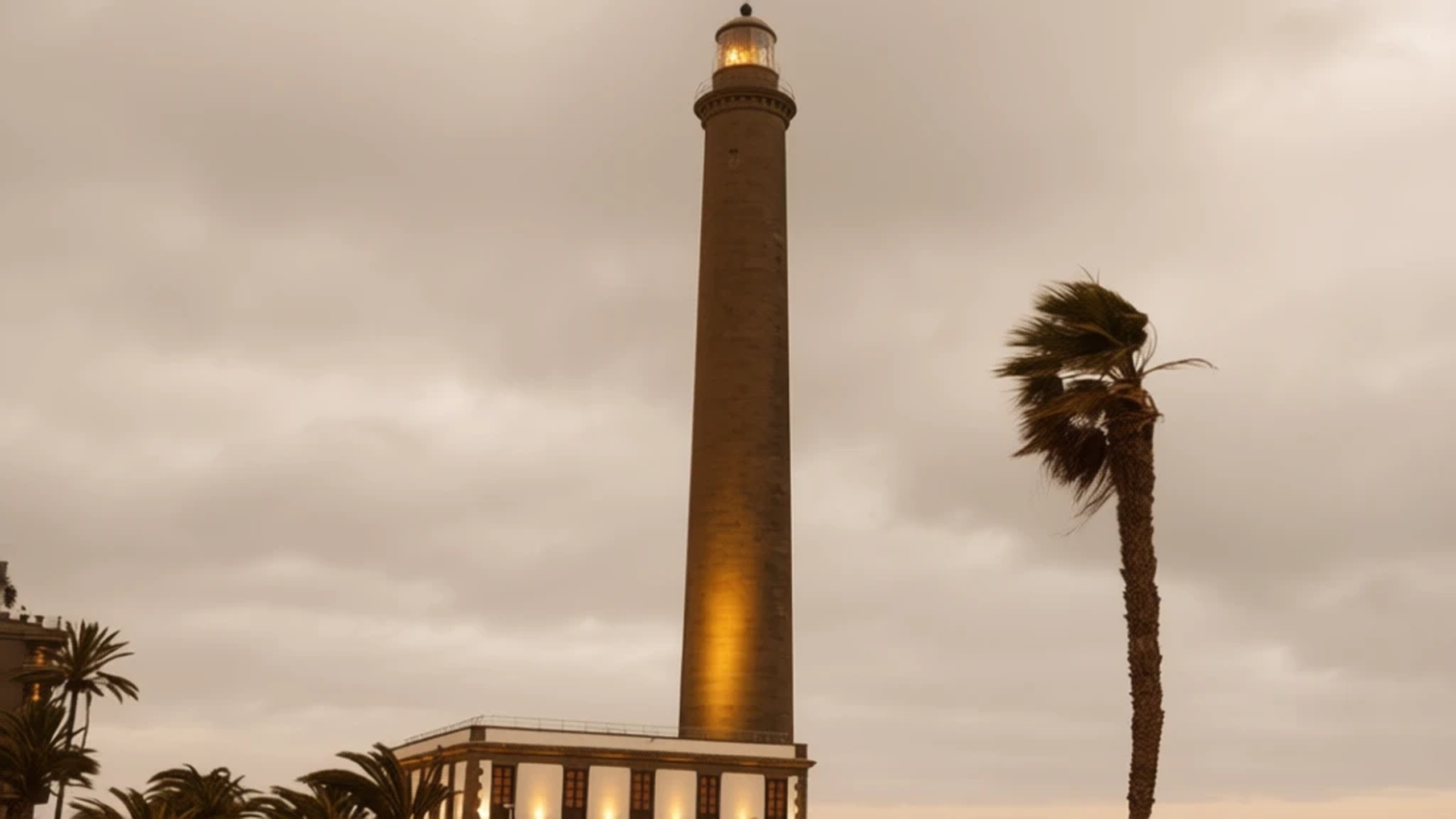
The Canary Islands, a popular destination known for their stunning landscapes and pleasant climate, are bracing for a significant shift in weather conditions in the coming days. Residents and visitors alike should prepare for changes that may impact daily life and vacation plans. According to the Spanish Meteorological Agency (Aemet), by Wednesday, the islands will experience stronger winds, a drop in temperature, and the possibility of rainfall—factors that are particularly crucial for regions where tourism and agriculture heavily rely on stable weather.
The forecast for Wednesday indicates that the archipelago will be under a blanket of cloudy skies, with occasional clear spells. Winds are expected to shift from the north to the northwest, bringing strong gusts in certain areas. The mountainous islands and northern parts of the archipelago will face particularly unstable conditions. As temperatures begin to drop, residents can expect a chillier atmosphere than is typical for this time of year.
Forecast for Thursday and Friday
As we move into Thursday, the cloud cover is set to persist across the islands, with an increasing likelihood of rain, particularly in Lanzarote, Fuerteventura, and the northwest regions of the larger islands. While some areas may remain dry, the possibility of precipitation cannot be entirely ruled out. Minimum temperatures are expected to remain stable, while maximum temperatures may see a slight rise. However, there is a continued risk of light frost in central Tenerife, which could affect road conditions and transport operations.
The winds will continue to strengthen, blowing from the north in the western province and from the northwest in other areas. Particularly strong gusts are anticipated in certain zones, especially in the highlands and central areas of Lanzarote and Fuerteventura. On Friday, the cloud cover and rain are expected to persist in the northern parts of the mountainous islands and in Lanzarote, while other areas may experience brief showers. Temperatures will remain relatively unchanged, with the risk of frost on Tenerife continuing.
Weather by Island
Residents and visitors in Lanzarote can expect cloudy skies with a slight chance of light rain by evening. Temperatures in Arrecife will range from 15 to 21 degrees Celsius, with winds strengthening in the central areas. In Fuerteventura, cloud cover will dominate, with a higher chance of rain in the north and west. Winds will pick up in Jandía at night and in inland areas during the day, while temperatures in Puerto del Rosario will range from 16 to 20 degrees.
Gran Canaria will see its northern areas under thick clouds with a chance of light rain, while the rest of the island is unlikely to experience precipitation. Winds will shift to a northwesterly direction, and temperatures in Las Palmas de Gran Canaria will remain between 16 and 19 degrees. In Tenerife, clouds and rain will affect the north and center, with brief showers possible in the south. Winds will intensify on the ridges and central areas, while Santa Cruz de Tenerife will see temperatures ranging from 16 to 20 degrees. Light frosts are also possible in the central part of the island.
Impact on Daily Life
La Gomera, La Palma, and El Hierro are expected to experience cloudy weather with rain, particularly in the northern and inland areas. Winds will strengthen in the highlands and certain parts of these islands, with temperatures in San Sebastián de La Gomera ranging from 16 to 21 degrees, in Santa Cruz de La Palma from 13 to 18 degrees, and in Valverde from 13 to 16 degrees. Some areas may experience very strong gusts, which could lead to disruptions in transport and energy services.
Meanwhile, on the mainland of Spain, brief showers are forecast for Wednesday in the central and western regions, as well as in Ceuta and Melilla, with thunderstorms possible in some locations. While no significant precipitation is expected on Thursday and Friday, new showers could arrive by the weekend, according to an analysis by russpain.com. Temperatures will remain above the seasonal average, which may affect agricultural activities and leisure plans.
Reflecting on recent weather anomalies, it’s important to note that the Canary Islands faced abrupt climate changes last year, when strong winds and heavy rains led to disruptions in air traffic and temporary road closures. Similar situations were observed in mainland Spain, where sudden downpours caused localized flooding. As highlighted by an analysis of international events, weather disasters can impact not only domestic affairs but also the country’s energy market.
Climate change in the region is becoming increasingly evident, with meteorologists reporting a rise in extreme weather events. In recent years, the Canary Islands have regularly experienced alternating periods of drought and heavy rainfall, necessitating that local authorities and residents be better prepared for changing conditions. The introduction of new alert systems and improvements in infrastructure are helping to minimize the impact, but it remains impossible to completely eliminate the risks associated with such unpredictable weather patterns.