VII International Symposium on Tourism Development: An Insightful Gathering
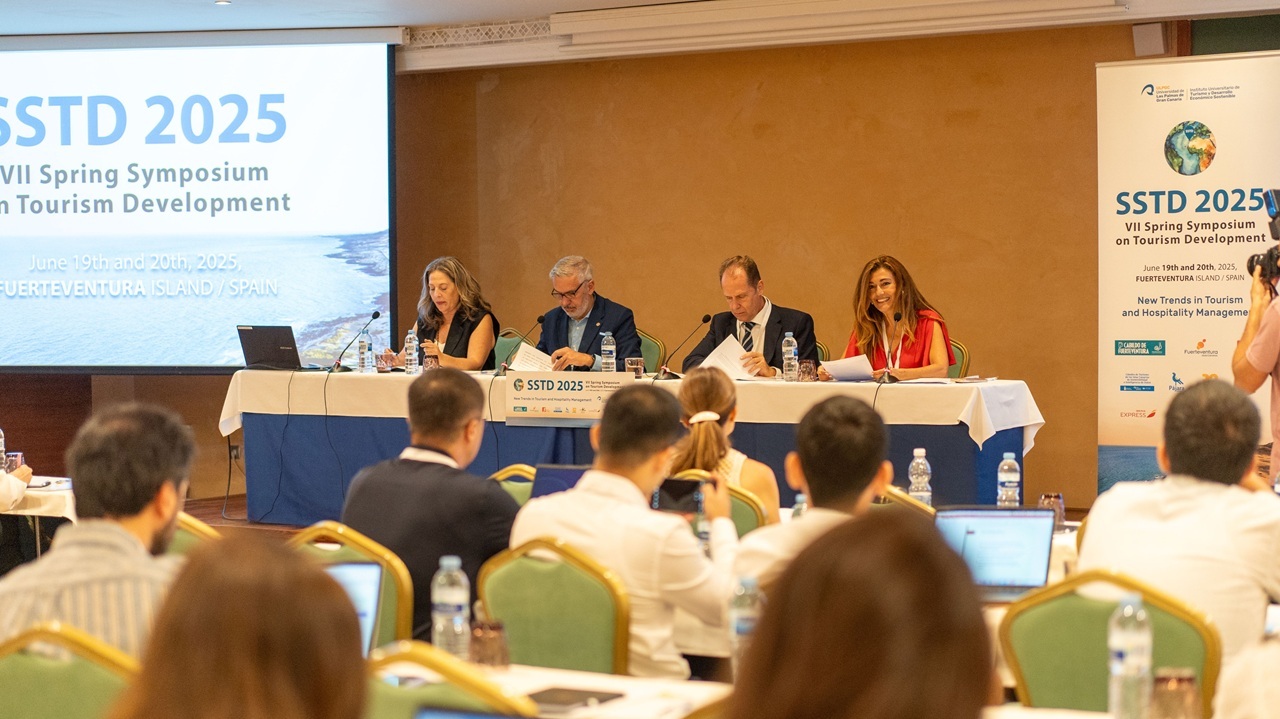
The VII International Symposium on Tourism Development (VII SSTD 2025) kicked off on Thursday, June 19, at the R2 Calma Hotel in Fuerteventura. Over a hundred experts and academics from 30 universities worldwide gathered to discuss a pressing topic: the future of tourism, with an emphasis on sustainability and community well-being.
Opening Sessions and Strategic Presentations
The symposium was inaugurated by José Manuel Sanabria Díaz, the Deputy Director of Tourism for the Government of the Canary Islands, who presented the “Canary Islands Destination Strategy 2025-2027.” Alongside him was Marlene Figueroa Martín, the Tourism Counselor in Fuerteventura, both emphasizing the urgent need to reformulate the tourism model in the archipelago to prioritize local populations’ welfare.
Sanabria detailed how the strategy assesses the current tourism landscape, identifies emerging trends in management, technology, and market demand. Central to this plan are themes of regenerative sustainability, digitalization, and enhancing residents’ quality of life.
In her address, Figueroa highlighted that with 88% of Fuerteventura’s economy relying on tourism, it’s essential that profits benefit the local community and foster social justice. She underscored the symposium as a unique opportunity for public administrations to take decisive and efficient actions that would benefit both the tourism sector and local residents.
Keynote Address: “Towards Just Tourism from the Perspective of Spatial Justice”
Cristina Figueroa, from Rey Juan Carlos University, delivered the first keynote speech titled “Towards Just Tourism from the Perspective of Spatial Justice.” She tackled the concept of “tourismophobia,” the impact of digitalization, and the necessity for greater citizen involvement in tourism governance.
Figueroa emphasized that tourism is a sector with significant economic and social repercussions. The management of this sector should transcend ideological confines, aiming to uplift all communities, especially vulnerable groups like women, who face challenges in decision-making despite holding a majority in the workforce.
Among her key points was the need to integrate residents and tourists while emphasizing citizen participation in tourism governance. The influence of digitalization and artificial intelligence also emerged as focal points. Figueroa illustrated with examples, contrasting the failed CycleGap project in Barcelona due to local disapproval with the success of Benidorm, which flourished due to local acceptance and investment in sustainability.
Figueroa also described her involvement with a project called “Just Tourism Destination” aimed at establishing a platform to design fairer tourism destinations. She applauded the Canary Islands government for its proactive approach in shaping a forward-thinking tourism model.
Leaders Panel: Digitalization and Sustainability in Tourism
The event continued with a strategic dialogue among private sector leaders during the panel discussion titled ‘Digitalization and Sustainability in Tourism.’ Moderated by Jacques Bulchand and Teresa Aguiar Quintana, participants included high-profile figures such as Óscar Ramos of Hotel Investment Partners and José Juan Lorenzo, Director General of Tourism for the Canary Islands. They discussed various challenges including investment in artificial intelligence, sustainable land management, and the digital transformation of tourist experiences.
Scientific Sessions on Sustainability and Economic Justice
The afternoon unfolded with parallel scientific sessions, showcasing groundbreaking research on several topics. These encompassed sustainability, economic justice, gender equity, and circular economy, with studies such as the decomposition of the gender pay gap in tourism, the challenges of overtourism, and impact assessments in tourism destinations.
Highlights of Friday’s Program
The symposium continued on Friday, June 20, promising an engaging lineup consisting of two keynote speeches, an online workshop organized by the UNESCO Chair, and three blocks of scientific presentations focusing on tourism marketing, technological innovation, and environmental sustainability.
Among the notable keynote presentations was one by John Fahy from the University of Limerick, discussing a generalist approach to tourism marketing research, followed by a session led by Carmelo León from the University of Las Palmas de Gran Canaria, covering the pros and cons of sustainable tourism.
The online workshop, addressing “Gender, Community, and Challenges in Tourism,” was coordinated by Yen E. Lam González and Eugenio Díaz Fariña from the UNESCO Chair in Tourism and Sustainable Development.
Parallel Scientific Sessions
The conference included multiple parallel scientific sessions covering topics like:
- Exploration of hotel cancellation trends.
- Impact of Customer Relationship Management (CRM) on customer loyalty in Canary Islands airlines.
- The role of travel influencers on platforms like YouTube and Instagram.
- Circular economy implementations in China’s tourism sector.
- Potential impacts of climate change on Mediterranean tourist demand.
Each session offered a deep dive into specific research areas, enriching the collective understanding of participants regarding the intricate dynamics of tourism.
Significance of the Symposium
The VII SSTD 2025 not only symbolizes academic collaboration but also serves as a crucial platform for redefining tourism in the Canary Islands. By focusing on governance, sustainability, and social transformation, the symposium intends to pave the way for a more equitable and responsible tourism future in a post-digital era.
Through engaging discussions and scholarly insight, this event underscores the importance of inclusive tourism policies that benefit local populations while embracing the economic potential of the industry.