A Vision for Urban Living: The Cities of Tomorrow
Introduction: A New Urban Paradigm
A new vision for urban living is taking shape, driven by an urgent need to make our cities more livable, sustainable, and resilient. As we look towards the future, metropolitan areas are evolving into spaces that prioritize green living, community engagement, and technological integration. This article explores what the cities of tomorrow might look like, focusing on innovative designs, sustainable practices, and community-driven initiatives.
The Aesthetic of Tomorrow: Nature Meets Architecture
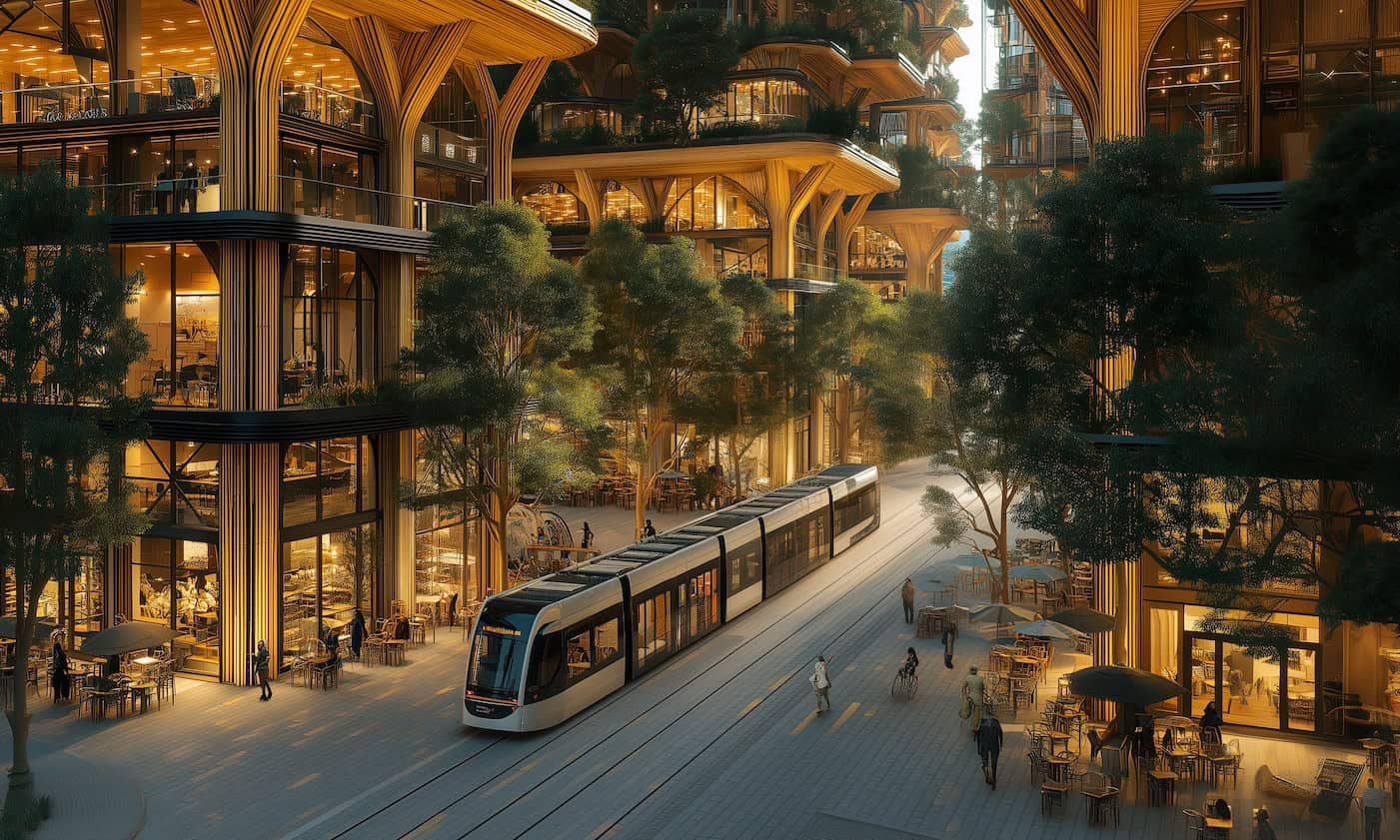
Imagine wooden towers rising above the tree canopy, their facades adorned with lush greenery and shimmering solar cladding. The hum of traffic is replaced by the gentle glide of autonomous robovans, seamlessly connecting neighborhoods through dedicated lanes. It’s a warm summer afternoon in 2037, and shoppers stroll beneath covered walkways reminiscent of Bologna’s porticoes. The air is fresh, filled with the scent of pine after a rain shower, and the skyline is dominated by timber and greenery rather than glass and steel.
In this future, every building is a self-sustaining entity, generating its own energy through integrated solar panels and micro wind systems. Water is collected and recycled, while lighting, heating, and ventilation systems respond automatically to occupancy and weather conditions, thanks to embedded IoT sensors. This level of automation optimizes living conditions without residents needing to lift a finger.
Forest City 1: A Case Study in Urban Innovation
For the one million residents who have called Forest City 1 home since its opening in 2032, this vision is a reality. Young professionals, priced out of traditional housing markets, have found opportunities in this groundbreaking city. A Community Land Trust model ensures affordability by separating land ownership from property ownership, allowing local residents to have a say in how their community’s assets are managed. The 350,000 homes built here have contributed to a national decrease in average UK house prices by 4%.
Forest City 1 is powered by new energy systems that include solar, small modular reactors, and advanced district loops, providing households with energy security. Much of the waste, utilities, and transport infrastructure is buried underground, meticulously planned before construction began. AI manages water, traffic, and energy flows, creating a smart city that operates efficiently and sustainably.
The Visionaries Behind Forest City 1
The concept of Forest City 1 is not just a dream; it’s a project spearheaded by Joe Reeve, founder of the non-partisan political movement Looking for Growth (LFG), and former journalist Shiv Malik. Their vision is anchored in a real site on the Cambridgeshire-Suffolk border, near Newmarket and Haverhill. The project has garnered support from investors, government entities, and local residents, indicating a growing interest in innovative urban solutions.
Reeve emphasizes the need for a new city that people want to live in, not just commute to. He points out that Cambridge is constrained by green belt regulations, limiting its growth potential. The chosen location, with its low population density and land owned by private landowners, presents an opportunity for large-scale change.
The Environmental Impact: A Commitment to Biodiversity
Forest City 1 allocates over 12,000 acres—more than a quarter of its total area—to forest, significantly enhancing biodiversity. The project aims to replace monocultural farmland with a natural environment, including plans for one of the largest redwood forests in the world. This commitment to green space is not just about aesthetics; it’s about creating a community where people genuinely want to live.
However, the project is not without its critics. Some argue that building on agricultural land, especially in a country that only produces 60% of its food domestically, is misguided. The debate highlights the tension between urban development and agricultural preservation, raising important questions about food security in the face of climate change.
Learning from Global Examples: The Challenges of New Cities
While new cities like Forest City 1 offer exciting possibilities, they also come with challenges. The Line, a planned city in Saudi Arabia, serves as a cautionary tale. Initially envisioned as a 100-mile-long, car-free metropolis, the project faced insurmountable complexities related to water supply, food production, and infrastructure. As construction delays and budget overruns mounted, the project was ultimately shelved, illustrating the difficulties inherent in ambitious urban planning.
Transforming Existing Urban Spaces
For many cities worldwide, the future will not be built from scratch but will emerge from transforming existing urban spaces. Paris, for example, has been a leader in reclaiming its streets for pedestrians and cyclists. The once-busy Rue de l’Arbalete has been transformed into a tranquil space filled with greenery, where children can play and families can gather.
The city has implemented over 300 ‘school streets’ since 2020, pedestrianizing areas around schools to improve air quality and safety for children. The positive outcomes—cleaner air, safer routes, and increased physical activity—have resonated with residents, leading to further expansions of this model.
The Global Movement Towards Sustainable Urban Living
Cities like Vienna, Stockholm, and Copenhagen are also embracing this shift. Vienna has introduced around 140 parklets, transforming parking spaces into mini public squares. Stockholm has doubled its pedestrian streets, creating vibrant spaces for cafes and public art. London, too, has seen a transformation in areas like Soho, which became an open-air district during the pandemic, inspiring other parts of the city to prioritize pedestrian access.
The evolution of urban spaces is not just about aesthetics; it involves rethinking the systems that keep cities running. Energy-efficient technologies, such as heat recovery from data centers and electrified public transport, are becoming the norm. Buildings are designed to generate and recycle resources, utilizing innovations like carbon-eating concrete and vertical farms.
Water Management: A New Approach
As cities grapple with climate change, effective water management becomes crucial. By 2050, the number of properties in England at risk of flooding is projected to rise significantly. Traditional drainage systems are proving inadequate for the increasing frequency of extreme weather events.
Architect Dirk van Peijpe advocates for a shift in mindset, suggesting that cities should invest in public spaces that can temporarily hold rainwater rather than merely expanding drainage systems. Rotterdam has embraced this philosophy, creating parks and basins that not only serve as public spaces but also function as water-absorbing systems during storms.
Conclusion: The Future is Now
Cities are evolving rapidly, responding to the pressures of climate change, population growth, and the need for healthier living environments. Whether through retrofitting existing urban areas or constructing new cities among forests, the future of urban living is not a distant fantasy. It is already under construction, and the choices we make today will shape the cities of tomorrow.