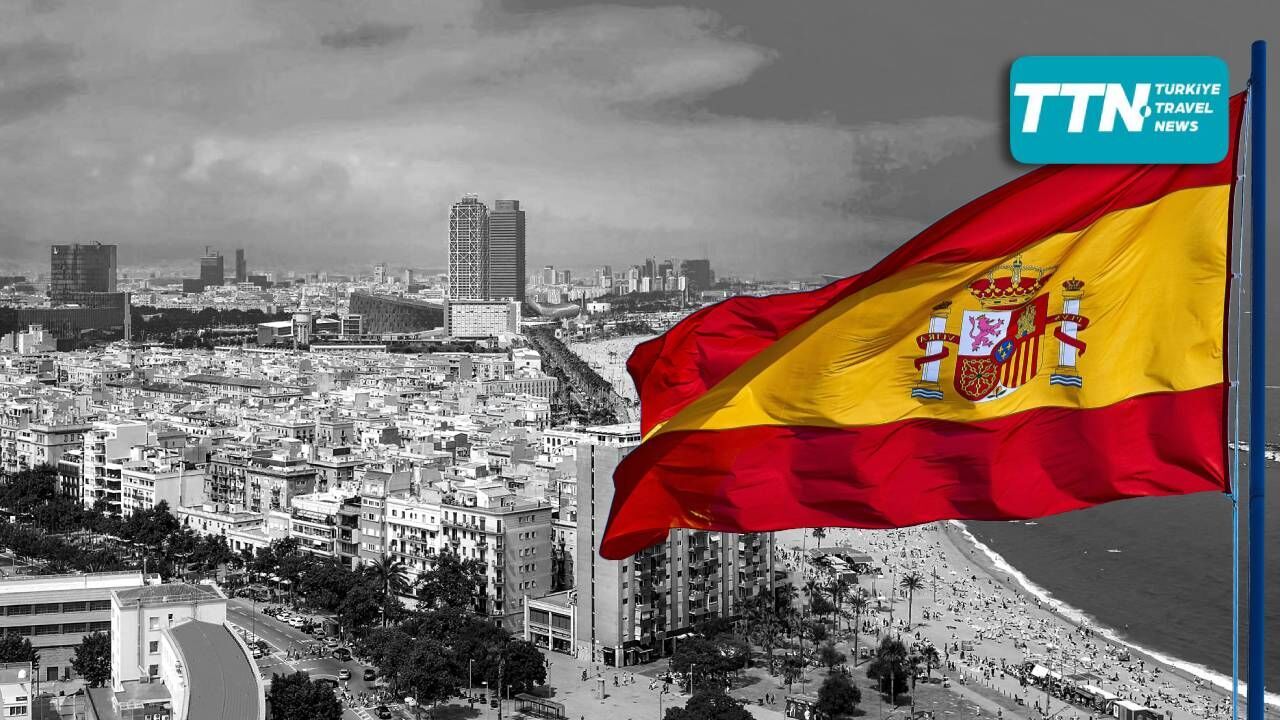
Spain’s Tourism Sector Thrives in Early 2026
Spain’s tourism sector is on a robust growth path as we step into 2026, buoyed by steady visitor numbers, increasing tourist spending, and a notable rise in demand from non-European markets. The latest data reveals a promising outlook for the country’s travel industry, showcasing its resilience and adaptability in a dynamic global landscape.
Visitor Numbers on the Rise
According to provisional data from February 2026, Spain welcomed approximately 5.7 million international visitors, marking a 2.8% increase compared to the same month last year. This surge brought total arrivals for the first two months of the year to around 10.7 million, reflecting a 2% year-on-year growth. These figures underscore Spain’s enduring appeal as a top travel destination.
Mixed Performance Among Key Source Markets
The United Kingdom continues to be Spain’s largest inbound market, contributing over 1 million visitors in February alone and 1.9 million during the January-February period. Following the UK are France, Germany, Italy, and the Netherlands. However, the performance across these key European markets has been mixed. While the UK maintained its strong position, France experienced a significant 11.7% decline in visitor numbers during the first two months, and Germany showed flat growth.
In contrast, the “rest of the world” segment saw a remarkable 19.1% increase, highlighting Spain’s success in diversifying its tourist base beyond traditional European markets. This shift indicates a growing interest from travelers in regions such as Asia, North America, and Latin America.
Trends in Travel Preferences
Travel patterns are evolving, with a noticeable shift towards independent travel. In February, 4.4 million visitors opted for independent travel arrangements, compared to 1.2 million who chose package tours. Both segments experienced growth, with package tours rising by 3.9% and independent travel increasing by 2.5%.
Accommodation preferences also reflect this trend. Hotel stays saw a 3.6% increase, while rental accommodations surged by 13.7%, indicating a growing demand for alternative lodging options. Interestingly, non-commercial stays, such as those with friends or family, declined by 2.3%.
The most common length of stay remained between 4 to 7 nights, which grew by 4.1%, while both short stays (day trips) and long stays (15+ nights) saw a decline.
Regional Highlights: Canary Islands and Valencia
Regionally, the Canary Islands emerged as Spain’s top destination in February, capturing 26.8% of total arrivals. Following closely were Catalonia and Andalusia. Notably, Valencia stood out with a 10.4% growth rate, signaling its rising competitiveness among secondary destinations. Conversely, the Balearic Islands experienced an 8.1% decline, suggesting shifting seasonal demand patterns.
Strong Revenue Growth
Alongside the increase in visitor numbers, Spain’s tourism revenues have also shown impressive growth. International tourists generated €7.6 billion in February alone, reflecting a 4.6% year-on-year increase. For the January-February period, total tourism revenue reached €15.4 billion, representing a 6.9% increase.
Higher Spending Per Tourist
Average spending indicators have improved significantly:
- Per tourist expenditure rose to €1,366 (+1.7%).
- Daily spending increased to €190 (+3.4%).
- The average stay slightly declined to 7.2 nights.
Spending patterns reveal that the largest share of tourist expenditure was allocated to international transport (23.4%, +11%), followed by:
- Activities (20.4%)
- Accommodation (17.2%)
- Food & beverage (16.1%)
Notably, non-package travel spending accounted for 85.5% of total expenditure, reinforcing the strength of independent travel behavior.
Hotels as Revenue Drivers
Hotels remain the dominant revenue generator, accounting for 59.1% of total spending, with an 8.1% growth. In contrast, spending by tourists staying with friends or relatives declined by 4.8%. Both package travel (+4.8%) and independent travel spending (+4.5%) posted gains, confirming a broadly positive demand environment.
Leisure vs. Business Travel
Leisure travel continues to dominate, representing 79.8% of total tourism spending, with a modest 2.1% increase. However, business travel is emerging as a high-growth segment, with total spending rising 5.6% and per capita expenditure surging by 12.5%, indicating stronger yield potential.
Regional Revenue Insights
In terms of tourism receipts, the Canary Islands ranked first with a 29.1% share, followed by Catalonia (18%) and Madrid (15.3%). Catalonia recorded the strongest growth at 18.7%, while the Canary Islands experienced a slight 1.6% decline in revenue, suggesting a shift in spending distribution across regions.
Spain’s tourism sector is clearly on an upward trajectory, showcasing resilience and adaptability in a competitive global market. The combination of increasing visitor numbers, higher spending, and a diversification of source markets positions Spain as a leading destination for travelers in 2026 and beyond.