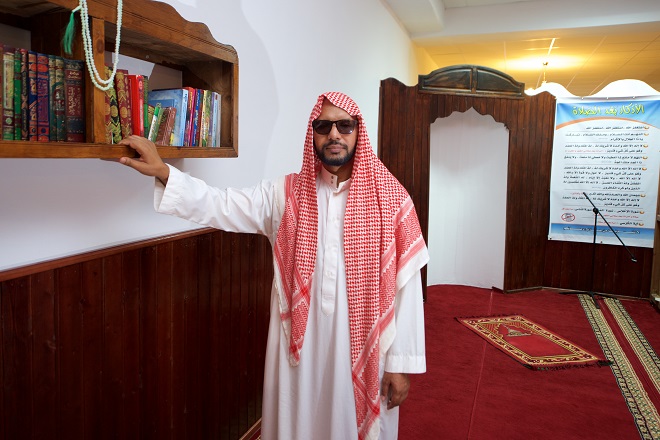
Fadel Kah: An Imam’s Perspective on Islam and Community
Fadel Kah is the imam of the mosque in Caleta de Fuste, located on the island of Fuerteventura, Spain. Originally from Mauritania, Kah has a diverse academic background, having studied Journalism, Political Sciences, and Islamic Studies. His journey as an imam began in 2004 during Ramadan at the mosque in Vecindario, followed by his roles in Costa Calma and Caleta de Fuste. Kah passionately advocates for mosques to serve as spaces for preventing and combating extremism, asserting that misunderstanding and social rejection are significant factors contributing to radicalization.
The Muslim Community in Fuerteventura
Kah describes the Muslim community in Fuerteventura as somewhat elusive in terms of statistics. He mentions data from 2005 when the community numbered approximately 2,000. However, due to economic challenges, many members left the island, although a gradual return is now taking place. Kah emphasizes integration, noting that the majority of the original immigrants from the late 1990s have acquired Spanish nationality. Language, however, remains a barrier, especially for the first generation, complicating deeper integration into the society.
The Role of Mosques
There are eight mosques across Fuerteventura, all legally recognized and registered with the Ministry of Justice. These mosques serve as cultural hubs, hosting events, Quran classes, and language lessons. Kah highlights plans for his mosque to offer Spanish and English lessons, which aligns with his vision of promoting understanding and integration within the larger community.
Misconceptions About Extremism
There’s often a perception that mosques are breeding grounds for extremism, especially in light of recent terrorist attacks. Kah firmly counters this notion, stating that the core mission of mosques is to foster peace and prevent radicalism. He argues that radicalism misrepresents Islam and that extremist actions are deeply disconnected from true Islamic teachings, which advocate for peace.
Factors Leading to Radicalization
Kah identifies several social issues contributing to radicalization: social rejection, ignorance of Islamic teachings, and lack of stable employment or integration. He speaks directly to the struggles faced by marginalized individuals—often characterized by limited education and social acceptance. These individuals may be easily manipulated by extremist ideologies that distort the true message of Islam, framing their grievances as a call to jihad.
Salafism and Its Misinterpretation
When discussing the interpretation of Islam, Kah explains that the salafist movement is often mischaracterized in the media. Although some individuals committing acts of terrorism claim to be salafist, they diverge significantly from the true teachings of Islam. Kah insists that radicalism cannot be publicly espoused within genuine salafist communities, and while he acknowledges the existence of extremism, he stresses that it is often hidden and operates discreetly.
Community and Radicalization
Kah expresses confidence that, to his knowledge, there are no known cases of youth radicalization on the island. He remains vigilant, however, acknowledging that some radical individuals tend to operate covertly. The fear of stigma and social exclusion leaves many potential extremists isolated and vulnerable.
The Misuse of Islamic Leadership
He points to cases where individuals, such as the imam alleged to be behind the terror attacks in Catalonia, tarnish the image of Islamic leaders. Kah critiques the qualifications and backgrounds of some individuals who take on the role of an imam without adequate training, which can lead to mistrust and misunderstanding within the community. He advocates for the establishment of educational programs for imams in Spain to ensure that leaders are well-informed and qualified.
Islamophobia and Its Local Impact
Islamophobia, Kah admits, exists to some extent within Fuerteventura. He recalls an incident where hateful messages were left at the mosque following high-profile terrorist attacks. Kah highlights that while the overarching community atmosphere is generally peaceful, instances of discrimination arise from a lack of understanding and education regarding Islam.
Setting the Record Straight
To those who conflate Islam with terrorism, Kah’s message is clear: “They are mistaken.” He emphasizes that the violent actions of certain individuals do not reflect the beliefs or values of the majority of Muslims. The focus, he insists, should be on understanding the societal and personal issues that lead to such behavior rather than attributing blame to an entire faith.
The Modernization of Islam
Kah advocates for the modernization of Islam and the elevation of women’s rights within its framework. He believes that Islamic texts inherently support gender equality and modern interpretations, contingent upon scholarly understanding rather than popular misconceptions. Emphasizing the importance of expert interpretation, he calls for a more nuanced understanding of Islam that resonates with contemporary values while staying true to its foundations.