Betancuria’s Cultural Heritage Catalogue: A Step Forward for Majorera Heritage
Betancuria, a historic municipality in Fuerteventura, has recently taken a significant step in preserving its cultural identity by publishing its Cultural Heritage Catalogue. This makes Betancuria the first municipality in the region to successfully complete and approve such a document, underscoring the community’s commitment to safeguarding its rich architectural and historical legacy.
Comprehensive Inventory of Cultural Assets
The catalogue comprehensively identifies 103 properties distributed throughout Betancuria, Valle de Santa Inés, and Vega de Río Palmas. Alarmingly, it highlights that 45.63% of these structures are in poor condition, with 18.4% classified as being in very poor condition. Such statistics shine a light on the urgent need for preservation efforts to combat the deterioration of this cultural wealth.
The enactment of the Cultural Heritage Law of the Canary Islands in June 2019 mandated municipalities to develop their own cultural heritage catalogues within a three-year timeframe. By June 2022, all municipalities on the island were expected to have their catalogues approved. However, the progress among the municipalities in Fuerteventura has been inconsistent, with some excelling while others lag behind.
Expert Collaboration for Preservation
The catalogue was meticulously prepared by the architecture firm of José Luis Gutiérrez Padrón, supported by a team of specialists in architecture, law, geography, history, and graphic design. Their collaborative effort aims to inventory not only architectural structures but also archaeological sites, traditional paths, and industrial and ethnographic assets within the municipality.
In its justification report, the expert team emphasizes that the catalogue aims to halt the decline of architectural and environmental heritage by regulating and encouraging both public and private conservation and restoration efforts. This calls for the cataloguing of properties and spaces of interest and the integration of these elements in functional contexts, while also promoting the preservation of traditional architectural styles.
Architectural Heritage: Spotlight on 103 Properties
One major aspect of the catalogue comprises an inventory of architectural heritage. Among the 103 identified structures, there are 20 in Betancuria, 34 in Valle de Santa Inés, and 49 in Vega de Río Palmas. Notably, buildings within the historical center of Betancuria are separately protected by the Special Protection Plan (PEP) that was approved in 2010.
The selected properties originate from the Traditional Architecture Inventory conducted by the Cabildo of Fuerteventura in 2013. This initial inventory included 145 properties, from which the most significant 103 were chosen for inclusion in Betancuria’s catalogue.
State of Preservation: A Critical Overview
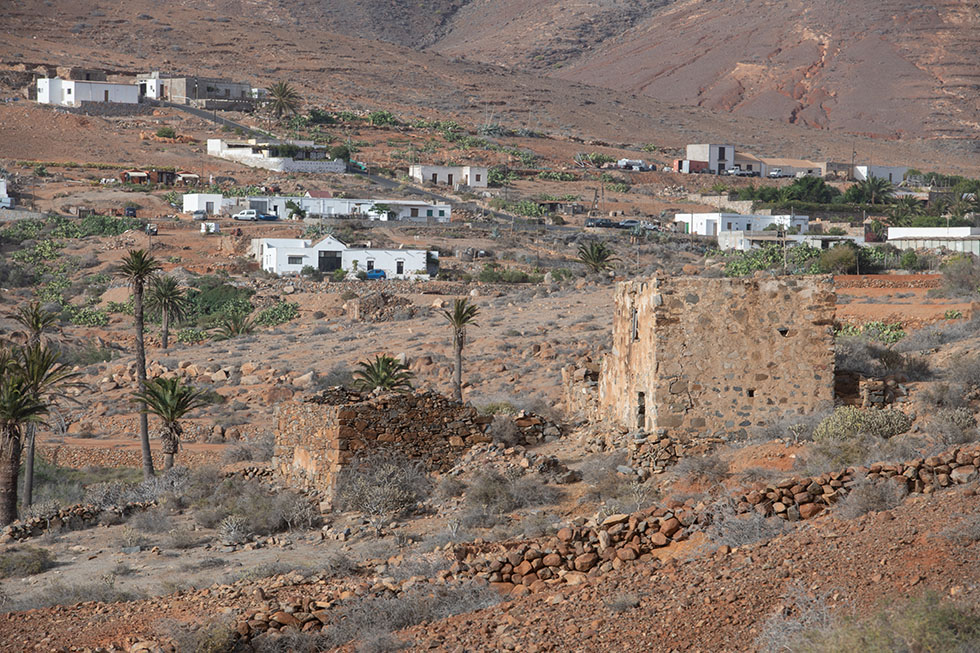
The condition of these buildings varies significantly: 13 properties are in good condition, 15 are in fair condition, 47 are in poor condition, 19 are in very poor condition, and three are in partial ruin. These figures indicate a concerning trend regarding the material preservation of the architectural heritage, with many structures suffering from various degrees of deterioration, particularly the roofs, which are often made of organic materials.
The report notes that numerous walls are crumbling, while most properties have lost their original carpentry. Interiors are also deteriorating, with many buildings lacking roofs altogether. Furthermore, several structures have been modified with discordant elements that stray from traditional architectural aesthetics.
Decline in Usage and Current Challenges
Worryingly, 71 of the 103 catalogued buildings are currently unused, a situation largely attributed to the depopulation of the region, as many former residents have migrated to other areas of the island or to different parts of the Canaries over the past few decades.
In a significant move, the catalogue allows for changes in the buildings’ footprint—30% of the listed properties can be expanded up to 80 square meters to meet modern habitation needs. This initiative aims to incentivize property owners to invest in preservation rather than allowing their structures to fall into disrepair due to an inability to make them livable.
Enrichment of the Cultural Heritage Landscape
The Cultural Heritage Catalogue of Betancuria is not merely an architectural inventory; it also encompasses an archaeological inventory of 56 sites, an ethnographic inventory of 49 elements, and 86 industrial assets. Additionally, the catalogue highlights 25 traditional paths, which have historically connected various localities and served as vital arteries for movement and communication.
A Living Legacy
The publication of this catalogue signifies a vital step forward in the preservation of Betancuria’s cultural identity. By documenting and regulating its heritage, this effort embodies the community’s determination to protect its past while adapting to contemporary requirements. With concerted efforts and proper funding, these historical structures can be revitalized, ensuring that they remain a crucial part of Betancuria’s narrative for generations to come.