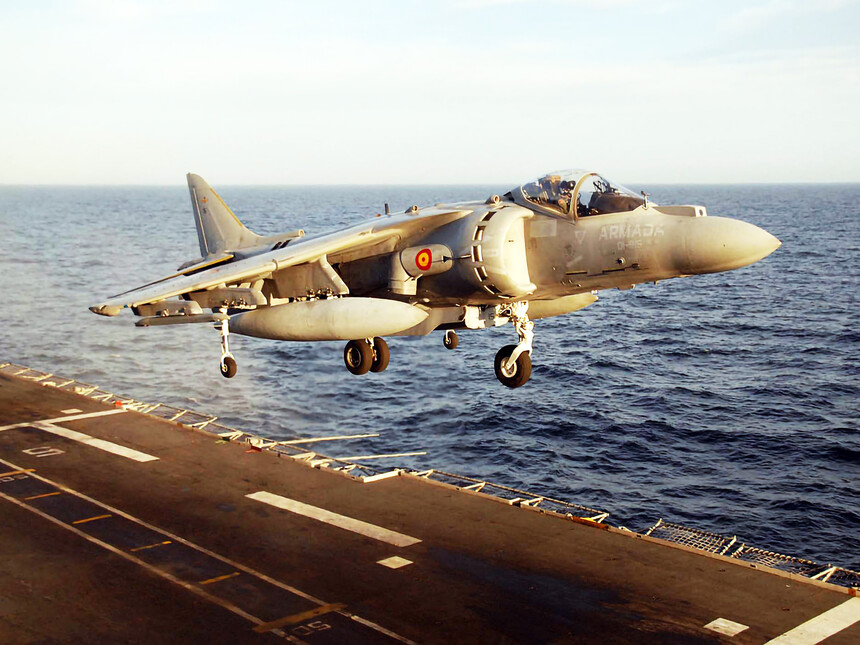
The Spanish Navy stands as a vital pillar of national and European maritime security, navigating a future laden with strategic and operational challenges. In a world characterized by high-intensity conflicts, hybrid threats, geopolitical tensions, and the looming impacts of climate change, the Navy’s “Vision 2050” plan has been meticulously crafted. This initiative aims to ensure that the fleet remains not only operational but also capable of projecting power and adapting to an increasingly unpredictable international environment.
This forward-thinking strategy is not merely reactive; it seeks to anticipate future challenges while addressing current ones. The modernization of capabilities, the strengthening of alliances, and the integration of cutting-edge technologies are the foundational pillars of this transformation. However, the Navy also faces demographic and logistical hurdles that must be navigated to achieve its ambitious goals.
A Transforming Geopolitical Context
The geopolitical landscape is evolving rapidly, and the challenges faced by the Spanish Navy reflect this complexity. The ongoing war in Ukraine has reshaped European security dynamics, emphasizing the critical importance of maritime control in high-intensity conflicts. For the Navy, this conflict has underscored the necessity of bolstering its presence along NATO’s eastern flank, extending from the Mediterranean to the North Atlantic, to deter potential aggressions in strategic territories.
In addition to its deterrence role, the Navy is tasked with protecting vital maritime routes that are essential for both the European and Spanish economies. These routes, which facilitate the movement of crucial resources and goods, are increasingly vulnerable to threats from hostile powers or non-state actors. Consequently, deploying modern ships equipped with rapid response and adaptability capabilities has become a strategic imperative.
Europe is also undergoing a significant transition toward greater strategic autonomy. While the transatlantic relationship with the United States remains robust, it has shifted in recent years due to the U.S. strategic pivot toward the Indo-Pacific. This shift necessitates that European nations, including Spain, assume a more prominent role in their own defense, particularly in regions like the Mediterranean, the Atlantic, and the Sahel. Defense cooperation among European states is essential, and the Spanish Navy is already engaged in key projects, such as the construction of S-80 submarines and future European combat ships.
Although geographically distant, the Indo-Pacific region has direct implications for global economics and, by extension, Spain. The rise of China as a maritime power has generated significant tensions, particularly in areas like the South China Sea. These tensions not only threaten regional security but also have global ramifications by jeopardizing critical trade routes. While the Spanish Navy does not routinely deploy forces in this region, it must remain prepared to collaborate with allies such as Japan, the United States, and Australia to safeguard freedom of navigation and uphold international law.
Moreover, “gray zone” threats—aggressions that stop short of armed conflict but create instability—pose an increasing challenge. Incidents such as sabotage of critical infrastructure, cyberattacks, and disinformation campaigns exemplify this new form of warfare. To effectively counter these threats, the Spanish Navy must enhance its cyber capabilities and technological resilience, ensuring stability not just for Spain but for all of Europe.
The Acquisition Horizon: Modernization and Expansion
In response to this complex landscape, the Spanish Navy has outlined an ambitious acquisition horizon. This long-term plan aims to ensure that the fleet can operate across a diverse array of scenarios, ranging from collective defense missions to humanitarian and maritime security operations.
Among the key developments is the acquisition of eight coastal patrol vessels, expected to enter service by 2027. These ships will play a crucial role in surveillance operations along the coast, combating drug trafficking, and managing migratory flows in sensitive areas like the Strait of Gibraltar and the Alboran Sea. They will replace aging patrol vessels such as the Anaga-class, ensuring the continuity of essential capabilities.
In terms of strategic projection, the construction of a new LHD (amphibious assault ship/aircraft carrier) scheduled for 2028 represents a qualitative leap forward. This vessel will not only supplement the current Juan Carlos I but will also double the Navy’s amphibious and air-naval projection capabilities. Designed to operate fixed-wing aircraft like the F-35B, which the Navy also plans to acquire, these ships will solidify Spain’s status as a maritime power capable of operating in distant theaters.
Another significant addition will be ship-to-shore connectors, also slated for 2028. These vessels, essential for landing operations, will enable the Marine Corps to swiftly and efficiently deploy troops and equipment during crises or conflicts.
Logistics, a cornerstone of any naval operation, will be bolstered with the acquisition of a new fleet tanker in the next decade. This ship will ensure a reliable fuel supply for units deployed at sea, enhancing the fleet’s autonomy and operational capability.
Looking further ahead, the construction of new minehunters is planned to commence in 2033. These vessels will replace the aging Segura-class ships, which have been in service for over 20 years. Equipped with advanced technology, the new minehunters will be vital for ensuring the safety of maritime routes against underwater threats.
Finally, the incorporation of motherships capable of operating both offshore and in coastal areas will provide greater operational flexibility. These ships, designed to host drones and helicopters, will mark a significant advancement in the Navy’s ability to adapt to future challenges.
Technological Innovation and the Demographic Challenge
The Spanish Navy is also committed to embracing technological innovation and sustainability. Transitioning to cleaner and more efficient energy sources will be crucial for reducing reliance on fossil fuels and minimizing the environmental impact of naval operations. Additionally, the development of autonomous technologies, such as drones and unmanned underwater vehicles, will enhance surveillance and response capabilities in increasingly complex environments.
However, the success of this strategic transformation will hinge not only on material modernization but also on addressing the human factor. Spain is experiencing a rapidly changing demographic landscape, characterized by an aging and increasingly multicultural population. This presents a significant challenge for recruiting military personnel. The Navy must adapt its recruitment strategies, offering attractive incentives and advanced training programs in key areas such as cybersecurity and artificial intelligence.