The Intriguing Tale of Juan Rodríguez and Roque Martín Mesa in Lajares
Juan Rodríguez was a quiet man, embodying the spirit of traditional rural life. Residing alone in Lajares, a small village in La Oliva, Fuerteventura, he lived modestly in the family home he had inherited from his parents. His constant companions were his goats, and his life was a tapestry of calmness until two years ago, when he passed away under less than tranquil circumstances.
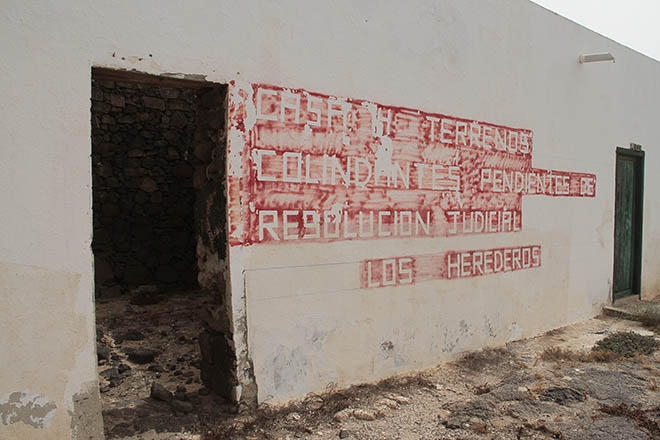
Years before his death, he made a fateful decision by selling— for a mere 10,000 pesetas—his water rights to a quarter of the cistern at his house to a neighbor, Roque Martín Mesa, known locally as Roquito. When Juan aimed to organize his inheritance for his thirteen nephews, he discovered that this private agreement had morphed into the sale of two plots of land totaling over 20,000 square meters, all while the selling price remained unchanged. “He said Roque told him: ‘Just live peacefully until you die, and when you die, the house is mine,’” shared Juan Pedro, one of Juan’s nephews, standing outside the home where Juan once lived.
Lajares: From Agriculture to Surfer Paradise
Today, Lajares is a thriving community of around 2,000 residents, including many affluent English, German, and Italian expatriates. Its once agricultural landscape, which produced corn, chickpeas, and lentils, has transformed into a haven for surfers, despite the village being inland. Not far behind this transformation are shady dealings involving land sales— transactions were historically conducted by Rafael del Toro, popularly known as Rafaelito, who facilitated property transfers through handwritten agreements without formal notarization.
Roque, or Roquito, enhanced the local practice of land sales, leading to significant legal complications for many. Juan Rodríguez’s family contends that Roquito added two plots to the original contract illegally, which allowed him to win an initial court case by leveraging the private contract over the family’s official documentation. The judicial ruling favored Roquito, even with a witness to the original agreement refusing to testify, paralyzed by fear of losing his land.
The Fishy Business of Roquito
A stroll through Lajares offers a peek into the many properties linked to Roquito’s dubious dealings. Some places are under construction, while others lie dormant, arms crossed in the judicial quagmire. The web of Roquito’s activities extended far beyond Lajares, encompassing other islands within the province of Las Palmas. His recent arrest, along with his associate Santiago Morales and several others, has exposed a complex network of property usurpation. The Guardia Civil has outlined a long list of charges including fraud, falsification of documents, and money laundering.
Local lore suggests that Roquito had a knack for deception from a young age. His inaugural business venture involved hauling water and sand, earning a paltry fee for each trip. Curiously, his first profitable transaction seems to have involved claiming his parents’ inheritance and secretly including additional plots in the process.
Many of the usurped lands were remarkably sold below their market value. In one documented case, a parcel on La Costilla has been divided into fourteen plots of 1,000 square meters each, highlighting the lucrative boom in property as Lajares evolved. With building permits issued for many areas, locals speculate Roquito amassed a small fortune by selling more than forty plots.
Tales of Struggle and Resilience
Behind every parcel of land lies a story of loss and hardship. The dramatic saga culminated in some families having to repurchase their own properties after Roquito sold them under fraudulent pretenses. One such family, beleaguered but determined, wound up reclaiming their own land for 8 million pesetas— ridiculously inflated due to Roquito’s manipulations.
The properties sold illegally frequently belonged to owners who resided far from Lajares, unaware of the chaos unraveling back home. This was true for Gran Canarian Manuel Viera, who discovered that Roquito had registered land belonging to his late mother by forging signatures.
Obtaining title deeds for communal land further complicated matters. Many plots were deliberately kept unbuilt to collect rainwater for cisterns, signifying the community’s effort to sustain livelihood in a harsh climate. Conversely, Roquito capitalized on vacant land parcels, in some cases even attempting to claim communal properties.
A Checkered Past After the Law
Roquito’s journey hasn’t been devoid of repercussions. In December 2015, he faced charges of attempted fraud, receiving a nearly year-long sentence along with a sizeable fine, which remains unpaid. His controversial dealings reportedly include presenting falsified documents with forged signatures, even manipulating other people’s thumbprints.
He attempted further legal recourse against the victims, forcing them into a prolonged battle that drained their spirits. His finagled network has generated numerous civil cases, all scrutinized by a justice system that seems to work slowly against the backdrop of his elaborate web of deceit.
Life in Shadows: The Unwitting Accomplice
One intriguing aspect of this ongoing saga is the involuntary role of a man named Miguel Ábalo, who found himself intertwined with Roquito’s dealings. Originally from Brazil, Miguel became embroiled through a partnership with Roquito, leading him to inadvertently oversee some of Roquito’s companies.
Now an elderly man with years of legal battles behind him, Miguel clings to truths scattered in a collage of paperwork, constantly reminding himself of the intricacies of law and loss. His walls are lined with legal terminology and reminders about his investments, reflecting a complex life led in layers of confusion imposed by another’s ambition.
The stories in Lajares weave a larger narrative of community resilience versus the ambitious opportunism of a few, long-term ripples of which are still being felt by the inhabitants today.