The Historic Pine Forest of Castillo de Lara: A Green Heart in Decline
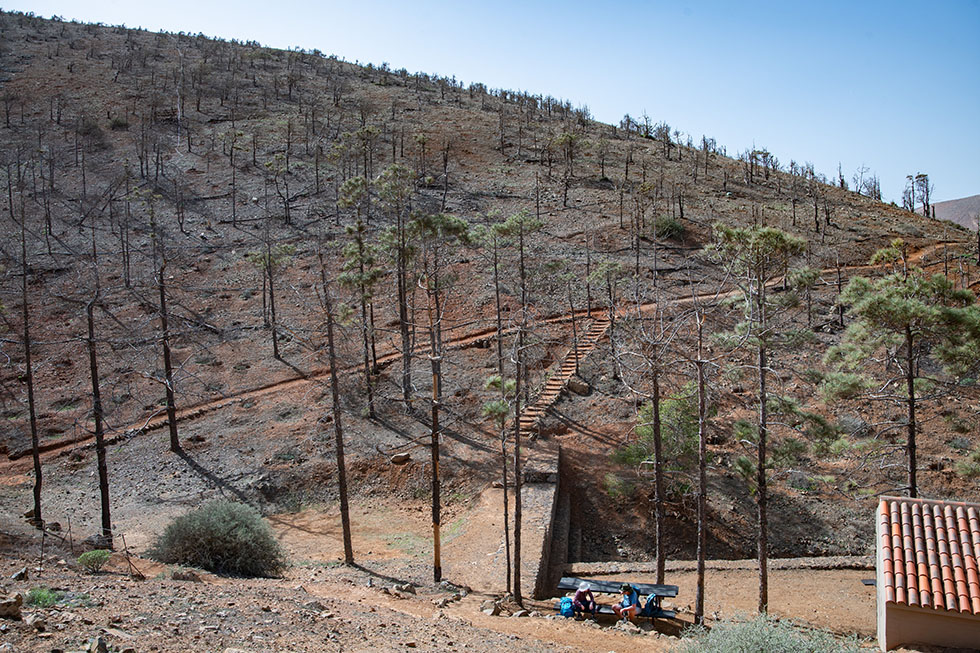
Nestled within the Betancuria Rural Park, the historic pine forest of Castillo de Lara stands as a testament to the resilience and beauty of nature. Yet today, this once-thriving ecosystem finds itself on the verge of collapse. Recognized as a Special Protection Area for Birds (ZEPA), the forest is experiencing dire straits, presenting a desolate image that has drawn criticism from hikers and nature-lovers alike.
A Legacy of Struggle
Planted approximately 80 years ago, the Castillo de Lara pine forest has undergone years of maintenance efforts. However, these initiatives have ultimately faltered. The ongoing drought, combined with rising temperatures and sporadic rainfall, has inflicted severe damage on the forest. The sight of the pines—some appearing like “pencils stuck upside down”—speaks volumes about the health of this critical natural space.
While substantial investments have been made in reforestation, many of these efforts have proven ineffective. Only a few specimens of the resilient Canary Pine have managed to endure, primarily found in sheltered areas where they receive protection from the harsh elements.
The Eye of Expertise: Stephan Sholz
Biodiversity expert and Director of the Fuerteventura Botanical Garden, Stephan Sholz, has a sobering assessment of the situation. “The persistent drought, wind, and erosion are among the main causes of the forest’s decline,” he remarks. However, he defends the resilience of the pine species, asserting that the forest should not be forcibly cleared. According to Sholz, letting these trees remain—allowing them to naturally fall when they die—could actually contribute to local forest mass.
Sholz also cautions against introducing new flora, such as olives or native species, due to the increased desertification of the soil. He optimistically mentions that while rain might momentarily breathe life into some plants, the overall forest has dissipated.
Reflections from Carla Alba Represa
Carla Alba Represa, a retired environmental technician with profound knowledge of Castillo de Lara, echoes Sholz’s concerns. “During my years working for the Canary Islands Government, we allocated funds for the upkeep of the pine forest. Unfortunately, the soil and climate were never conducive for pine growth, making it resemble a bonsai forest,” she reflects.
The indigenous islanders, or majoreros, have traditionally maximized the use of rainwater, a skill passed down through generations. The landscape of Betancuria, dotted with terraces, reservoirs, and windmills, is testimony to this rich agricultural heritage. In the past, this thriving agricultural activity helped in the conservation of the surrounding environment, inadvertently benefiting the pine forest.
The Tale of Changing Seasons
Carla recalls how the forest’s appearance was intimately tied to rainfall. During wetter years, the landscape would burst into a vibrant green, while in dry spells, the need for irrigation was even contemplated—a rather irrational idea, she notes, as nature thrives without undue interference.
During the Franco era, misguided efforts aimed to create a green zone by planting pine trees in a region ill-suited for their growth, ignoring the fact that the local landscape is predominately characterized by smaller, drought-resistant species like shrubs, tabaibas, and olives.
A Historic Perspective
Historical records reveal that reforestation efforts began in late 1935 when heavy rains allowed the Cabildo of Fuerteventura to embark on a campaign. They planted a mixture of fruit trees and native vegetation across their holdings, including Castillo de Lara. By 1941, a significant project aimed at soil preservation introduced approximately 6,000 pines from Gran Canaria, with the goal of establishing a forestry nursery.
Despite well-intentioned plans including those by German entrepreneur Gustav Winter, who sought to plant 100,000 Canary pines on Pico de la Zarza, outcomes were far from successful. Drought and overgrazing by goatherds hampered these ambitious projects.
The Complexity of Conservation
Though considerable resources—800,000 pesetas in that era—were directed towards forest conservation with the the establishment of shelters and plantations, failures continued to mount. Initial efforts saw local youths assisting with tree planting, but drought often resulted in mass failures.
Eventually, a shift in focus towards planting endemic greenery took place, emphasizing the need for species better suited to the island’s unique conditions. Recent efforts culminated in a 1.3 million euro investment to restore the pine forest and combat erosion, indicating a commitment to preserving this natural treasure.
Forward-Looking Initiatives
In December 2020, the Ministry of Ecological Transition launched a project aimed at enhancing soil management and biodiversity in arid regions. Experimental work took place in the Betancuria Pine Forest, focusing on agroforestry methods to restore habitats. This research, conducted by the University of La Laguna, aims to ensure sustainable management practices filling the gaps in previous endeavors.
The struggle to sustain the Castillo de Lara pine forest is emblematic of broader issues surrounding climate adaptation and conservation. As the pressures of drought and changing environmental conditions continue to mount, the future of this unique forest hangs in the balance.