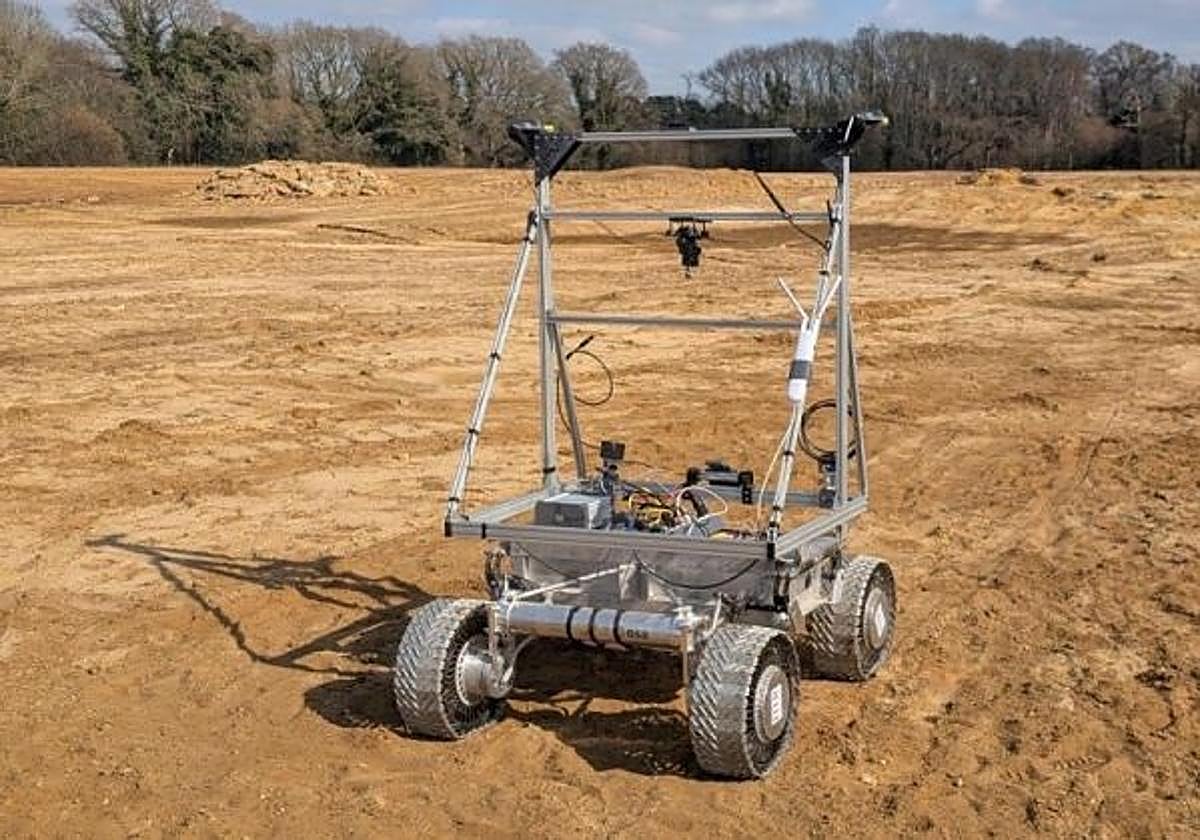
Pioneering Lunar Navigation: GMV Unveils LUPIN System
On May 8, 2025, in the serene setting of Lajares, Fuerteventura, a substantial leap in lunar exploration was unveiled by the multinational technology company GMV. This event marked the presentation of LUPIN (Enabling High-Performance PNT in the Lunar Environment), a cutting-edge initiative under the auspices of the European Space Agency (ESA). Designed to simulate navigation signals expected to guide future rovers on the Moon’s surface, LUPIN functions similarly to GPS, acting as a reliable navigational tool for astronauts and robotic explorers alike.
The Importance of Lunar Exploration
With the resurgence of interest in lunar exploration, developing advanced technologies for navigation has emerged as a strategic priority for the space industry. The Moon, once seen as a distant frontier, is now viewed as a potential hub for scientific research and even human settlement. The ESA’s LUPIN project is pivotal, falling within the framework of the Program of Innovation and Support for Navigation (NAVISP). This initiative is exploring novel methods of Positioning, Navigation, and Timing (PNT) tailored specifically for lunar conditions.
Technical Innovations in LUPIN
The core of LUPIN’s technology is its ability to integrate existing planetary PNT methods with innovative signals from the Lunar Communication and Navigation System (LCNS). This dual approach allows for enhanced navigation capabilities in various lunar terrains, such as the poles, the far side, and regions shrouded in permanent shadow.
Reducing Dependency on Onboard Algorithms
One of the standout features of LUPIN is its potential to significantly reduce reliance on complex onboard localization algorithms. Traditional methods often require extensive computational resources to determine positioning. By utilizing LUPIN’s advanced navigation signals, lunar rovers will be able to operate more efficiently and effectively, allowing for a greater focus on exploration rather than navigation challenges.
Enhanced Performance and Efficiency
The implications of the LUPIN system are profound. By improving navigational precision, LUPIN allows for faster and more efficient routing of rovers. This technological leap ensures that the vehicles can traverse the lunar landscape unhindered by technical limitations, adapting to the naturally occurring terrain conditions instead. The enhanced capabilities mean that missions can accomplish far more in a given time frame, thereby expediting research and exploration efforts.
A New Era in Automated Lunar Exploration
The advancements introduced by LUPIN signify not just a technical achievement but the advent of a new era for automated lunar exploration. As Mankind’s foray into space continues to advance, the integration of such technologies helps set the stage for more ambitious undertakings, whether landing humans on the Moon permanently or exploring its surface with unprecedented efficiency.
With initiatives like LUPIN paving the way, we stand on the brink of a new chapter in space exploration — where the Moon transforms from a distant dream into a tangible, navigable frontier.