The Enigmatic History of Betancuria: An Island Jewel
Nestled in the heart of Fuerteventura, Betancuria stands as a testament to centuries of history, culture, and natural beauty. Founded in 1405 by the Norman conqueror Jean de Bethencourt, this quaint village emerged amid the tumultuous landscape of the 15th century, a time when the coastal regions of the Canary Islands were dominated by pirates. As a result, the first European settlers sought refuge in the island’s interior, paving the way for Betancuria to become a pivotal part of the archipelago’s history.
A Hidden Gem with Rich Heritage
Despite its modest population of just 812 residents (according to the 1924 census), Betancuria has earned a reputation as the least populated municipality in the Canary Islands. However, it is also recognized as one of the most beautiful villages in Spain, thanks to its charming cobblestone streets and whitewashed houses. The village is enveloped within the protected landscape of the Betancuria Rural Park, a haven for nature enthusiasts and a crucial area for preserving the island’s unique geomorphological and ethnographic values.
Nature’s Masterpiece: The Volcanic Origins of Fuerteventura
Betancuria’s surrounding park spans an impressive 16,000 hectares, making it one of the most significant natural enclaves on the island. Unlike other regions of the Canary Islands where lush laurisilva forests or pine trees dominate, this area features an arid and mountainous landscape, sculpted over millennia by volcanic activity. A walk through the park is akin to traversing a geological archive that reveals ancient basalt, pillow lavas, and sedimentary layers dating back millions of years. Here, visitors can find some of the oldest rocks in the Canary Islands, remnants from the era when Fuerteventura first broke through the surface of the ocean.
While vegetation is sparse, various hardy plant species have adapted to survive on minimal rainfall, such as the rock jable, thorny shrubs, and tabaiba. This ecological niche also serves as a refuge for protected bird species, including the guirre, a local subspecies of the Egyptian vulture, which finds its last viable habitats in these rugged terrains.
Exploring Nature Trails
For those who enjoy hiking, the Betancuria Rural Park offers numerous rural pathways and ancient trails that weave through valleys and hills. These trails connect Betancuria to neighboring towns like Vega de Río Palmas, Ajuy, and Valle de Santa Inés—often considered the second settlement on the island after Betancuria itself. One of the park’s most popular routes is the path through the Barranco de las Peñitas, leading to the Ermita de la Virgen de la Peña, a monument recognized as Bien de Interés Cultural since 1985. Visitors venturing to overlooks like the Degollada de los Granadillos or the Morro Velosa viewpoint can gain a deeper appreciation for how the elements have shaped Fuerteventura over the ages.
Architectural Time Capsule
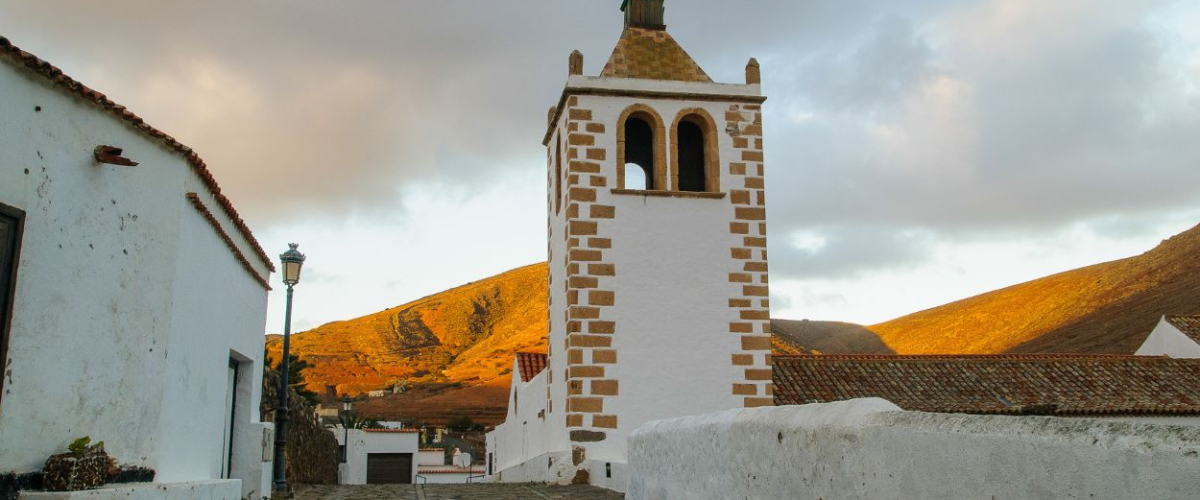
Stepping into Betancuria is like taking a journey back in time. The town’s historic core retains the essence of its colonial beginnings, characterized by narrow stone streets and traditional majorera architecture. Whitewashed houses adorned with volcanic stone accents and quaint wooden balconies in shades of green and brown add to the village’s picturesque charm.
At the heart of Betancuria stands the Iglesia de Santa María, constructed in 1410 and later reconstructed after a Berber corsair attack in 1593. Inside, the church is a treasure trove of artistic styles, featuring Gothic, Mudéjar, and Baroque elements, including the striking 18th-century altarpiece crafted by the skilled hand of Francisco Hernández.
Nearby, the ruins of the Convento de San Buenaventura hint at the religious fervor that followed the island’s conquest. Founded by Franciscan monks in the 15th century, it was among the earliest religious centers in the Canaries. The Ermita de San Diego, meanwhile, commemorates the cave where Friar Diego de Alcalá is believed to have prayed, celebrating the monastic life that once flourished here.
Unearthing History: The Archaeological Museum
To fully grasp the island’s insular character, the Museo Arqueológico de Betancuria is a must-visit. The museum showcases artifacts from the island’s pre-Hispanic inhabitants, known as the majoreros, named after their distinctive footwear made from goat hide. Here, visitors discover how these ancient people lived, their cultural practices, religious beliefs, and their remarkable ability to thrive on this arid land for over two millennia.
Savoring the Flavors of Fuerteventura
No visit to Betancuria is complete without sampling its culinary delights. One standout is queso majorero, a delightful goat cheese with a designation of origin, which can be tasted in some local farms that welcome visitors for cheese-making demonstrations. The gastronomic heritage of Betancuria is simple but robust, featuring fresh local products, fish dishes, and traditional sauces like mojo.
Among the region’s time-honored dishes is gofio amasado, a comforting mix of ground grain that can be combined with broth, milk, water, wine, or honey, traditionally served in a cloth bag or pouch. This hearty fare showcases the resourcefulness of the islanders and connects modern visitors with the age-old practices of island life.
Enjoying Betancuria is not just about the sights; it’s a full sensory experience that interweaves history, culture, and nature into a rich tapestry of life on Fuerteventura. Each visit reveals something new, beckoning you to discover yet another story from this captivating part of the Canary Islands.