Monitoring the Palm Groves of Fuerteventura: A Closer Look at Invasive Species
The palm groves of Ajuy, Madre del Agua, Pájara, and Buen Paso have recently been under the scrutiny of the Cabildo de Fuerteventura, revealing critical insights into the ecological health of this unique region. As part of an initiative aimed at preserving the natural beauty of the island, the monitoring pilot has confirmed the unsettling presence of the invasive insect Diocalandra frumenti in several Ajuy specimens. This discovery raises urgent concerns for conservationists and local authorities alike.
Objectives of the Monitoring Pilot
Launched in March under the Fuerteventura, bonita por naturaleza program, the monitoring pilot aims to provide scientific data on the health status of the palm groves within the Parque Rural de Betancuria. These areas are crucial not just for biodiversity but also fall under special protective designations, including the Zona Especial de Conservación (ZEC) and the Zona Especial de Protección para las Aves (ZEPA), spanning the municipalities of Pájara and Betancuria. The Cabildo’s initiative underscores the importance of understanding and safeguarding these ecological hotspots.
Observations from the Monitoring Efforts
While monitoring revealed that traps set in Madre del Agua, Pájara, and Buen Paso did not catch any Diocalandra frumenti specimens, the situation in Ajuy was markedly different. Here, two traps yielded nearly twenty of these harmful insects, which pose a significant threat to the Canarian palm populations. This alarming statistic emphasizes the vulnerability of the local flora to invasive species and the urgent need for targeted mitigation strategies.
Methodology of the Monitoring Project
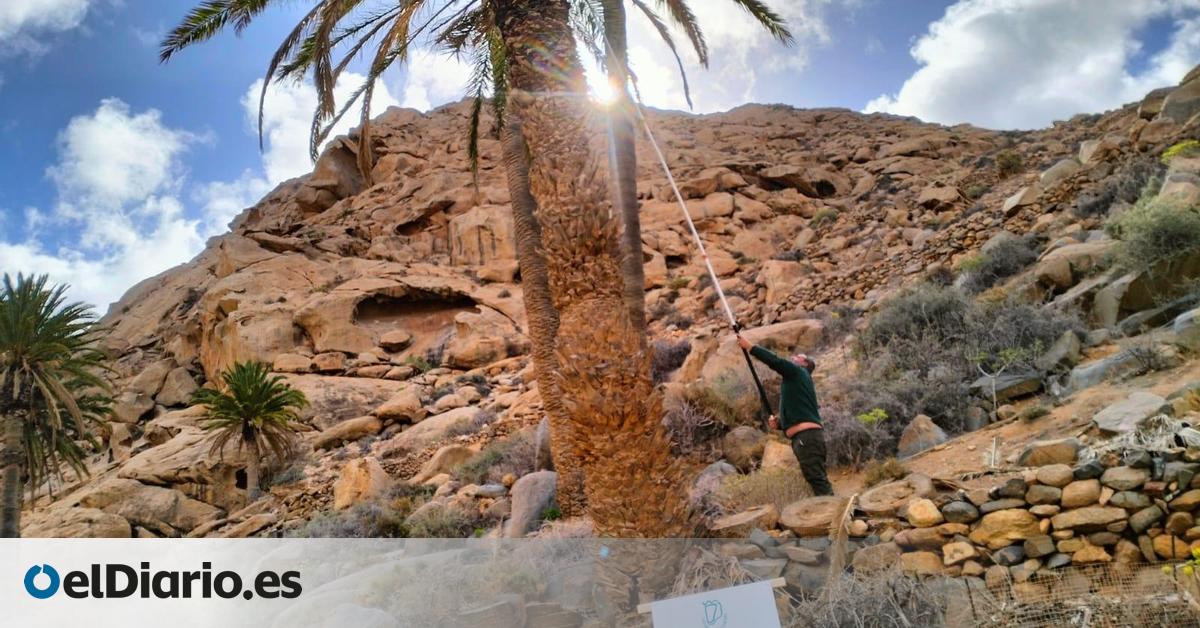
To effectively monitor the situation, the team installed 20 Palm Rocket Tramp traps equipped with registered pheromones—designed to attract the invasive beetles. The installation required careful planning to minimize any potential damage to the palm trees. Utilizing telescoping poles and forestry ladders, the team was able to deploy the traps without resorting to methods that could harm the trees, a practice often referred to as “trepolines.”
Statements from Local Authorities
The president of the Cabildo, Lola García, underscored the importance of such monitoring efforts, stating that it is crucial to evaluate the extent of damage to a species that holds significant ecological and cultural value for the island. García’s sentiments are supported by Blas Acosta, the counselor for Works and Machinery, who emphasized the necessity of having concrete data to understand the situation and guide corrective measures. Acosta urged immediate actions to ward off the spread of Diocalandra frumenti to other palm populations, emphasizing that the time for procrastination has passed.
Wider Implications
The problem of Diocalandra frumenti is not restricted to Fuerteventura. Other Canary Islands, such as Lanzarote, have experienced its detrimental effects. The local government has responded vigorously with a Control and Eradication Plan involving a budget of 4 million euros, aimed at curtailing the population of this invasive pest. Such measures highlight the growing recognition of the seriousness of the threat that invasive species pose to native ecosystems.
The findings from the Cabildo’s monitoring pilot serve as a wake-up call for the preservation of Fuerteventura’s unique natural heritage. They highlight a pressing need for collective action, rigorous monitoring, and effective management strategies to combat invasive species and protect the fragile ecosystems that define this beautiful island.