The Human Cost of Healthcare Deficiencies in Fuerteventura
The Struggles of Patients and Caregivers
In Fuerteventura, the challenges of the healthcare system extend far beyond mere statistics; they manifest in the dehumanization experienced by patients and their families. A typical encounter reveals how individuals become numbers in a system that often loses sight of the human element. For instance, a caregiver, who wishes to remain anonymous, recounted a harrowing experience:
“The day before a scheduled appointment, the Transportation Desk calls and states they’ll pick up the patient at ten in the morning,” she explained, referring to an individual suffering from anxiety and disability who required a stretcher for transport. When the caregiver reminds them that the appointment is three hours later, she receives a curt reply: “Yes, but we have another patient in the area who needs to be picked up.”
This kind of interaction is all too familiar for caregivers in Fuerteventura.
The Waiting Game
After what feels like an eternity, the patient finishes the appointment around one o’clock in the afternoon. The caregiver, anxious for the transportation service to arrive, begins to make calls. As the clock ticks on, the situation becomes increasingly volatile with the impending shift change at two o’clock. The hospital hallways are overflowing with patients, complicating the situation further.
In one corner, a patient on a stretcher and another in a wheelchair await their transport. As lunchtime approaches, the atmosphere becomes even more uncomfortable. Caregivers and nurses rush about, while patients feel their dignity slipping away, akin to animals on display. The caregiver continually pleads with the hospital attendant to expedite the transport, met with empty assurances: “It will just be another 10 to 20 minutes.”
Some patients can end up waiting for two hours or more, an agonizing wait that can feel eternal.
Dealing with Dignity
The situation worsens when the patient on the stretcher urgently needs to use the restroom. With facilities located far from where they are waiting, the hospital attendant is stretched thin, managing incoming patients who are confused about how to check in and directing those looking for various departments. Faced with an urgent need, the attendant eventually resorts to bringing a urine bottle, sparking a deeply humiliating moment for the patient, who can’t bear doing such a thing in public.
In a striking moment of humanity, when the caregiver requests to take the patient to an unused chapel for privacy, the attendant simply shakes his head. The chapel, seemingly out of place in a secular nation, serves as a stark reminder of the lack of appropriate spaces to cater to patients’ needs.
A Crumbling Infrastructure
The hospital itself reflects the constraints of a healthcare system struggling to keep pace with a growing population. Over the last two decades, Fuerteventura’s populace has nearly doubled, and despite efforts to expand facilities, the hospital remains strained. The influx of patients also comes with a shortage of medical professionals, as many new graduates hesitate to settle on the island.
According to a doctor who spoke on condition of anonymity, “It’s not an appealing place for new doctors. The housing costs in Puerto del Rosario are daunting, and only those truly passionate about the surfing lifestyle might consider it worthwhile.”
The Transportation Conundrum
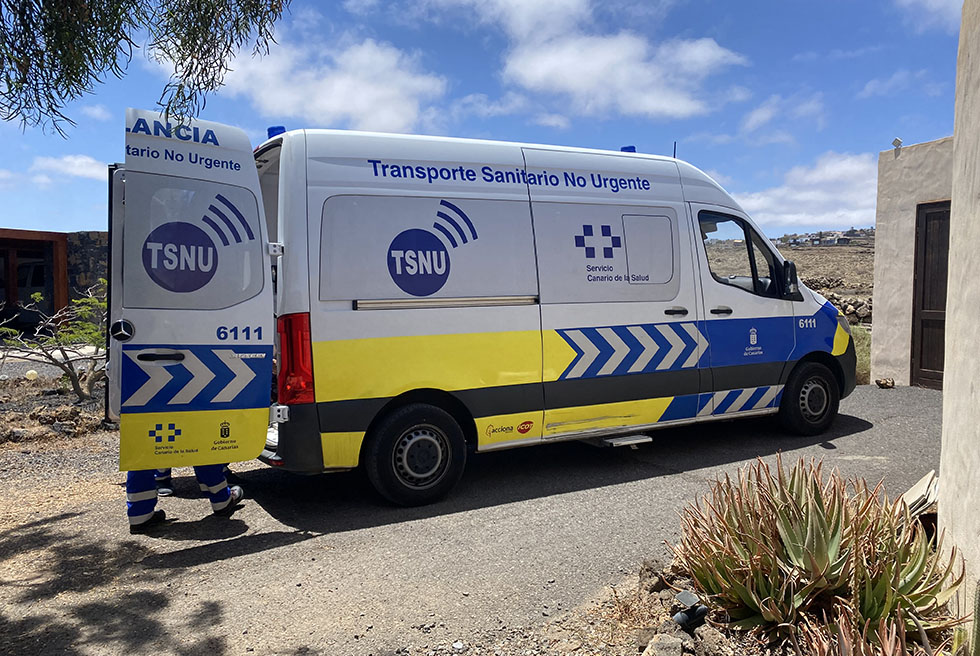
The crux of the problem lies within the management of patient transportation. In Fuerteventura, a company known as GSC (Gestión de Servicios para la Salud y Seguridad de Canarias) manages non-urgent patient transfers, a service poorly equipped to handle the current demand. With only five ambulances servicing a region with numerous small towns, the logistics become untenable. Transportation staff, already under immense stress, are unaware of the complexities surrounding their patients’ medical situations, such as mental health conditions that exacerbate anxiety during these journeys.
“Patients may be collected from as far as Lajares, only to be dropped off at various points, complicating their travel to the hospital,” said the caregiver. For elderly individuals requiring regular treatments like dialysis, the uncertainty of return times compounds their stress, with waits outside the hospital stretching to several hours.
Hesitance to Complain
Despite these significant challenges, patients are often reluctant to voice their concerns. A patient waiting in line expressed a sentiment common among many: “Even if I complain, it won’t change anything; plus, what if it affects my transportation for the next appointment?” Trust in the system appears to be eroding, with many feeling their voices and experiences will not lead to any meaningful changes.
Overburdened Public Health Services
The public healthcare system on the island experiences significant strain, but the private sector also grapples with similar issues. One patient noted, “I was seen by a doctor in the public hospital and sent home, but a week later when I went to a private clinic, the doctor didn’t even recognize me and ordered a barrage of tests.”
Long Waits for Fundamental Care
Compounding the issues at the hospital is the situation at local healthcare centers like the one in Corralejo. Patients often find themselves waiting for appointments, with times averaging up to 15 days to see a general practitioner. In an environment where timely medical care should be the norm, these delays speak volumes about a healthcare system in disarray.
As Fuerteventura grapples with a myriad of deficiencies in its healthcare services, it is not simply the figures that matter. The daily experiences of patients and their caregivers reveal the human cost of a failing system—a narrative that calls for immediate attention and reform.
-kLmF-U2101634232676etF-1200x840@Canarias7.jpeg "A giant lizard from Gran Canaria on a farm in Lajares")